

1999 Omega Seamaster GMT 50th Anniversary 41mm 2534.50
Read more...





More Information
Description
More
Less
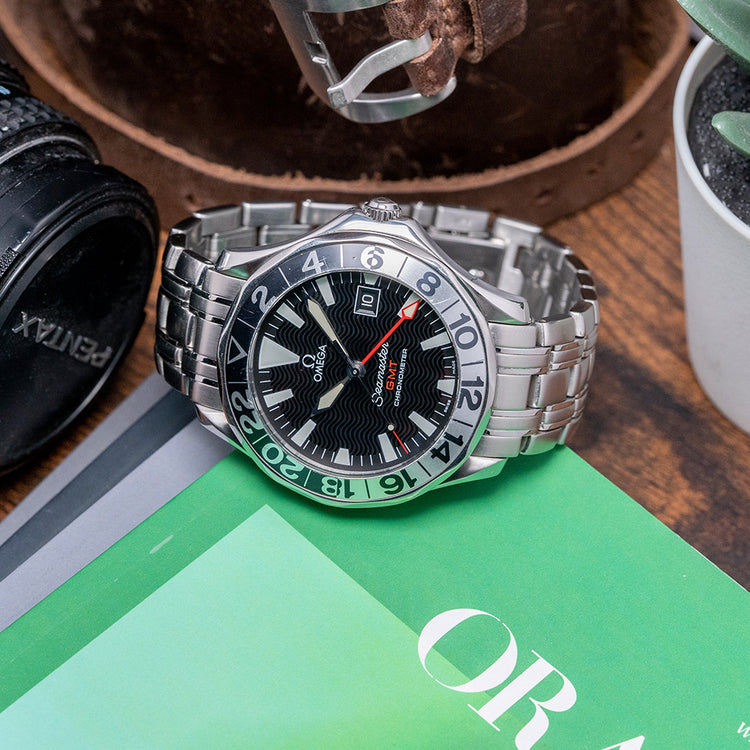
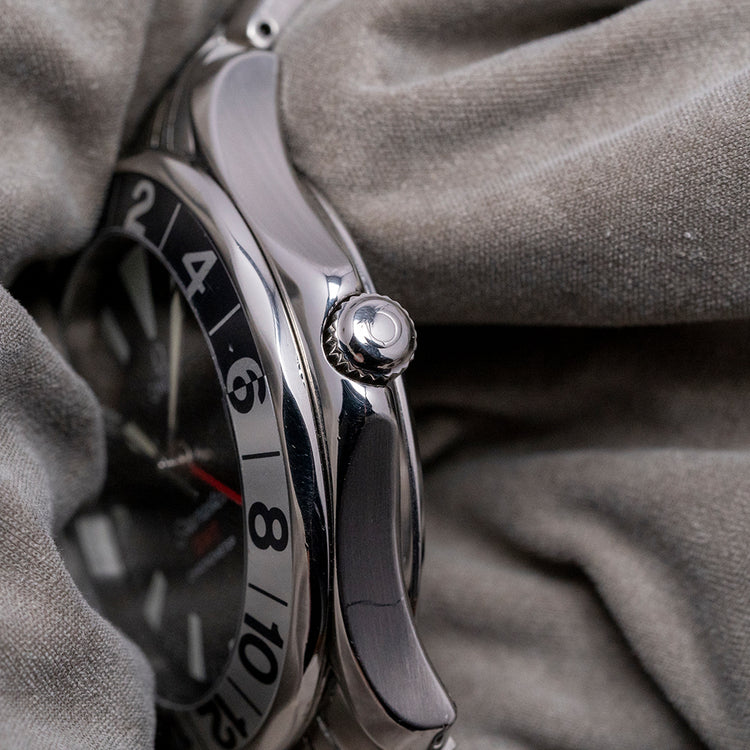
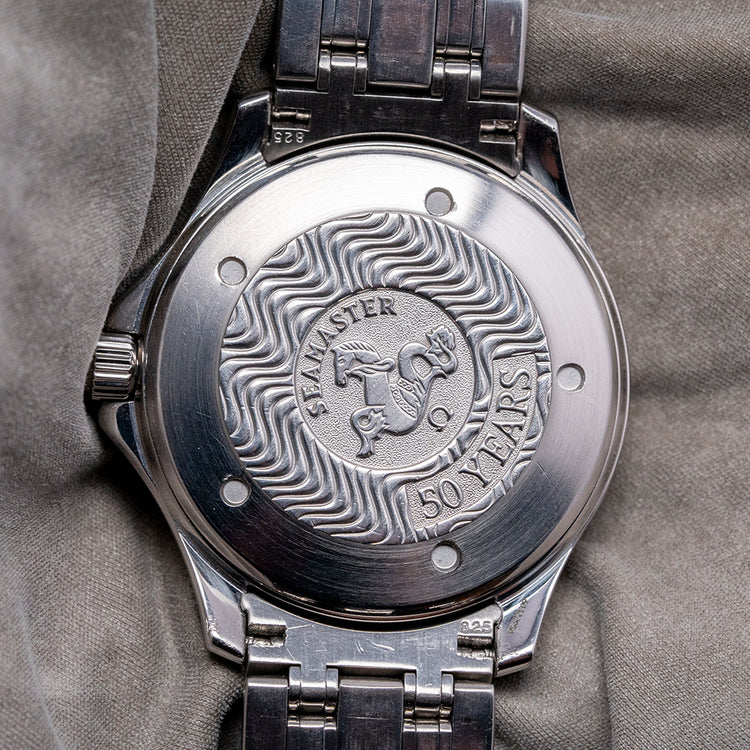
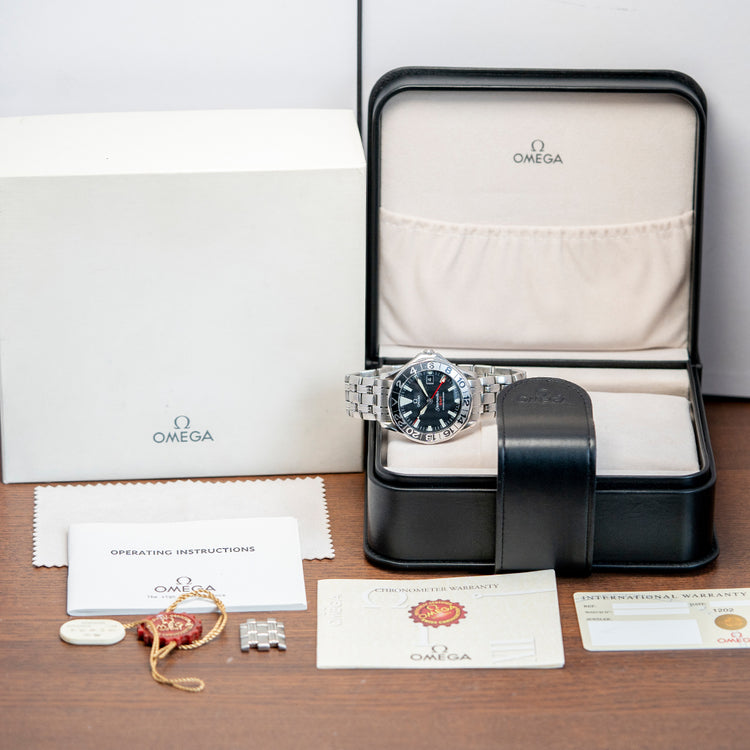
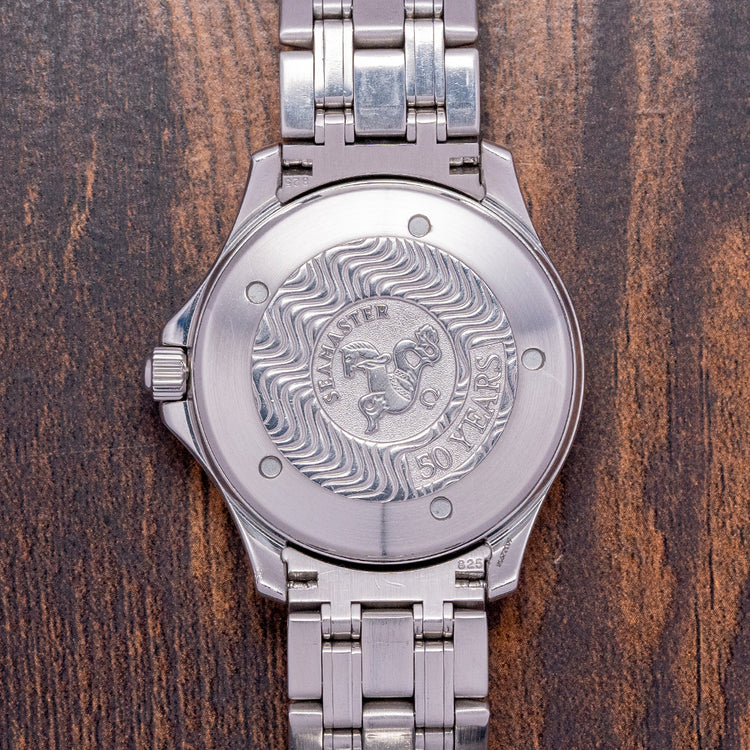
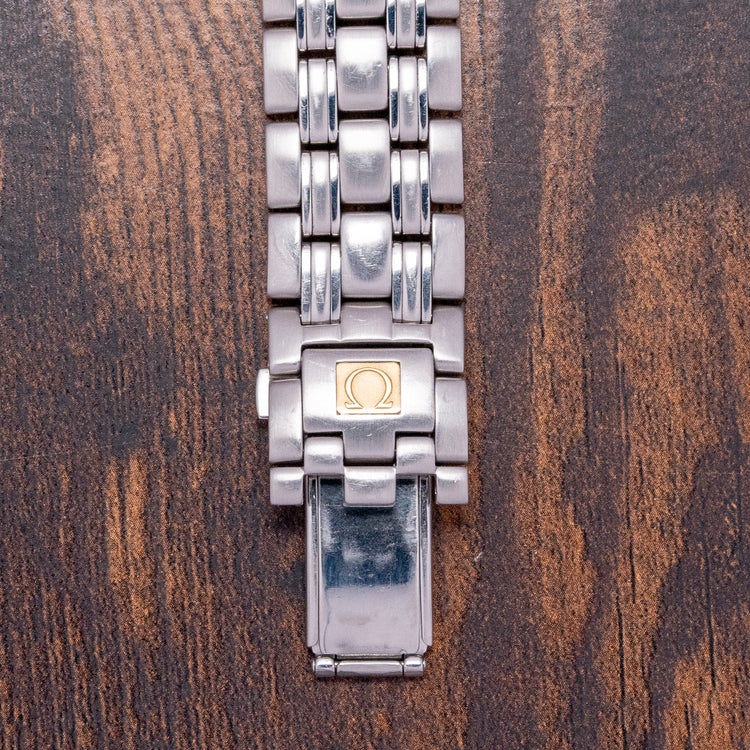
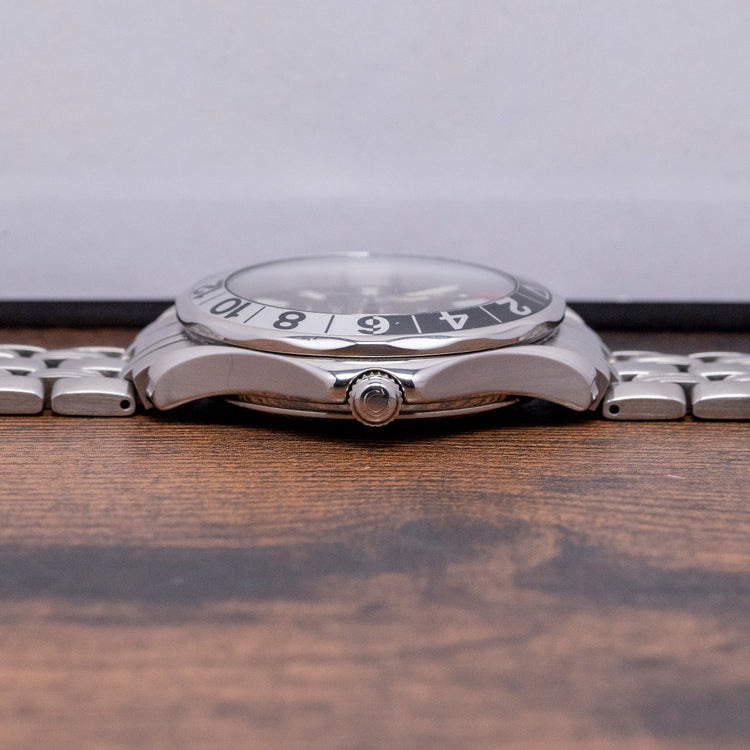
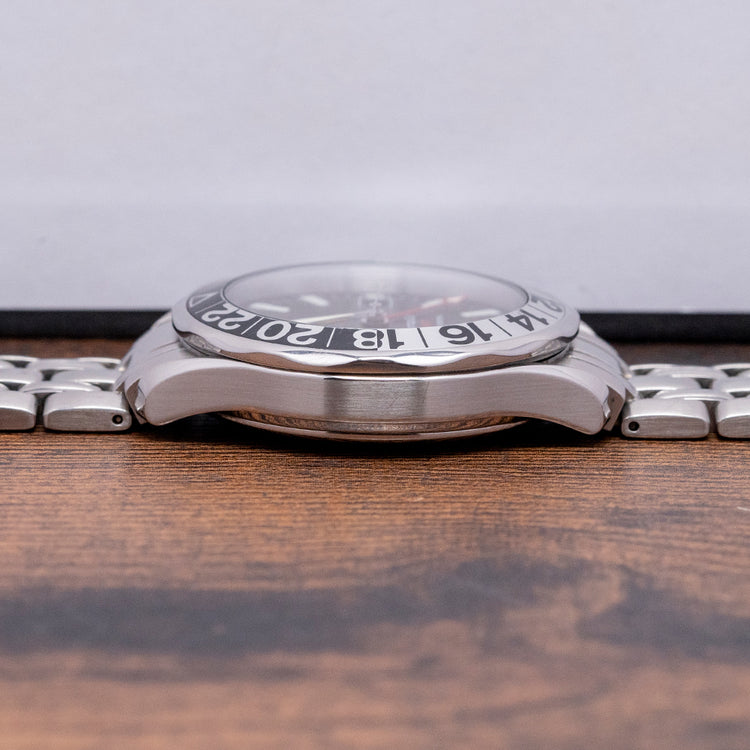
Here we have the charismatic 1999 Omega Seamaster GMT 2534.50, released in 1998, which celebrates the 50th Anniversary of the Seamaster, first released in 1958. Featuring a 41mm polished and brushed stainless steel case, curving over your wrist with the characteristic twisted lugs, and a lug-to-lug length of 47mm and a case thickness of 12mm, giving the watch an impressive wrist presence. On the right side is a signed screw-down crown protected by crown guards. The bidirectional bezel has scalloped sides for extra grip and a black and silver aluminium 24-hour insert with black and silver numerals and markings. The domed sapphire crystal sits above a black dial with a dynamic wavy pattern, an outer minute chapter ring has long and short indexes coated in lume marking the hours. At 3 o’clock, a colour-matched date window, black sword hands are lume-filled, complemented by red-tipped sweeping second-hand and a red arrow-tipped GMT hand, at 12 o’clock we have the Omega motif. At 6 o’clock ‘Seamaster’ ‘GMT’ in red and ‘Chronometer’ completes this dynamic traveller's companion. On the reverse a screw-down case back with engraved waves and a polished Hippocampus in the centre, a seahorse that represents Neptune the God of the sea, Pierre Borie conceived it after seeing a picture of Neptune riding a chariot pulled by seahorses, it is the reason why the seahorses are wearing a bridle, first seen on the Seamaster in 1958. Inside an automatic Omega Cal. 1128, 23 jewels, beating at 28,800 beats per hour, it features hand-winding, quick-set date, and hacking seconds for your convenience. It comes paired with its polished and brushed 20mm Omega stainless steel bracelet secured with a signed push-button-released concealed clasp; all links are provided. This watch is sold with its great set, including Omega box, swing tags and unsigned paperwork.
Points of Mention
More
Less
Personal Note
More
Less
Specification
More
Less
Movement : Automatic Omega Cal. 1128
Age : Circa. 1999
Year : 1999
Case Size : 41mm
Case Thickness : 12mm
Lug to Lug : 47mm
Lugs : 20mm
Condition : Pre-Owned
Box and Papers : Box & Papers
Case Material : Stainless Steel
Warranty : 12-Months NON-Waterproof Warranty
The wrist model's wrist size is 7inch
About Omega
More
Less
Description
Here we have the charismatic 1999 Omega Seamaster GMT 2534.50, released in 1998, which celebrates the 50th Anniversary of the Seamaster, first released in 1958. Featuring a 41mm polished and brushed stainless steel case, curving over your wrist with the characteristic twisted lugs, and a lug-to-lug length of 47mm and a case thickness of 12mm, giving the watch an impressive wrist presence. On the right side is a signed screw-down crown protected by crown guards. The bidirectional bezel has scalloped sides for extra grip and a black and silver aluminium 24-hour insert with black and silver numerals and markings. The domed sapphire crystal sits above a black dial with a dynamic wavy pattern, an outer minute chapter ring has long and short indexes coated in lume marking the hours. At 3 o’clock, a colour-matched date window, black sword hands are lume-filled, complemented by red-tipped sweeping second-hand and a red arrow-tipped GMT hand, at 12 o’clock we have the Omega motif. At 6 o’clock ‘Seamaster’ ‘GMT’ in red and ‘Chronometer’ completes this dynamic traveller's companion. On the reverse a screw-down case back with engraved waves and a polished Hippocampus in the centre, a seahorse that represents Neptune the God of the sea, Pierre Borie conceived it after seeing a picture of Neptune riding a chariot pulled by seahorses, it is the reason why the seahorses are wearing a bridle, first seen on the Seamaster in 1958. Inside an automatic Omega Cal. 1128, 23 jewels, beating at 28,800 beats per hour, it features hand-winding, quick-set date, and hacking seconds for your convenience. It comes paired with its polished and brushed 20mm Omega stainless steel bracelet secured with a signed push-button-released concealed clasp; all links are provided. This watch is sold with its great set, including Omega box, swing tags and unsigned paperwork.
Points of Mention
Personal Note
Specification
The Brand
Enquire or Book an Appointment
Would you like to discover further details about this watch, or perhaps arrange an appointment to view and try it on? Complete this form and a member of our team will get back to you shortly.
You May Also Like