

1984 Rolex Explorer 1 36mm Tritium 1016 on Bracelet
Read more...




More Information
Description
More
Less
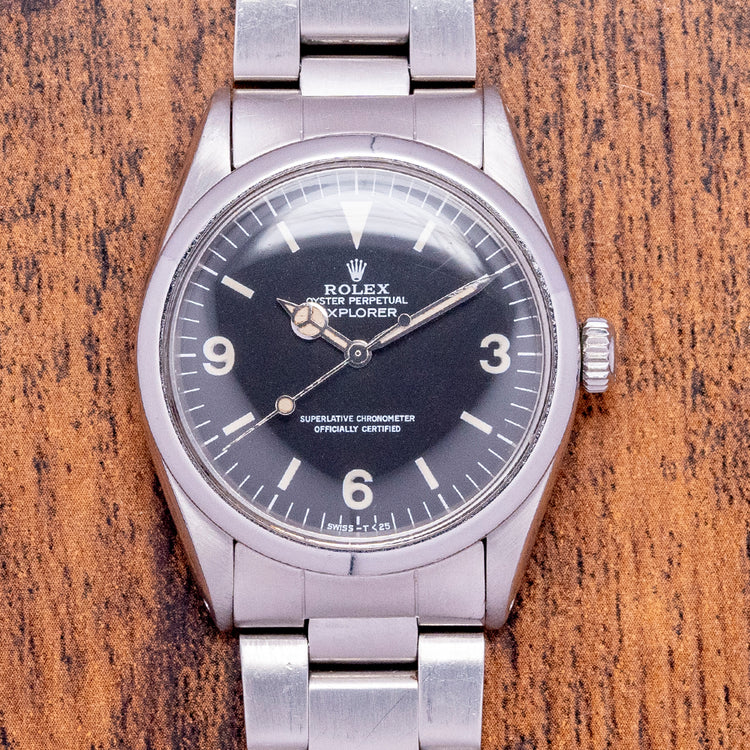
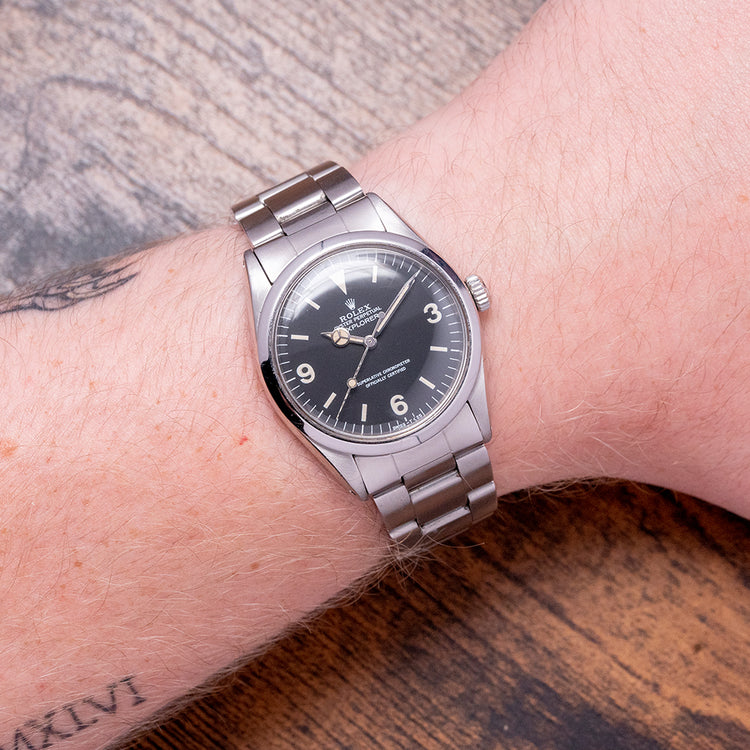
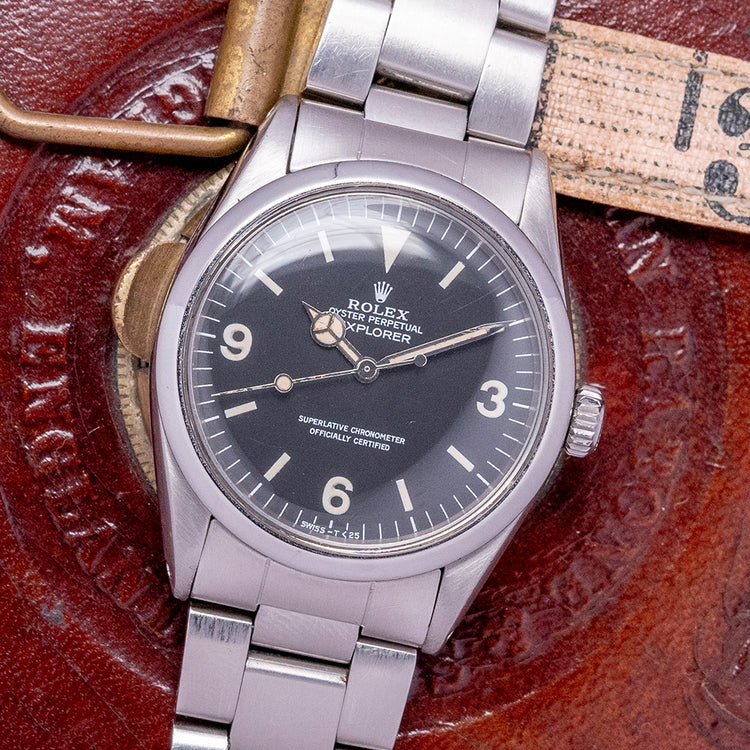
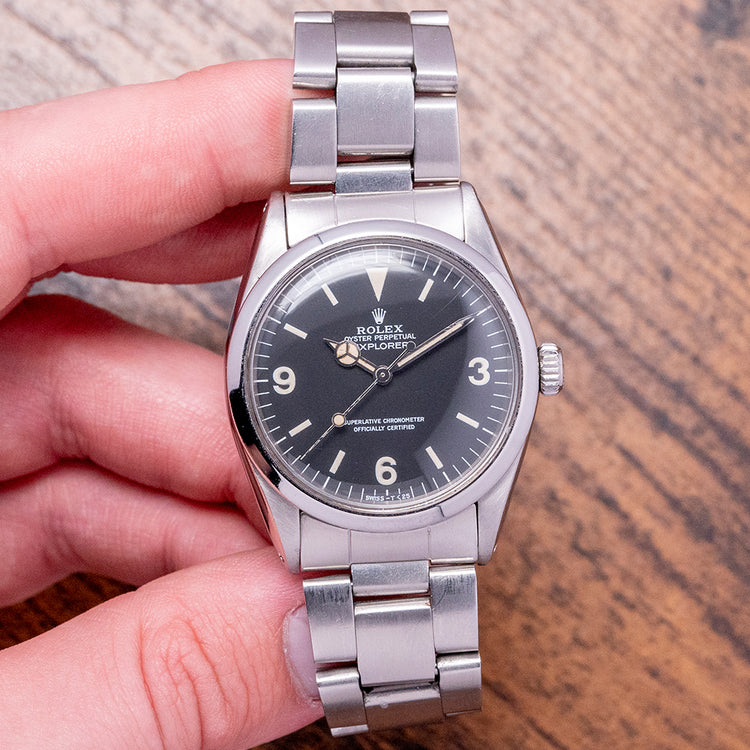
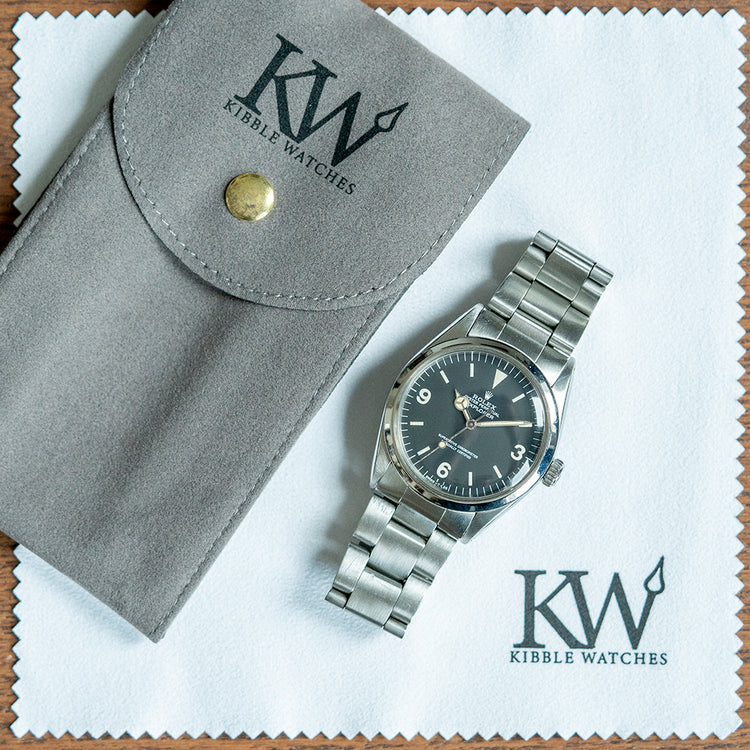
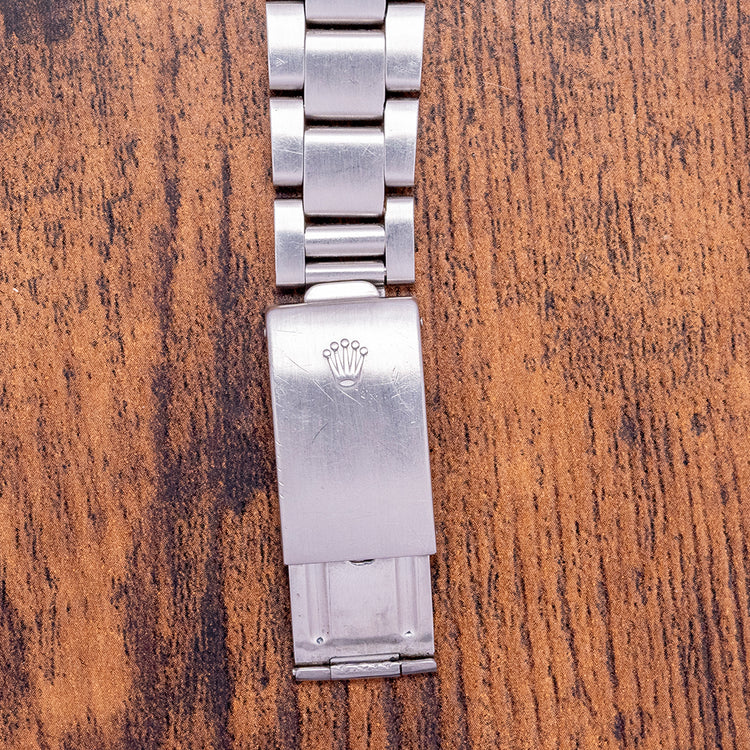
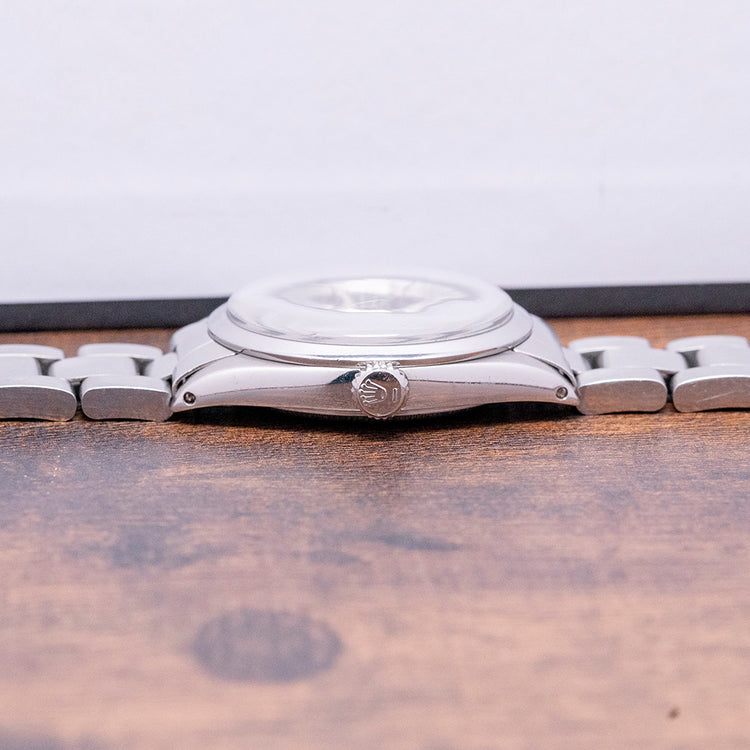
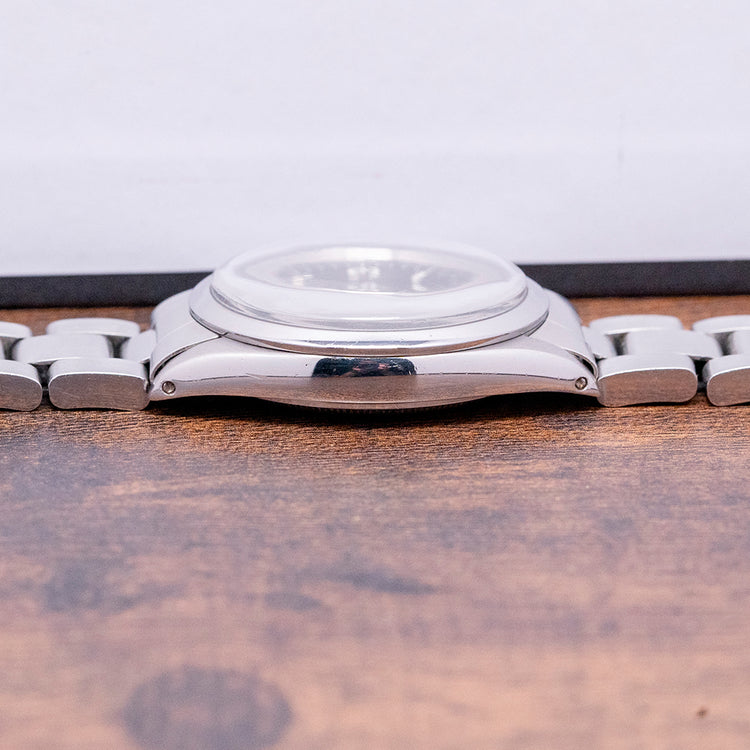
Here we have a 1984 Rolex Explorer Tritium 1016 on a Bracelet. The Rolex Explorer was first introduced in 1953, shortly after the first successful summit of Everest by Sir Edmund Hillary. The Rolex Oyster Perpetual Chronometers used by the expedition were the forerunner of the explorer, albeit without the name. Introduced in 1963, it remained in production until 1989, when the Ref 1016 was discontinued after 26 years of production. A 36mm stainless steel Oyster case has polished and brushed surfaces that transition perfectly towards tapering drilled lugs, and a lug-to-lug length of 43.5mm and a case thickness of 12.5mm ensure a comfortable fit on your wrist. On the right a large screw-down crown. Its polished bezel holds a domed crystal above a matte black dial and has Arabic numerals at 12, 3, 6, and 9 with baton indexes between, all of which are coated in Tritium, and Mercedes’s hands are Tritium filled and complemented by a lollipop counterweighted sweeping second hand. At 12 o’clock, we have the Rolex Coronet Oyster Perpetual Explorer and Superlative Chronometer. Officially Certified at 6 o’clock, Swiss- T<25 on the bottom edge completes this striking timepiece. On the reverse, a coin-edged screw-in case back, inside is an automatic Rolex Cal. 1570, 26 jewels, 19,800 beats per hour, this COSC-certified movement with hacking seconds was introduced in 1972. The watch comes paired with its original 1984, reference 78360, 20mm Rolex stainless steel Oyster bracelet with a signed folding clasp and will fit up to a 7-inch wrist.
Points of Mention
More
Less
Personal Note
More
Less
Specification
More
Less
Movement : Automatic Rolex Cal. 1570
Age : Circa. 1984
Year : 1984
Case Size : 36mm
Case Thickness : 12.5mm
Lug to Lug : 43.5mm
Lugs : 20mm
Condition : Pre-Owned
Box and Papers : None
Case Material : Stainless Steel
Warranty : 12-Months NON-Waterproof Warranty
The wrist model's wrist size is 7inch
About Rolex
More
Less
Description
Here we have a 1984 Rolex Explorer Tritium 1016 on a Bracelet. The Rolex Explorer was first introduced in 1953, shortly after the first successful summit of Everest by Sir Edmund Hillary. The Rolex Oyster Perpetual Chronometers used by the expedition were the forerunner of the explorer, albeit without the name. Introduced in 1963, it remained in production until 1989, when the Ref 1016 was discontinued after 26 years of production. A 36mm stainless steel Oyster case has polished and brushed surfaces that transition perfectly towards tapering drilled lugs, and a lug-to-lug length of 43.5mm and a case thickness of 12.5mm ensure a comfortable fit on your wrist. On the right a large screw-down crown. Its polished bezel holds a domed crystal above a matte black dial and has Arabic numerals at 12, 3, 6, and 9 with baton indexes between, all of which are coated in Tritium, and Mercedes’s hands are Tritium filled and complemented by a lollipop counterweighted sweeping second hand. At 12 o’clock, we have the Rolex Coronet Oyster Perpetual Explorer and Superlative Chronometer. Officially Certified at 6 o’clock, Swiss- T<25 on the bottom edge completes this striking timepiece. On the reverse, a coin-edged screw-in case back, inside is an automatic Rolex Cal. 1570, 26 jewels, 19,800 beats per hour, this COSC-certified movement with hacking seconds was introduced in 1972. The watch comes paired with its original 1984, reference 78360, 20mm Rolex stainless steel Oyster bracelet with a signed folding clasp and will fit up to a 7-inch wrist.
Points of Mention
Personal Note
Specification
The Brand
Enquire or Book an Appointment
Would you like to discover further details about this watch, or perhaps arrange an appointment to view and try it on? Complete this form and a member of our team will get back to you shortly.
You May Also Like