

1979 Omega Speedmaster Automatic 'Mark 4.5' 40mm 176.0015
Read more...



More Information
Description
More
Less
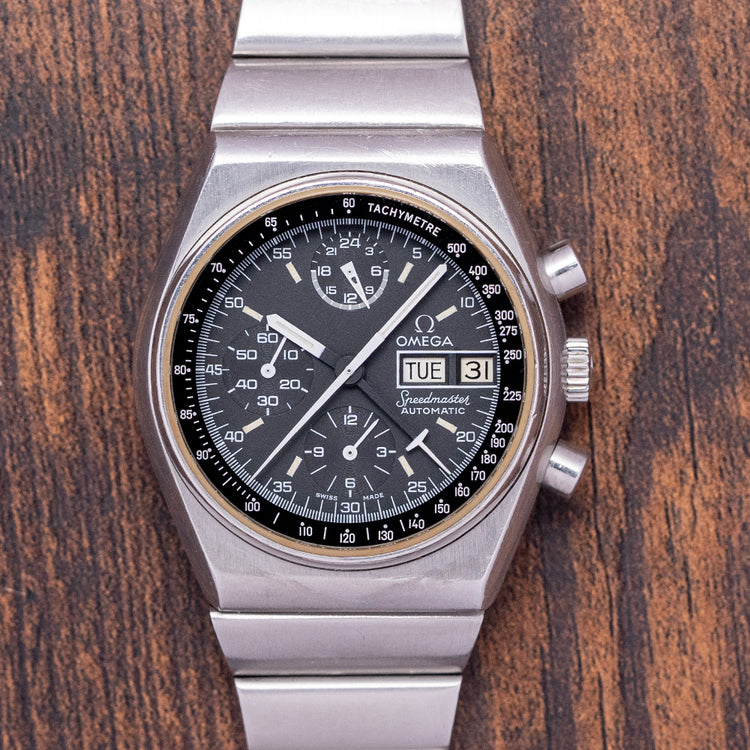
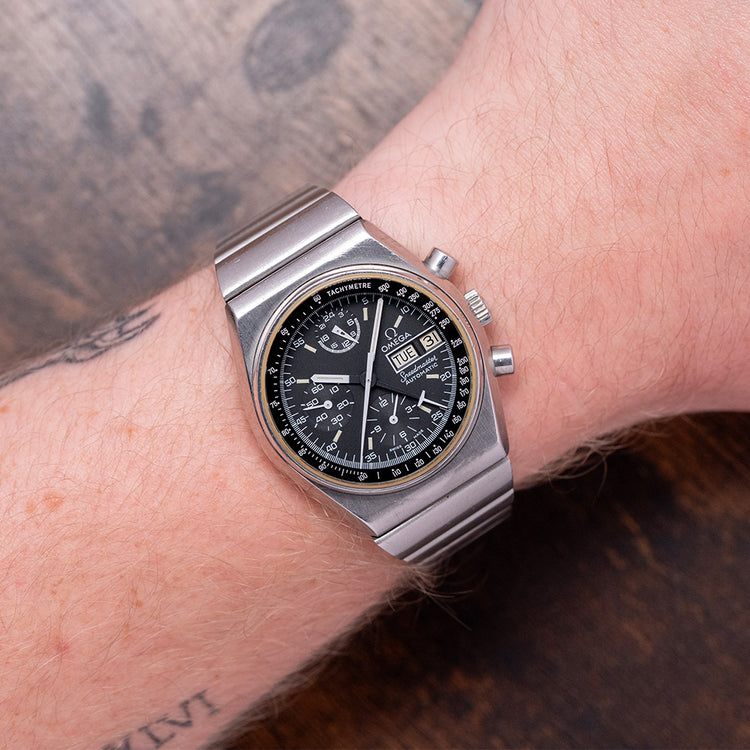
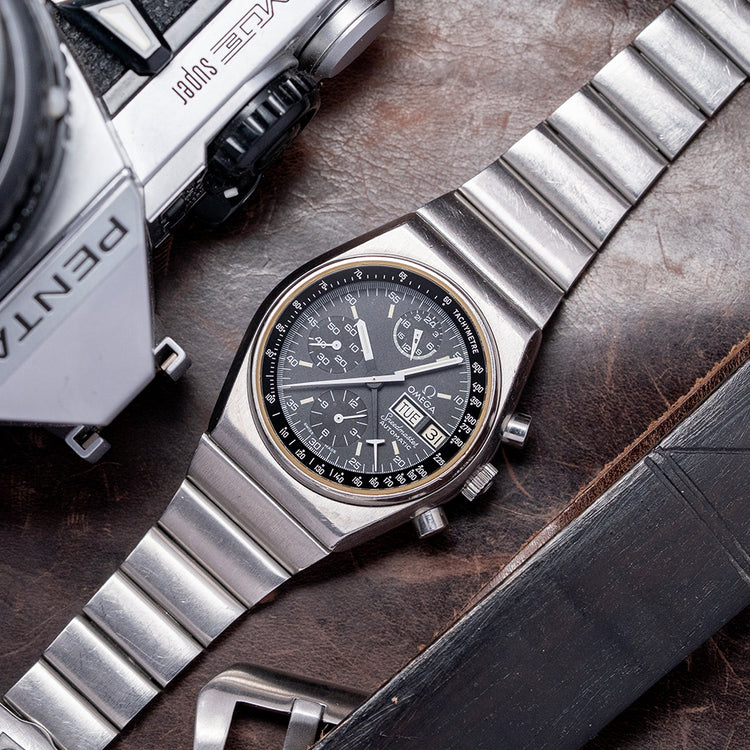
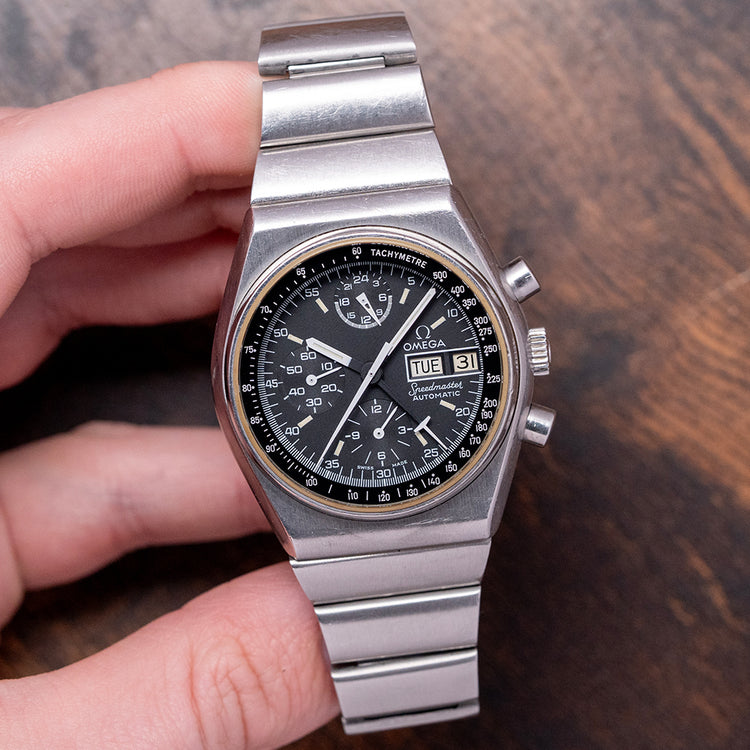
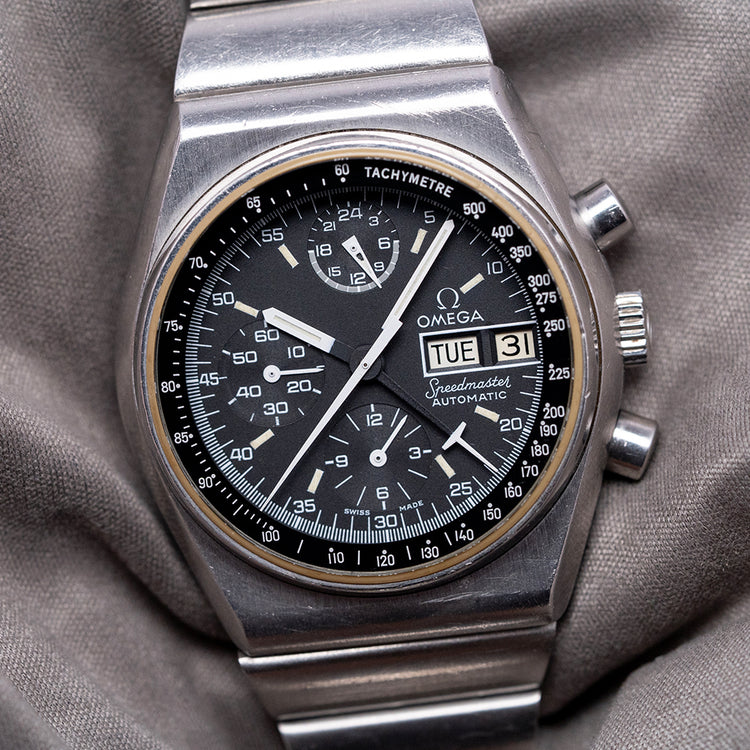
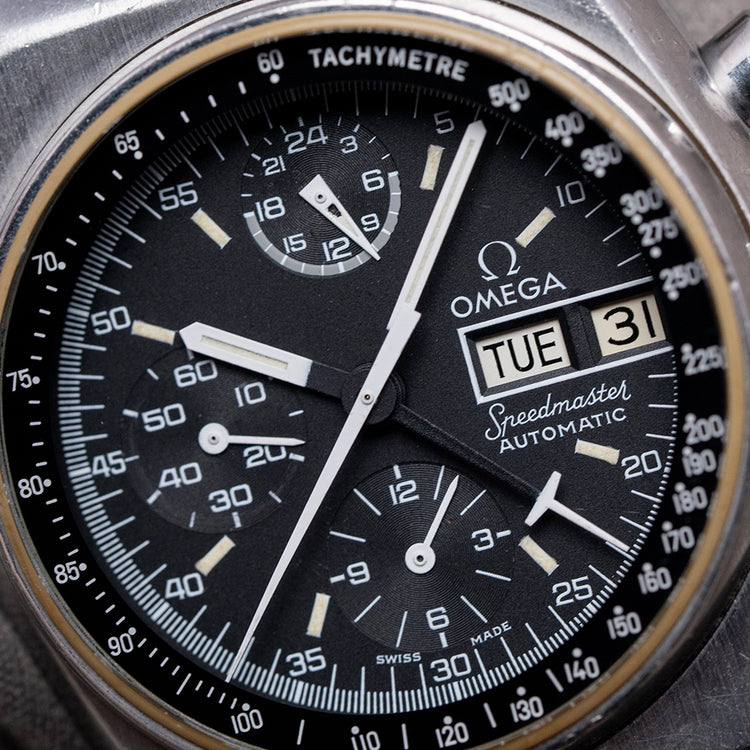
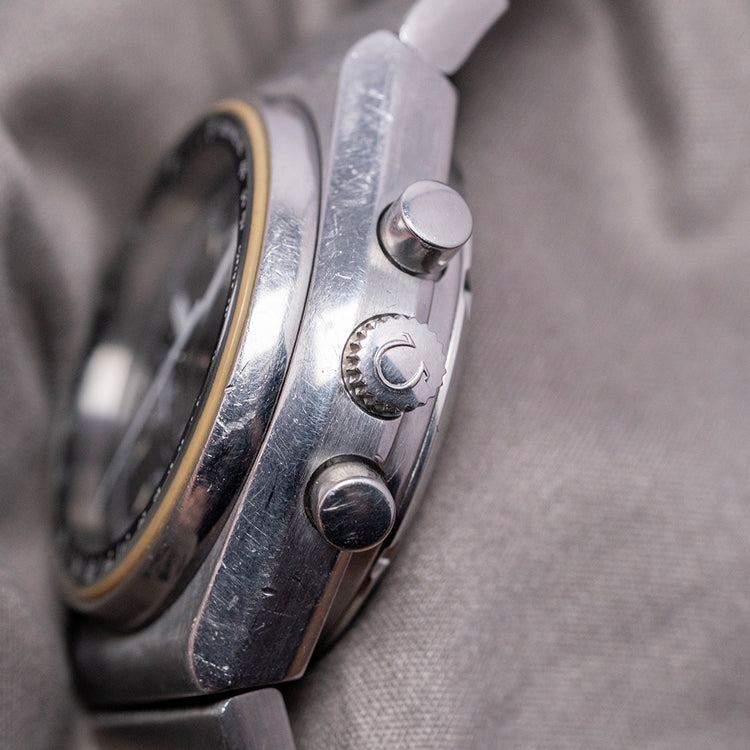
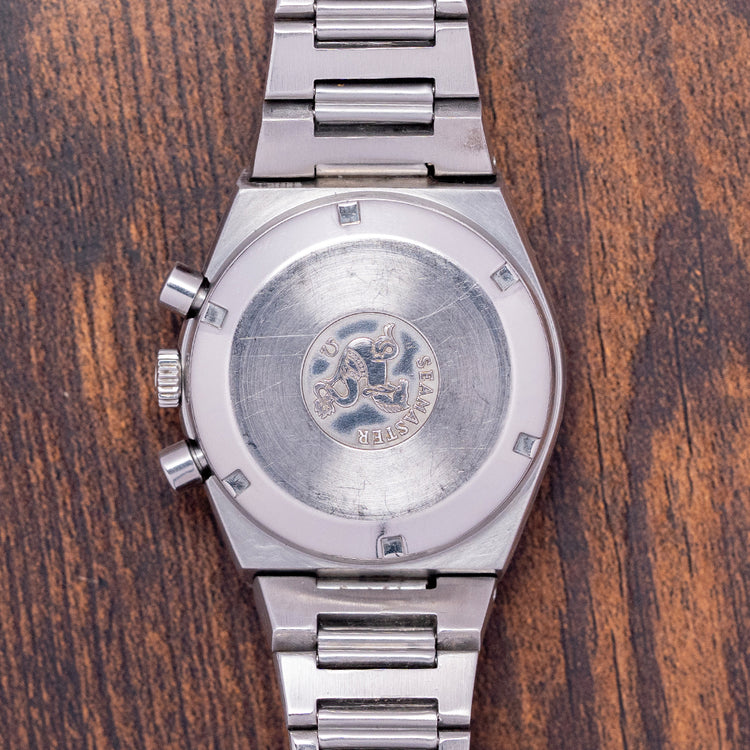
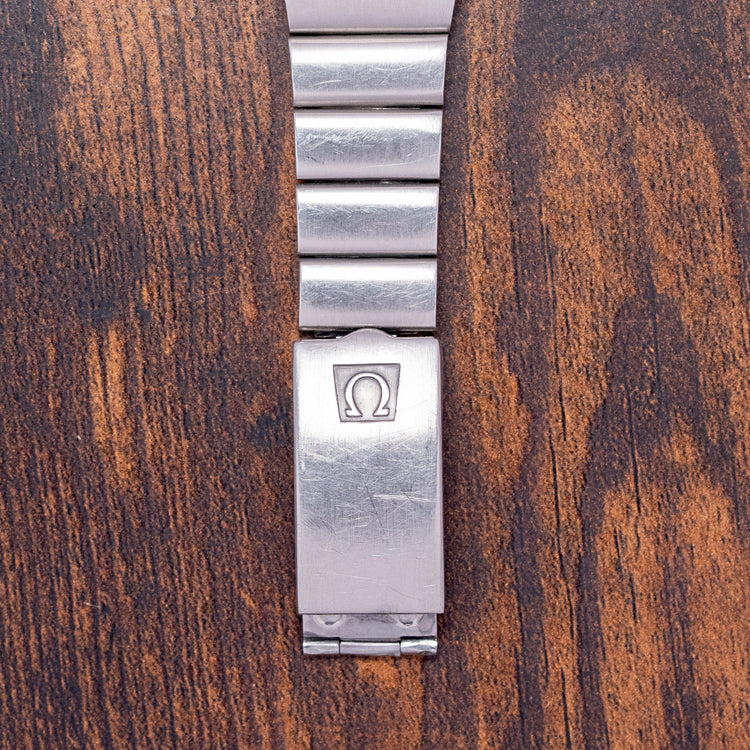
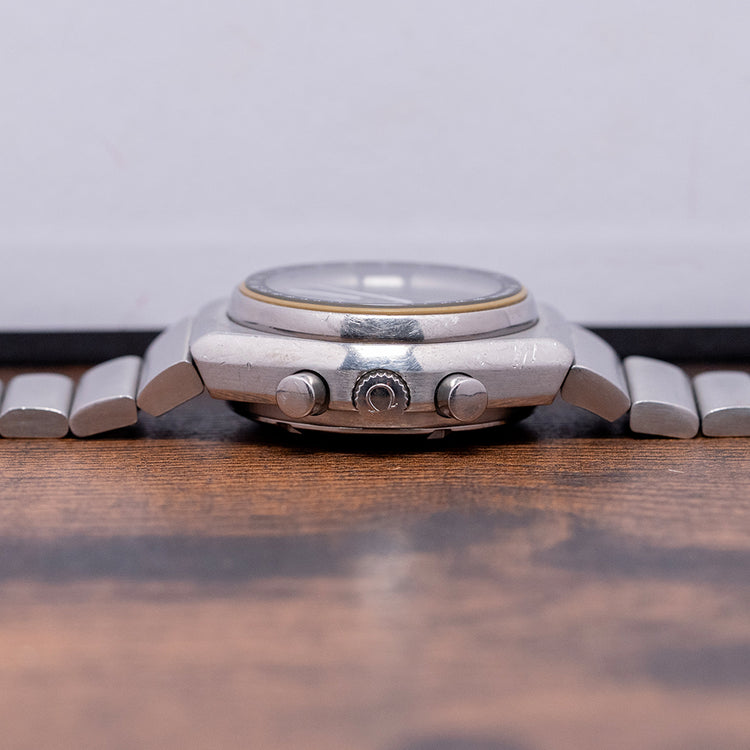
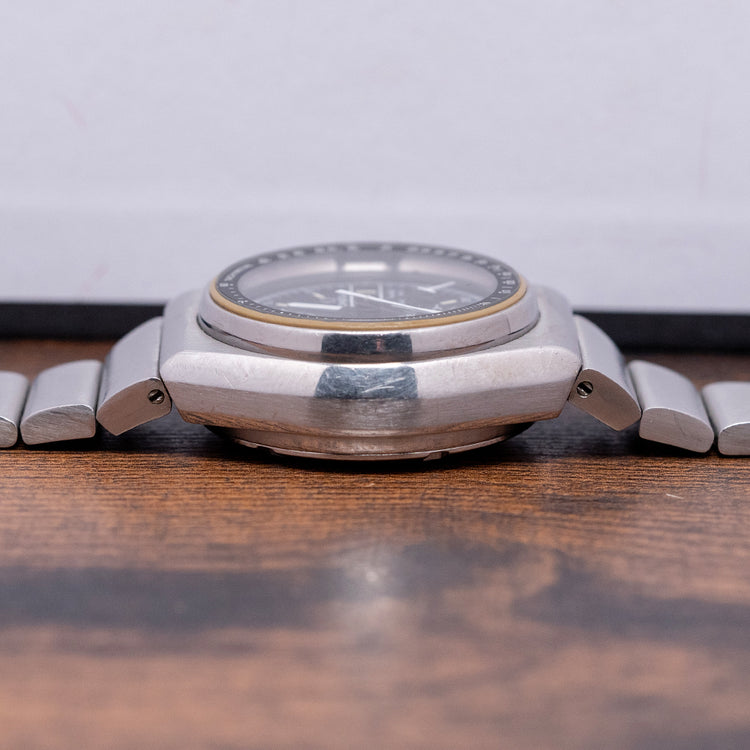
Here we have a 1979 Omega Speedmaster Automatic 'Mark 4.5' 176.0015, the Mark series started in 1969 with the Mark II and ended with the Mark V in 1984 this ‘Mark 4.5’ was released in 1975, with its production running until 1986, so named by collectors as this is technically not part of the series and has no official ‘Mark’ number on the dial but it does represent a mix of the Speedmaster ‘Mark IV’ case and ‘Mark V’ movement. Featuring a curvaceous 40mm tonneau-shaped satin-brushed stainless steel case that sits comfortably on your wrist with flat-ended lugs and an integrated bracelet. Its polished, chamfered edge flows across the brushed flanks, leading to a lug-to-lug length of 43mm and a case thickness of 16mm, giving the watch an impressive wrist presence. On the right side, we have the short chronograph pushers recessed into the case and a signed, deeply knurled crown at the centre. A thin, polished bezel holds a flat mineral glass crystal above a dynamic matte black dial. An inner Tachymeter bezel is printed on the crystal and sits above a minute track, precisely executed with Tritium batons marking the hours and the 60 minutes printed underneath. At noon, we have a Day/Night 24-hour GMT register; at 3 o’clock, a framed German day/date window; at 6 o’clock, a 12-hour register and finally, a running seconds. At 3 o’clock, printed ‘Omega Speedmaster Automatic’, featuring white hands; a 60-minute hand underneath the chronograph hand, both the hour and minute hands are filled with Tritium. On the reverse, a screw-down solid case back with the Omega Hippocampus embossed in the centre, a seahorse that represents Neptune, the God of the sea; it was conceived by Pierre Borie after seeing a picture of Neptune riding a chariot pulled by seahorses; it is the reason why the seahorses are wearing a bridle. Inside the legendary Lemania Calibre 5100, automatic Omega Cal. 1045, 17 jewels, beating at 28,800 beats per hour. A robust movement made with Delrin plates, a type of plastic, to protect and absorb shocks. It comes paired with its original chunky 25mm integrated satin-brushed stainless steel bracelet secured by a signed folding clasp, which will fit up to a 7.1-inch wrist.
Points of Mention
More
Less
Personal Note
More
Less
Specification
More
Less
Movement : Automatic Omega Cal. 1045
Age : Circa. 1979
Year : 1979
Case Size : 40mm
Case Thickness : 16mm
Lug to Lug : 43mm
Lugs : 25mm (Integrated)
Condition : Pre-Owned
Box and Papers : None
Case Material : Stainless Steel
Warranty : 12-Months NON-Waterproof Warranty
The wrist model's wrist size is 7inch
About Omega
More
Less
Description
Here we have a 1979 Omega Speedmaster Automatic 'Mark 4.5' 176.0015, the Mark series started in 1969 with the Mark II and ended with the Mark V in 1984 this ‘Mark 4.5’ was released in 1975, with its production running until 1986, so named by collectors as this is technically not part of the series and has no official ‘Mark’ number on the dial but it does represent a mix of the Speedmaster ‘Mark IV’ case and ‘Mark V’ movement. Featuring a curvaceous 40mm tonneau-shaped satin-brushed stainless steel case that sits comfortably on your wrist with flat-ended lugs and an integrated bracelet. Its polished, chamfered edge flows across the brushed flanks, leading to a lug-to-lug length of 43mm and a case thickness of 16mm, giving the watch an impressive wrist presence. On the right side, we have the short chronograph pushers recessed into the case and a signed, deeply knurled crown at the centre. A thin, polished bezel holds a flat mineral glass crystal above a dynamic matte black dial. An inner Tachymeter bezel is printed on the crystal and sits above a minute track, precisely executed with Tritium batons marking the hours and the 60 minutes printed underneath. At noon, we have a Day/Night 24-hour GMT register; at 3 o’clock, a framed German day/date window; at 6 o’clock, a 12-hour register and finally, a running seconds. At 3 o’clock, printed ‘Omega Speedmaster Automatic’, featuring white hands; a 60-minute hand underneath the chronograph hand, both the hour and minute hands are filled with Tritium. On the reverse, a screw-down solid case back with the Omega Hippocampus embossed in the centre, a seahorse that represents Neptune, the God of the sea; it was conceived by Pierre Borie after seeing a picture of Neptune riding a chariot pulled by seahorses; it is the reason why the seahorses are wearing a bridle. Inside the legendary Lemania Calibre 5100, automatic Omega Cal. 1045, 17 jewels, beating at 28,800 beats per hour. A robust movement made with Delrin plates, a type of plastic, to protect and absorb shocks. It comes paired with its original chunky 25mm integrated satin-brushed stainless steel bracelet secured by a signed folding clasp, which will fit up to a 7.1-inch wrist.
Points of Mention
Personal Note
Specification
The Brand
Enquire or Book an Appointment
Would you like to discover further details about this watch, or perhaps arrange an appointment to view and try it on? Complete this form and a member of our team will get back to you shortly.
You May Also Like