

1974 Seiko SpeedTimer "Kakume" Auto Chronograph 6138-0030
Read more...



More Information
Description
More
Less
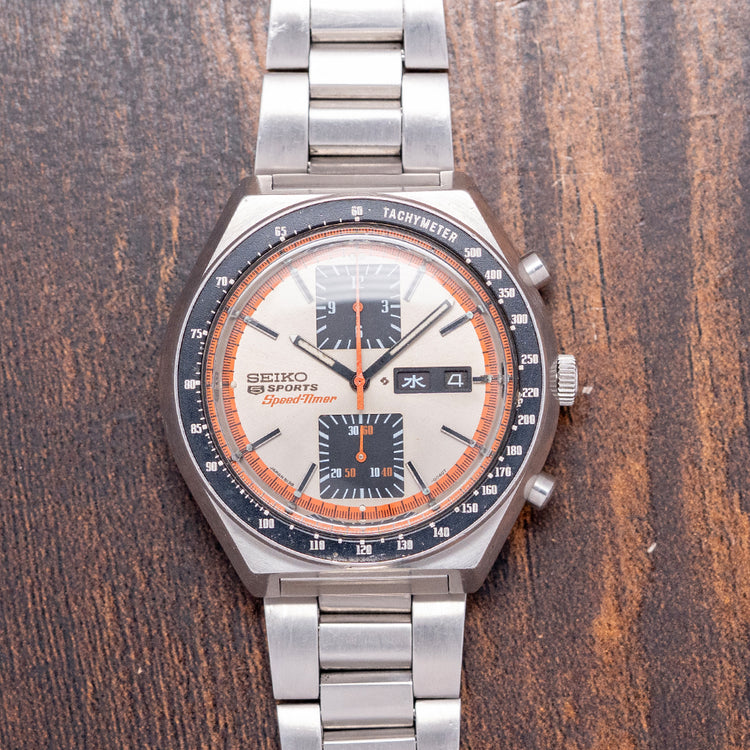
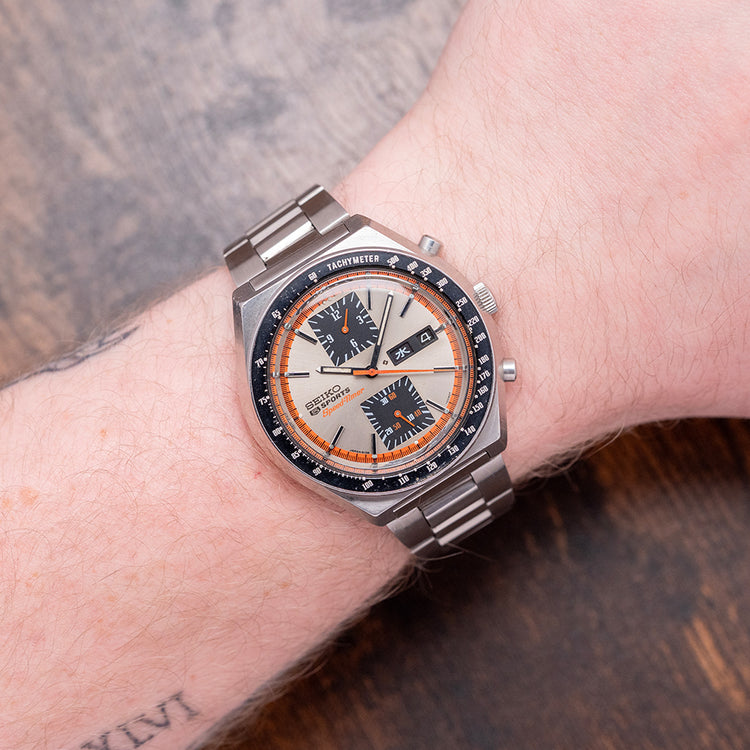
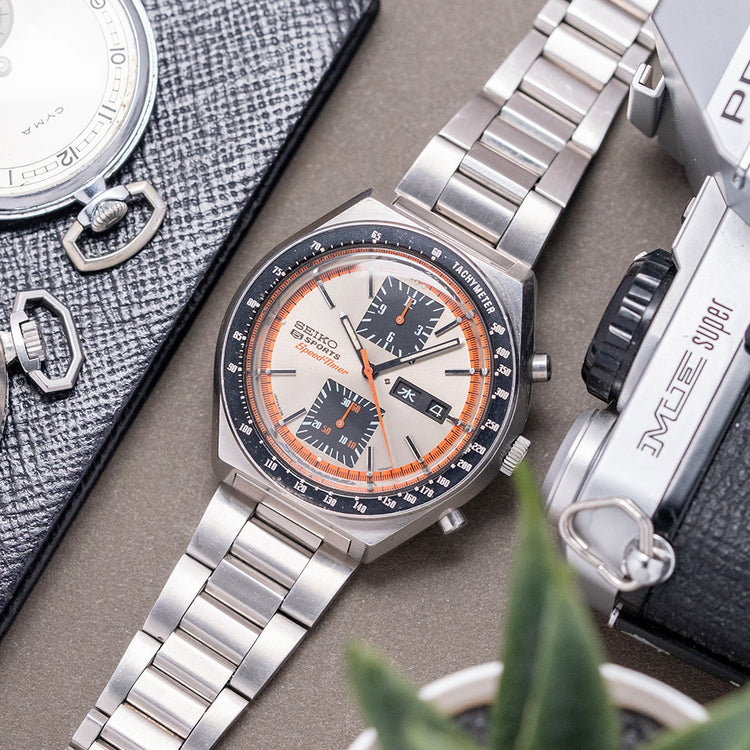
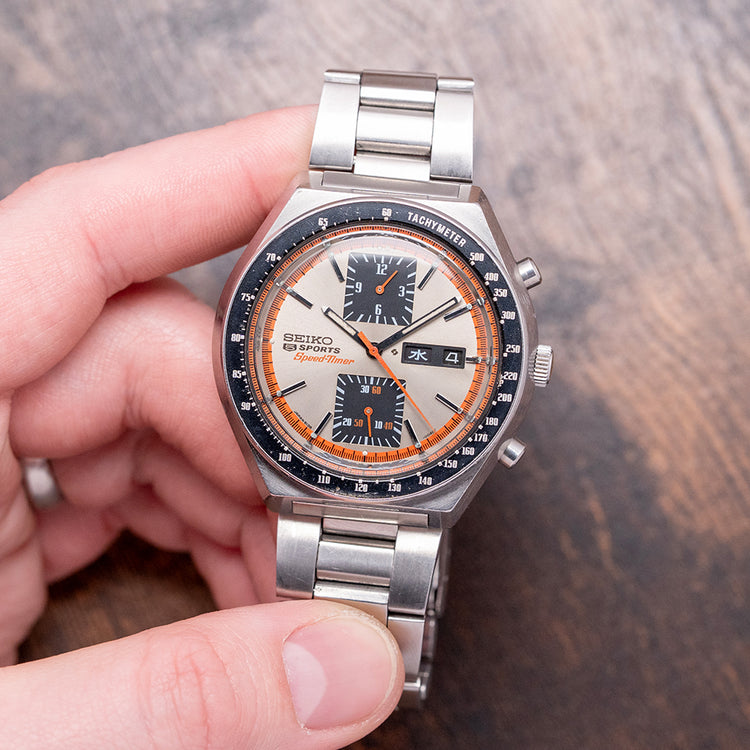
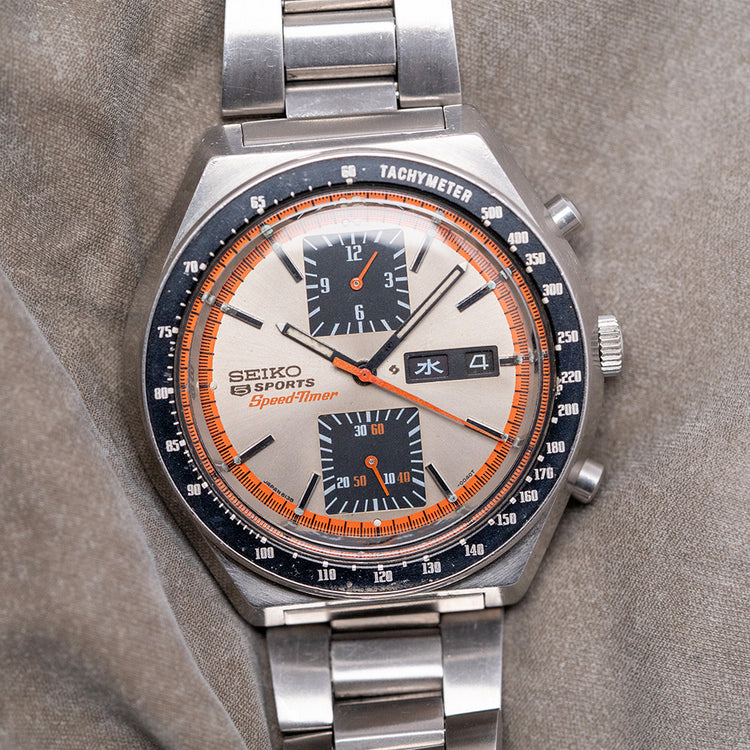
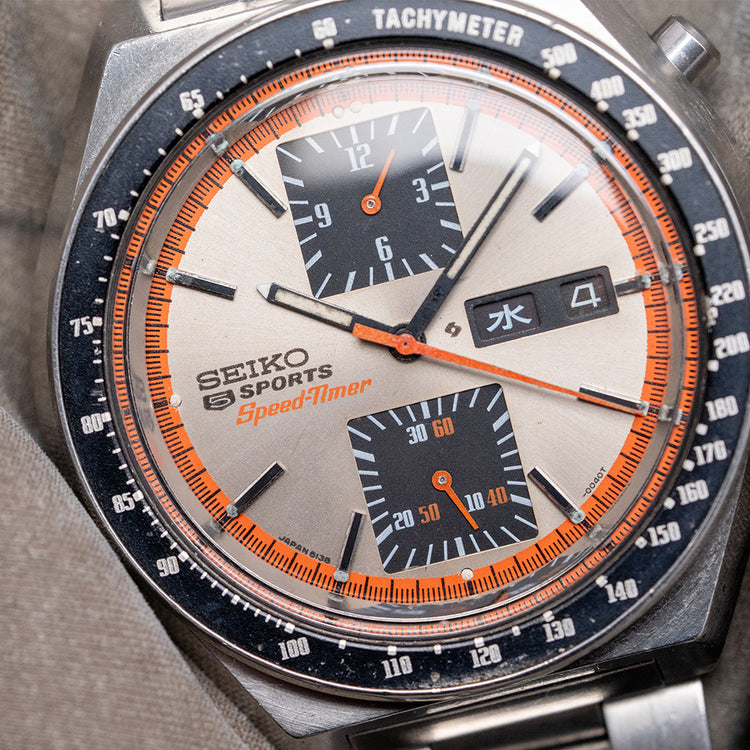
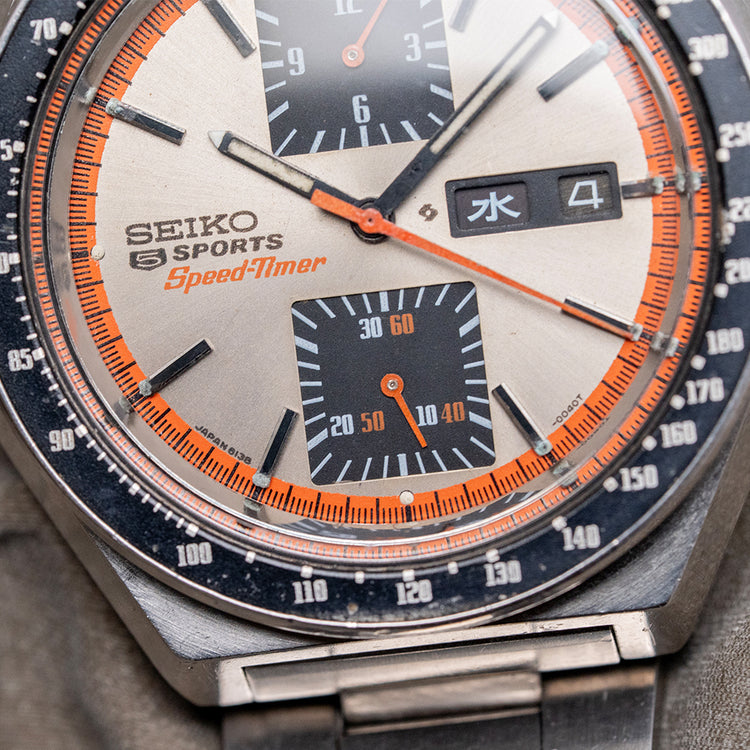
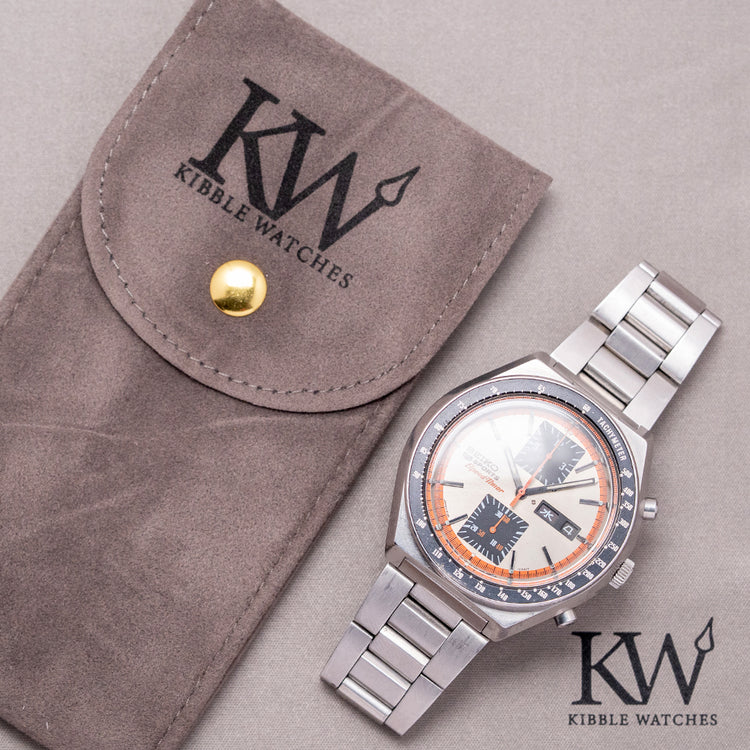
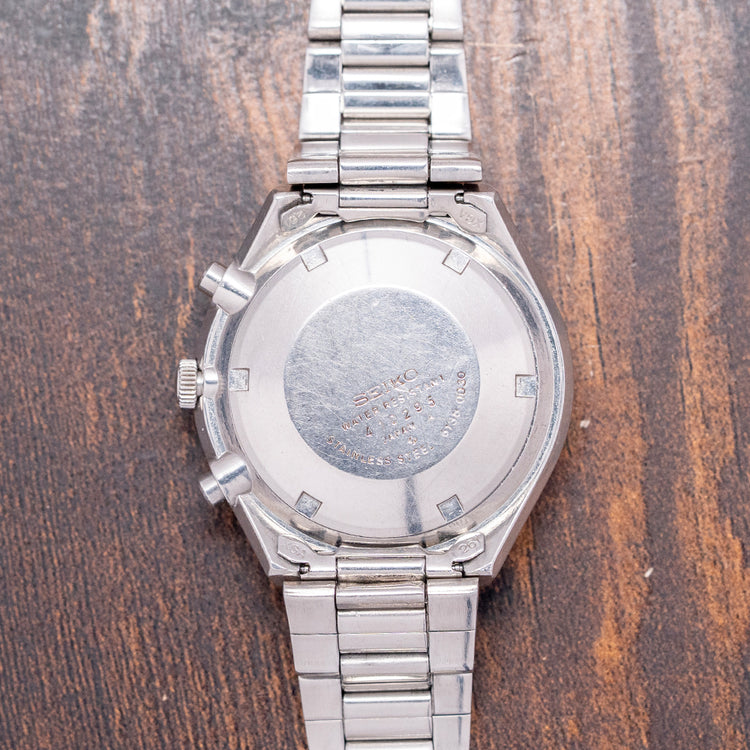
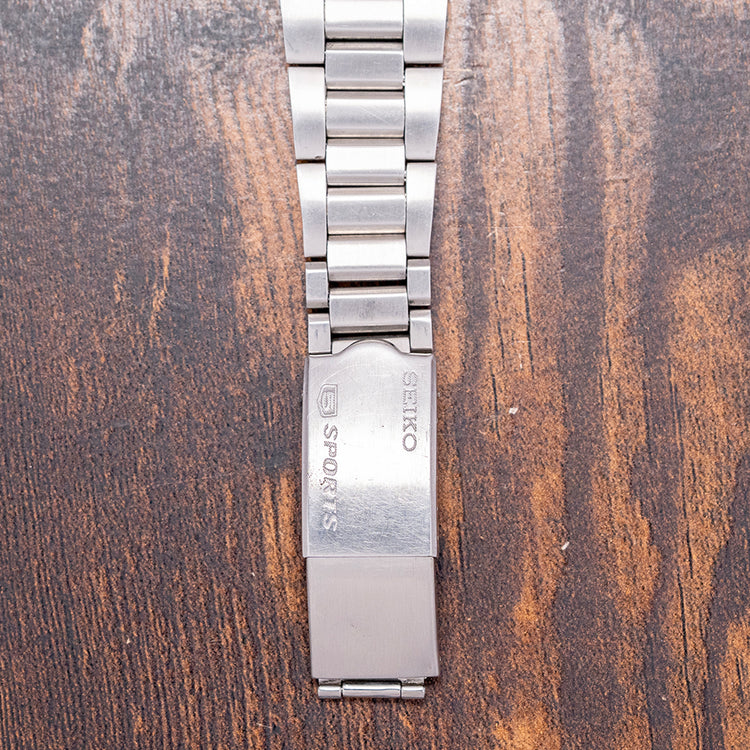
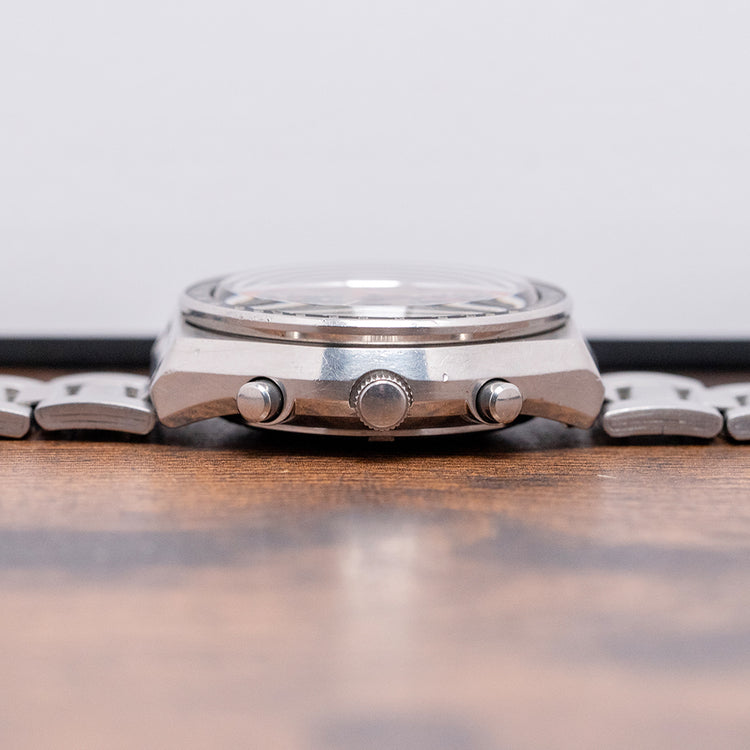
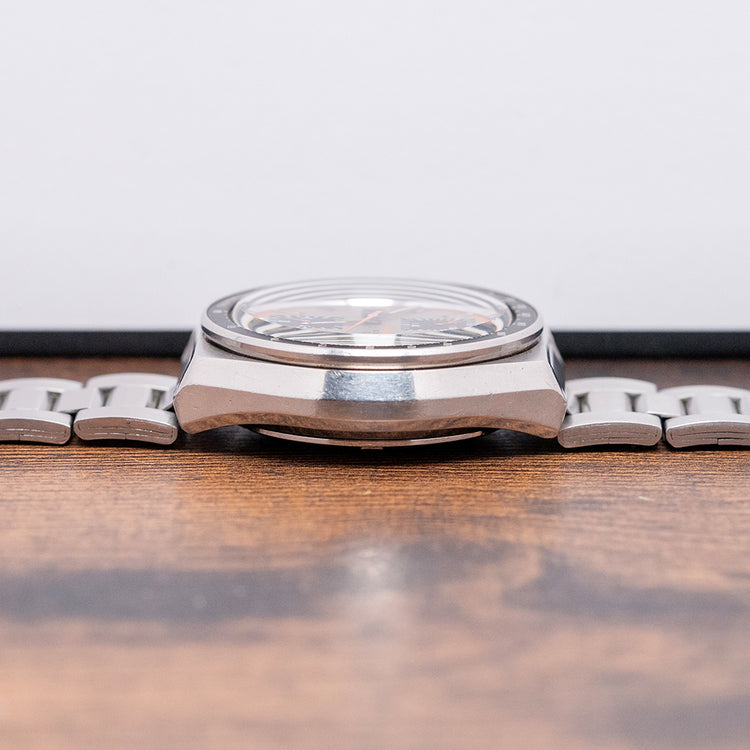
Here we have a classic 1974 Seiko SpeedTimer "Kakume" Automatic Chronograph 6138-0030, "Kakume" is Japanese for ‘Square Eyes' due to its distinctive sub dials. In May 1969, Seiko introduced the 6139, one of the world's first automatic chronographs, alongside the Zenith El Primero, which launched that year. The early 6138 “5 Sports Speedtimer” watches were made for the (JDM) Japanese domestic market only. Featuring a 43mm tonneau-shaped stainless steel case that comfortably sits on your wrist, with flat-ended lugs. Its chamfered edge flows across the case towards a lug-to-lug length of 45mm and a case thickness of 14.5mm, giving the watch an impressive wrist presence. On the right, we have the chronograph pushers, and in the centre, a coin-edged crown. The fixed stainless steel bezel holds a black insert featuring a Tachymeter scale. The domed Hardlex crystal sits above a sunburst blue "Kakume" dial. An orange outer minute track is precisely executed, surrounding the applied steel baton indexes that mark the hours. At 12 o’clock, a black square 12-hour sub dial with an orange hand; at 3 o’clock, a framed Kanji/ English Day/Date window; at 6 o’clock, a black square 30-minute sub dial with an orange numbered running seconds. Slender baton hands are complemented by a tapered orange chronograph hand. The Seiko 5 Sports motif and orange ‘SpeedTimer’ complete this dynamic sports watch. On the reverse, a solid screw-down case back is engraved with the watch details, inside an automatic Seiko Cal. 6138, 21 jewels, beating at 21,600 beats per hour. This vertical bicompax column-wheel movement with vertical clutch was first released in 1969. Based on the Seiko 6139 movement, it features an added chronograph hand, quick-set day/date, and hand-winding for your convenience. It comes paired with its 18mm Seiko stainless steel bracelet, secured by a signed folding clasp, which will fit up to a 7-inch wrist, with a clasp extender included.
Points of Mention
More
Less
Personal Note
More
Less
Specification
More
Less
Movement : Automatic Seiko Cal. 6138
Age : Circa. January 1974
Year : 1974
Case Size : 43mm
Case Thickness : 14.5mm
Lug to Lug : 45mm
Lugs : 18mm
Condition : Pre-Owned
Box and Papers : None
Case Material : Stainless Steel
Warranty : 12-Months NON-Waterproof Warranty
The wrist model's wrist size is 7inch
About Seiko
More
Less
Description
Here we have a classic 1974 Seiko SpeedTimer "Kakume" Automatic Chronograph 6138-0030, "Kakume" is Japanese for ‘Square Eyes' due to its distinctive sub dials. In May 1969, Seiko introduced the 6139, one of the world's first automatic chronographs, alongside the Zenith El Primero, which launched that year. The early 6138 “5 Sports Speedtimer” watches were made for the (JDM) Japanese domestic market only. Featuring a 43mm tonneau-shaped stainless steel case that comfortably sits on your wrist, with flat-ended lugs. Its chamfered edge flows across the case towards a lug-to-lug length of 45mm and a case thickness of 14.5mm, giving the watch an impressive wrist presence. On the right, we have the chronograph pushers, and in the centre, a coin-edged crown. The fixed stainless steel bezel holds a black insert featuring a Tachymeter scale. The domed Hardlex crystal sits above a sunburst blue "Kakume" dial. An orange outer minute track is precisely executed, surrounding the applied steel baton indexes that mark the hours. At 12 o’clock, a black square 12-hour sub dial with an orange hand; at 3 o’clock, a framed Kanji/ English Day/Date window; at 6 o’clock, a black square 30-minute sub dial with an orange numbered running seconds. Slender baton hands are complemented by a tapered orange chronograph hand. The Seiko 5 Sports motif and orange ‘SpeedTimer’ complete this dynamic sports watch. On the reverse, a solid screw-down case back is engraved with the watch details, inside an automatic Seiko Cal. 6138, 21 jewels, beating at 21,600 beats per hour. This vertical bicompax column-wheel movement with vertical clutch was first released in 1969. Based on the Seiko 6139 movement, it features an added chronograph hand, quick-set day/date, and hand-winding for your convenience. It comes paired with its 18mm Seiko stainless steel bracelet, secured by a signed folding clasp, which will fit up to a 7-inch wrist, with a clasp extender included.
Points of Mention
Personal Note
Specification
The Brand
Enquire or Book an Appointment
Would you like to discover further details about this watch, or perhaps arrange an appointment to view and try it on? Complete this form and a member of our team will get back to you shortly.
You May Also Like