

1973 Omega Geneve Automatic Blue Dial 35mm 166.0124
Read more...



More Information
Description
More
Less
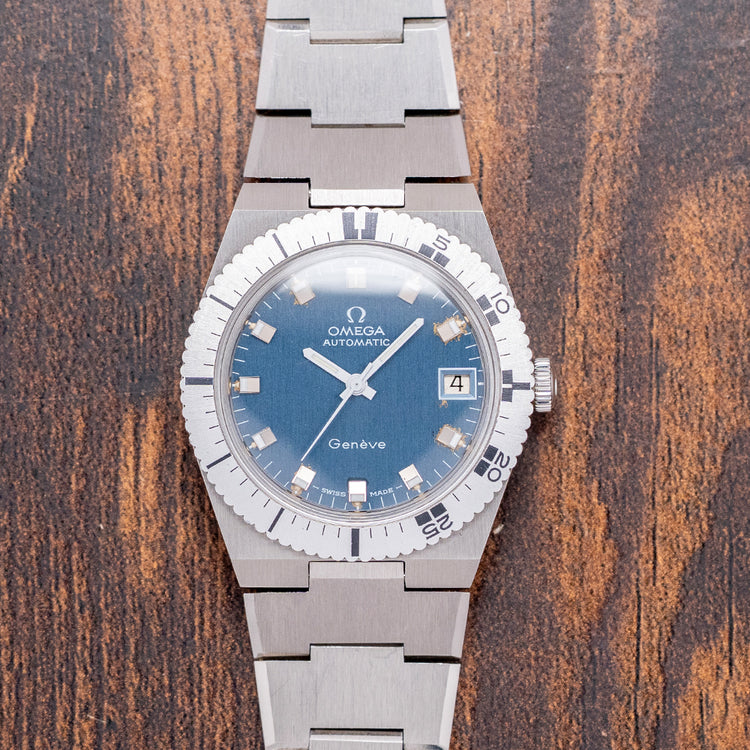
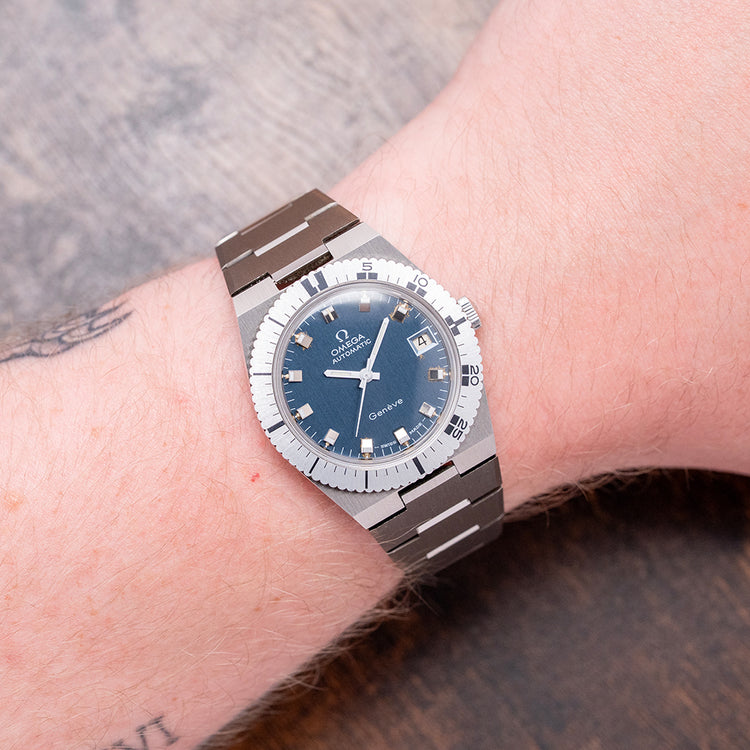
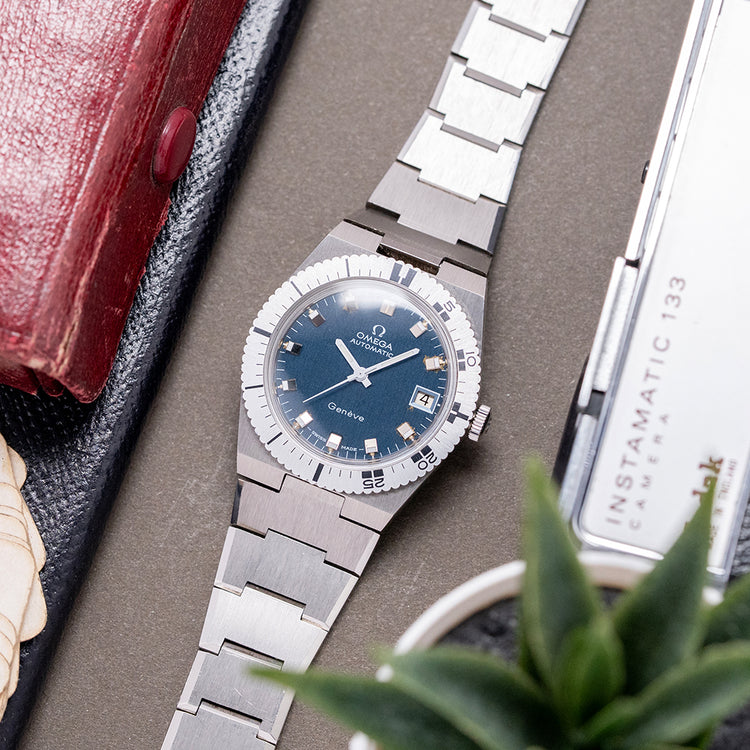
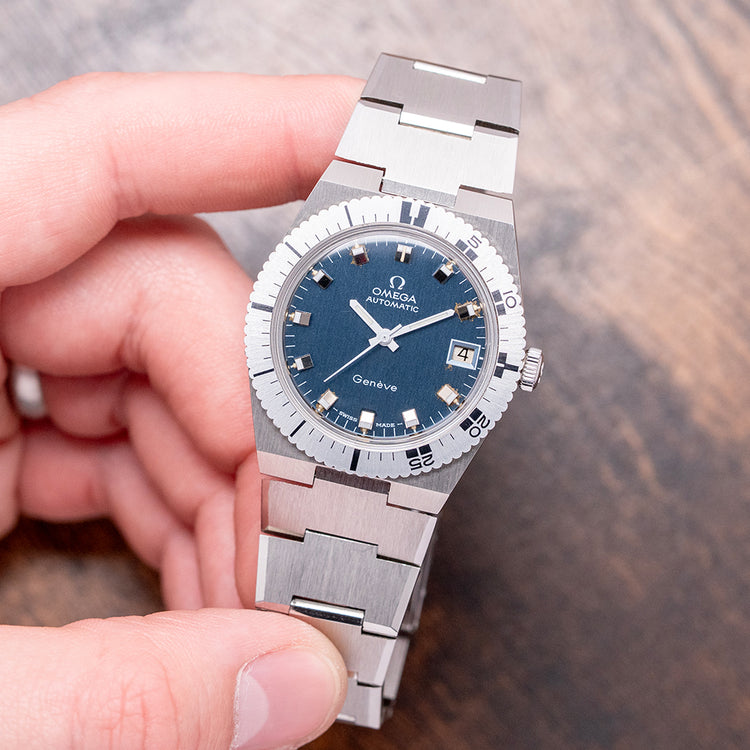
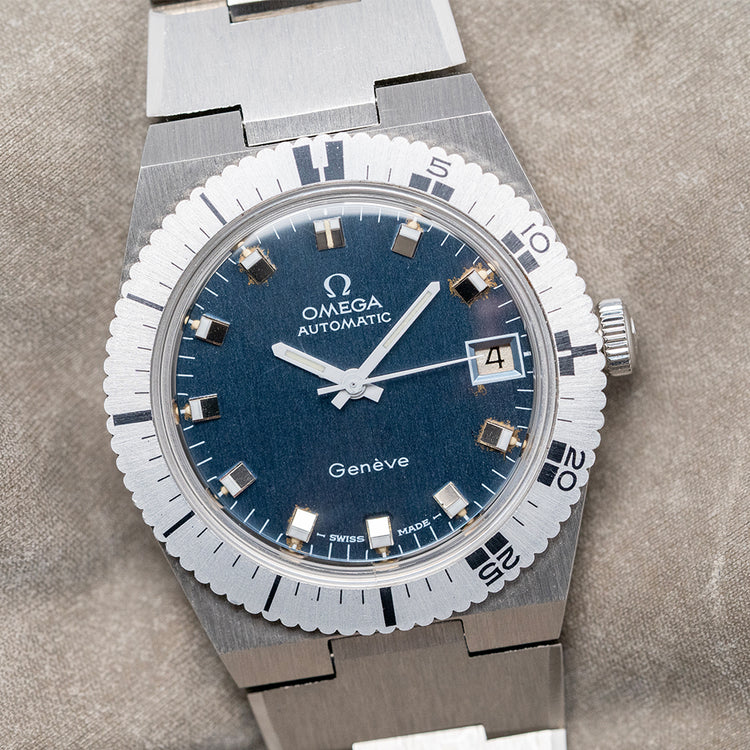
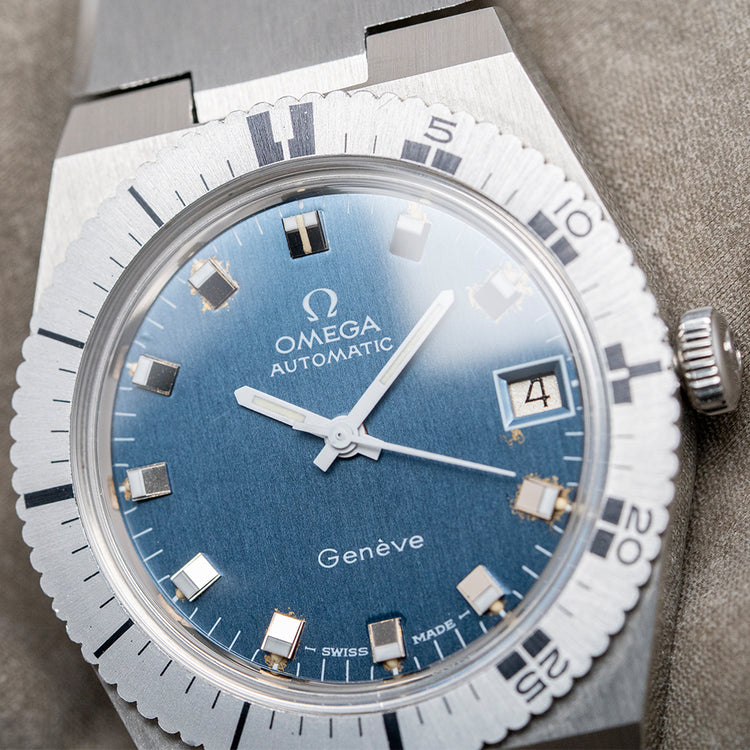
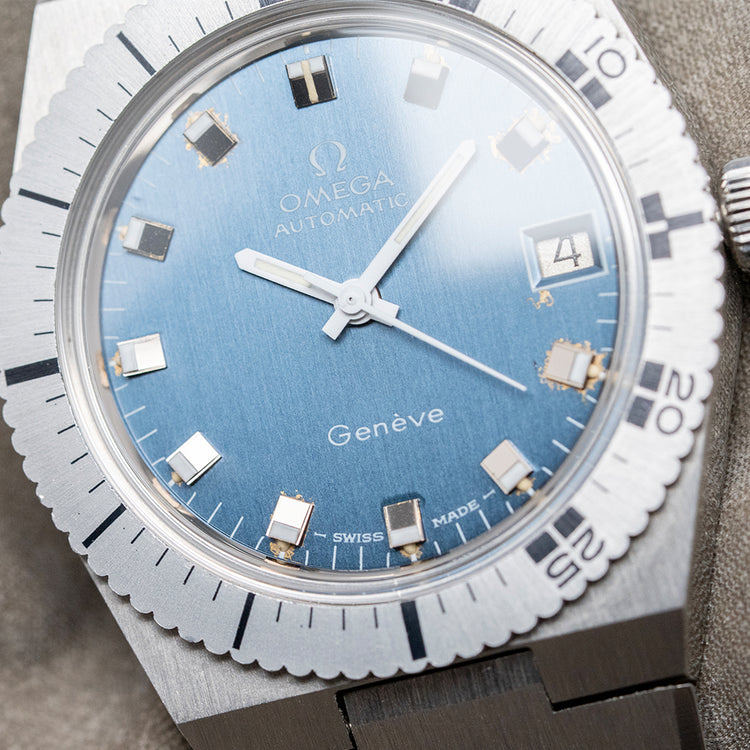
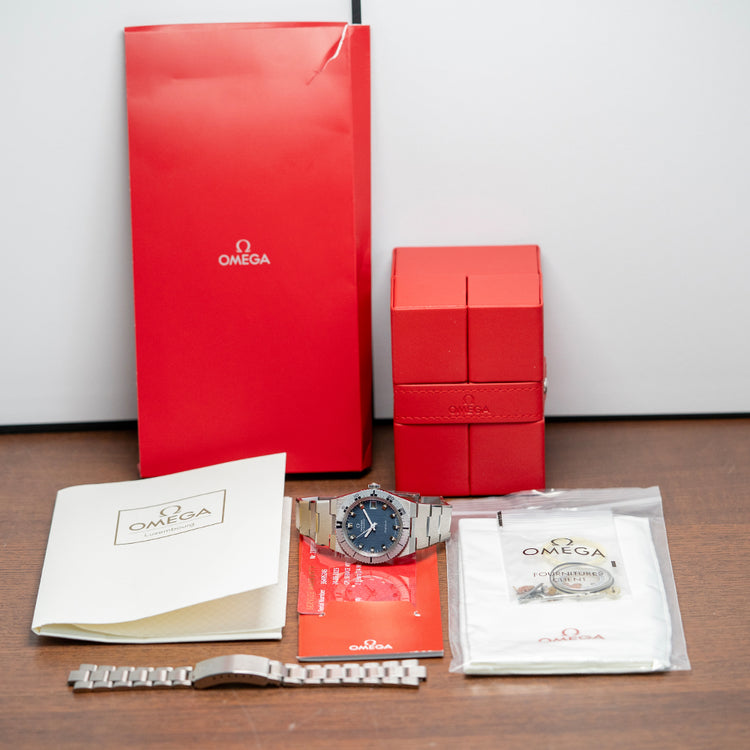
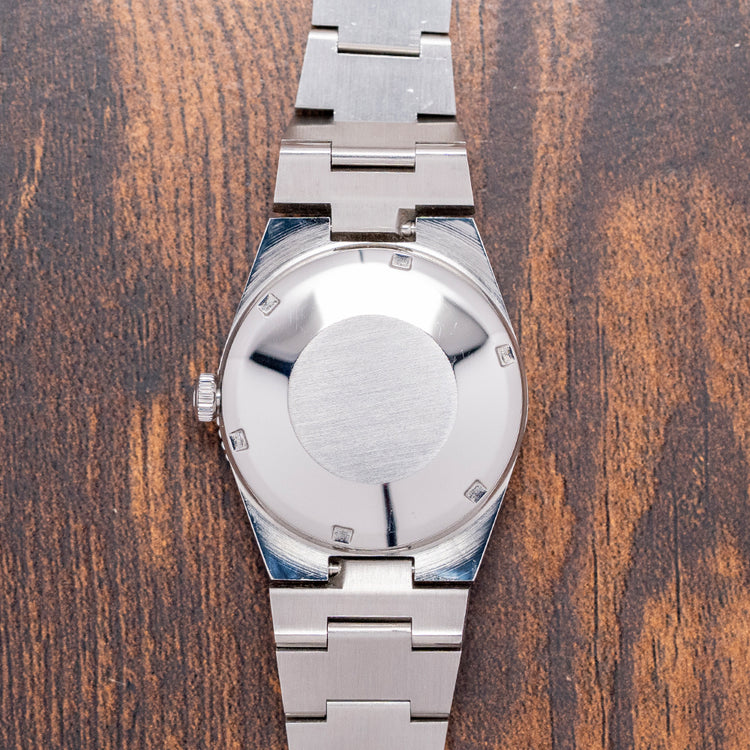
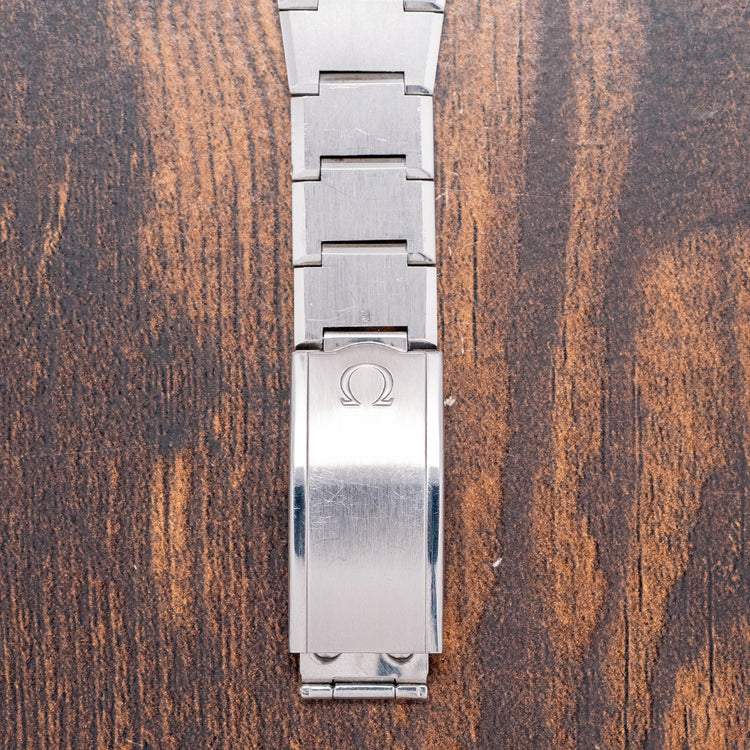
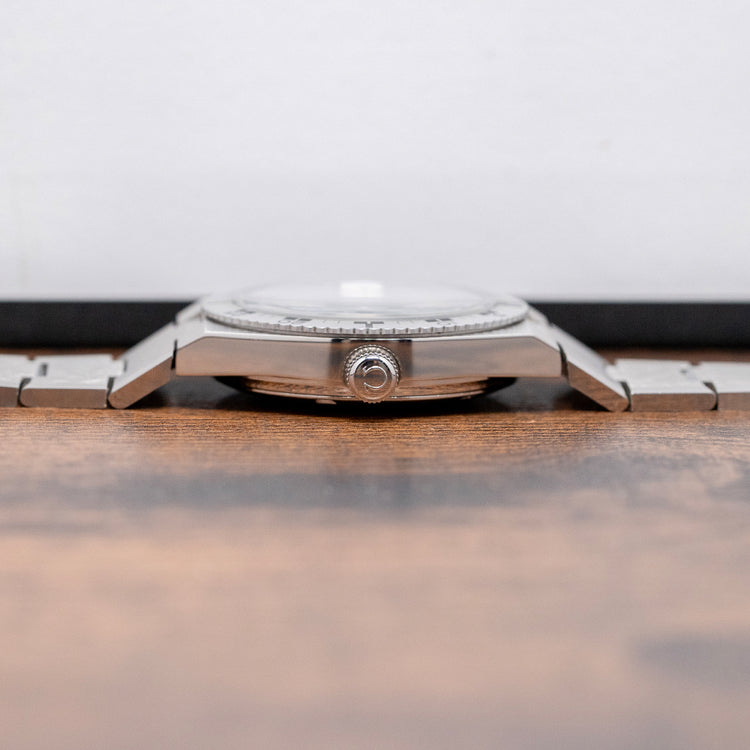
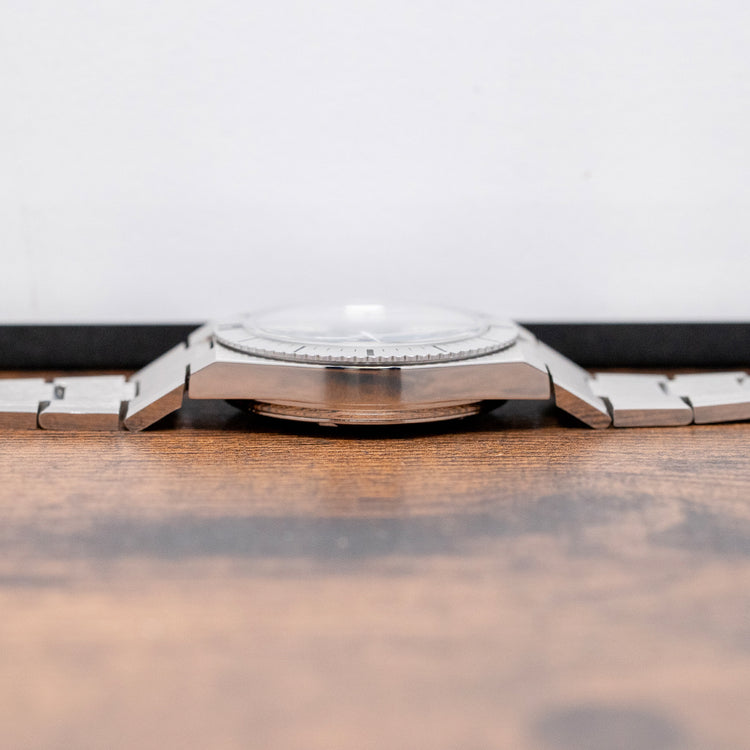
Here we have a rare configuration 1973 Omega Genève Automatic Blue Dial 166.0124, a striking representation of Omega’s transition into the bold, experimental aesthetics of the early 1970s. While many Genève models opted for traditional silver tones, this reference leans into the era's love for "integrated" geometry and vibrant finishes, offering a sporty yet sophisticated alternative to the classic dress watch. Featuring a 35mm satin-brushed stainless steel case, it possesses a distinct barrel-shaped profile that sits prominently with a thickness of 11.5mm. The lugs are integrated into the case design, leading to a compact 40mm lug-to-lug length, which ensures the watch hugs the wrist with a seamless, architectural flow. On the right, a signed Omega crown is partially recessed to maintain the case's clean, streamlined silhouette. The wide brushed stainless steel bezel features a 60-minute scale with the first 25 minutes highlighted. The centrepiece is the vertically brushed blue dial, which shifts dramatically in tone depending on the light. It features applied square indexes with white inserts for a sharp contrast, matched by white-painted baton hands that ensure high legibility against the deep blue backdrop. At 3 o’clock, a date window provides daily utility, framed by the minimalist "Genève" script and the applied Omega logo at noon. On the reverse, a screw-down case back protects the In-house Omega Calibre 1481. This 21-jewel automatic movement, co-developed with Tissot, beats at 21,600 vibrations per hour and features a unique "push-crown" quick-set date function—a quirky and tactile mechanical hallmark of this specific era of Omega production. The watch comes paired with 22mm integrated stainless steel Omega bracelets that taper significantly toward a signed Omega folding clasp and will fit up to a 7.3-inch wrist. This watch is sold with its Omega Service box and 2025 Omega Service paperwork.
Points of Mention
More
Less
Personal Note
More
Less
Specification
More
Less
Movement : Automatic Omega Cal. 1481
Age : Circa. 1973
Year : 1973
Case Size : 35mm
Case Thickness : 11.5mm
Lug to Lug : 40mm
Lugs : 22mm (Integrated)
Condition : Pre-Owned
Box and Papers : Service Box & Service Papers
Case Material : Stainless Steel
Warranty : 12-Months NON-Waterproof Warranty
The wrist model's wrist size is 7inch
About Omega
More
Less
Description
Here we have a rare configuration 1973 Omega Genève Automatic Blue Dial 166.0124, a striking representation of Omega’s transition into the bold, experimental aesthetics of the early 1970s. While many Genève models opted for traditional silver tones, this reference leans into the era's love for "integrated" geometry and vibrant finishes, offering a sporty yet sophisticated alternative to the classic dress watch. Featuring a 35mm satin-brushed stainless steel case, it possesses a distinct barrel-shaped profile that sits prominently with a thickness of 11.5mm. The lugs are integrated into the case design, leading to a compact 40mm lug-to-lug length, which ensures the watch hugs the wrist with a seamless, architectural flow. On the right, a signed Omega crown is partially recessed to maintain the case's clean, streamlined silhouette. The wide brushed stainless steel bezel features a 60-minute scale with the first 25 minutes highlighted. The centrepiece is the vertically brushed blue dial, which shifts dramatically in tone depending on the light. It features applied square indexes with white inserts for a sharp contrast, matched by white-painted baton hands that ensure high legibility against the deep blue backdrop. At 3 o’clock, a date window provides daily utility, framed by the minimalist "Genève" script and the applied Omega logo at noon. On the reverse, a screw-down case back protects the In-house Omega Calibre 1481. This 21-jewel automatic movement, co-developed with Tissot, beats at 21,600 vibrations per hour and features a unique "push-crown" quick-set date function—a quirky and tactile mechanical hallmark of this specific era of Omega production. The watch comes paired with 22mm integrated stainless steel Omega bracelets that taper significantly toward a signed Omega folding clasp and will fit up to a 7.3-inch wrist. This watch is sold with its Omega Service box and 2025 Omega Service paperwork.
Points of Mention
Personal Note
Specification
The Brand
Enquire or Book an Appointment
Would you like to discover further details about this watch, or perhaps arrange an appointment to view and try it on? Complete this form and a member of our team will get back to you shortly.
You May Also Like