

1972 Omega DeVille "Andrew Grima" Blue Dial Manual 511.0383
- Regular price
- £1,750.00
- Sale price
- £1,750.00
- Regular price
- £1,950.00
Read more...



More Information
Description
More
Less
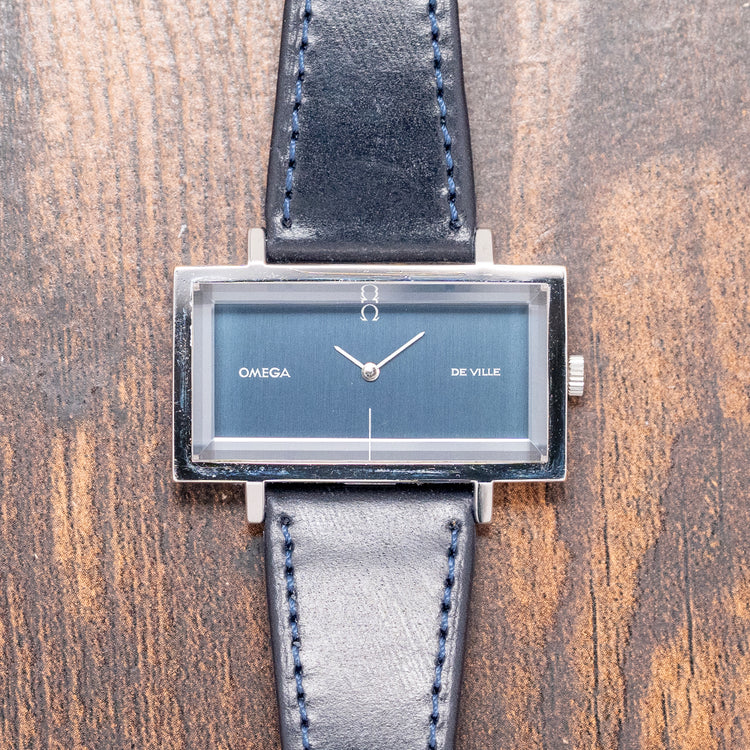
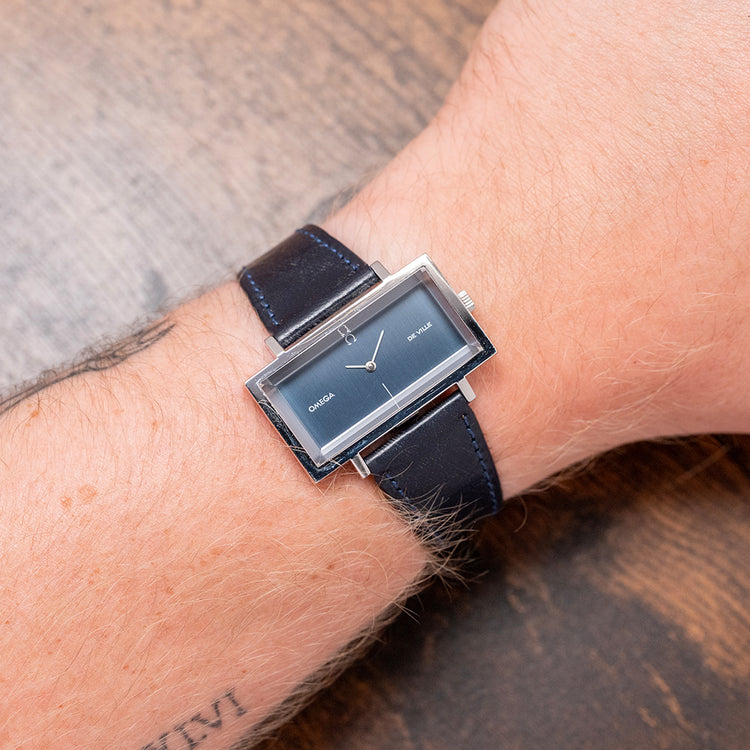
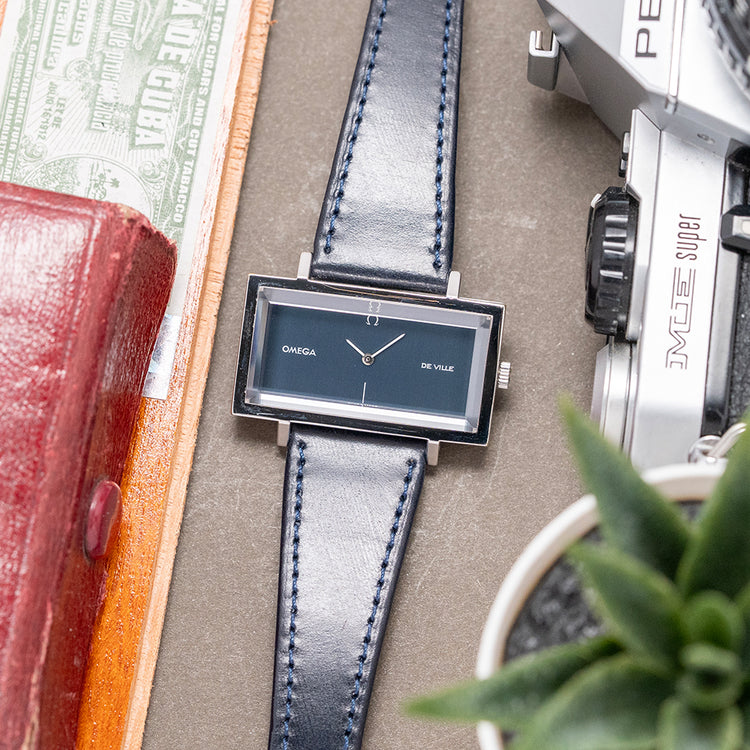
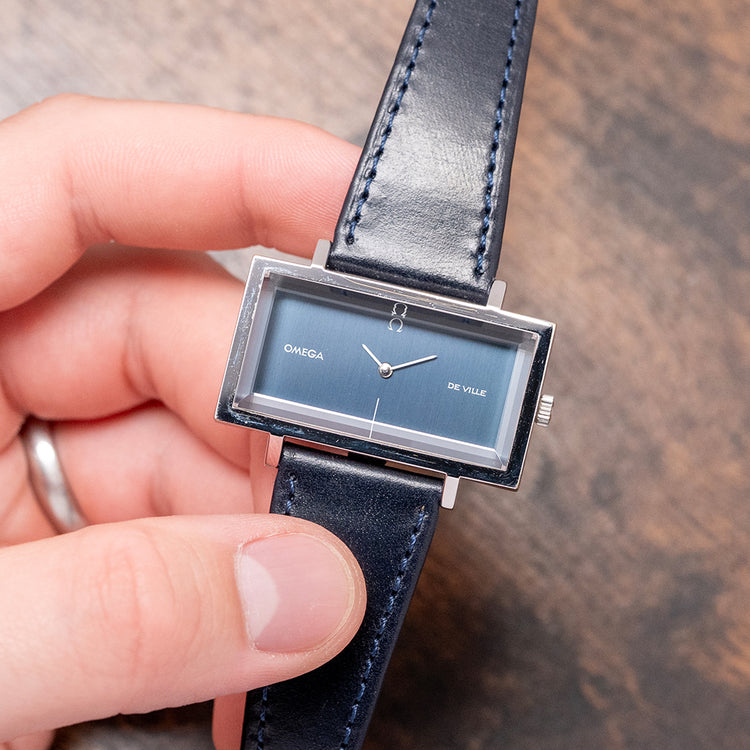
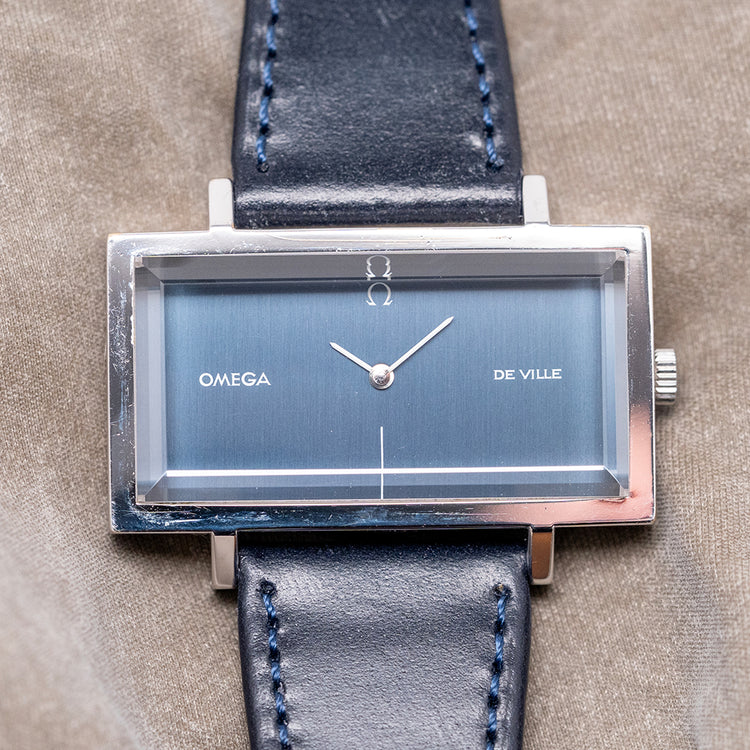
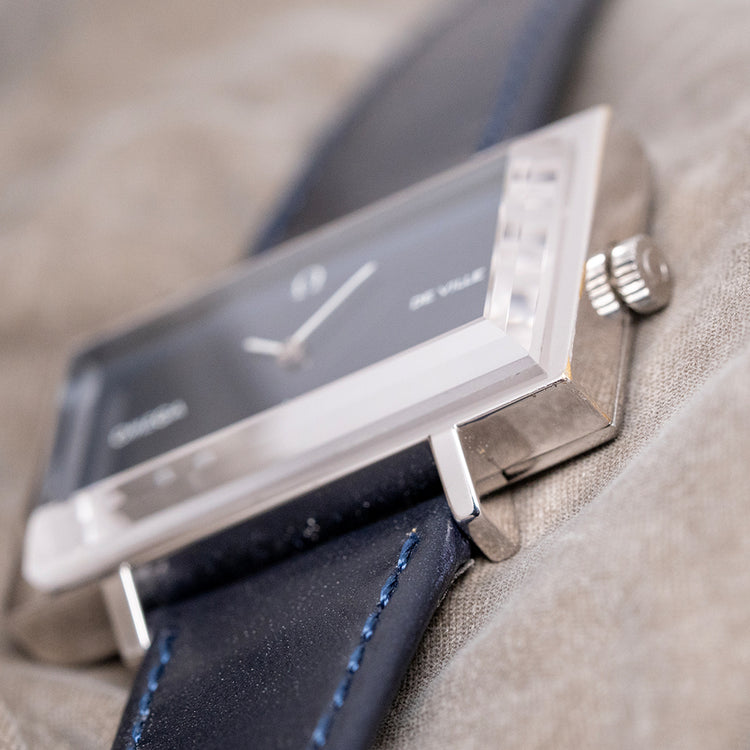
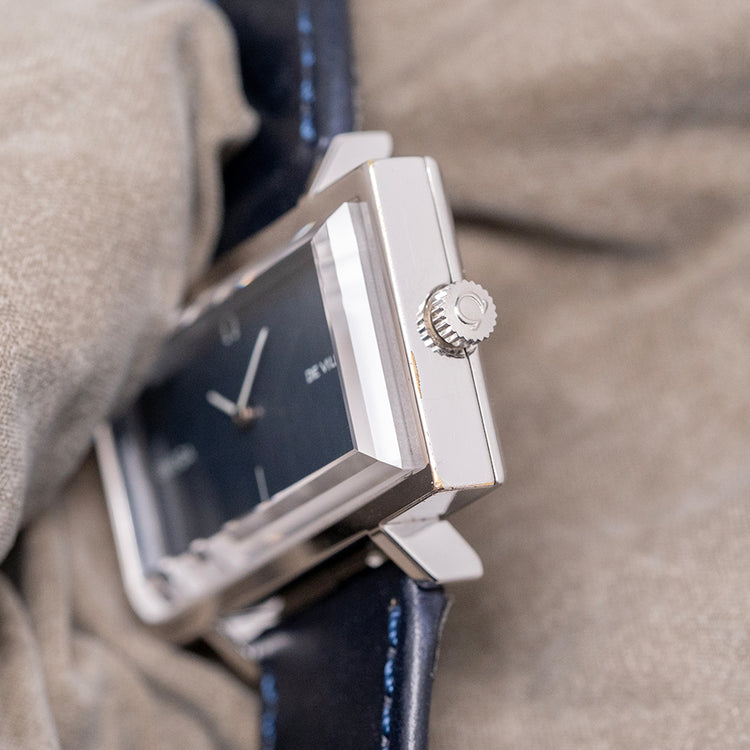
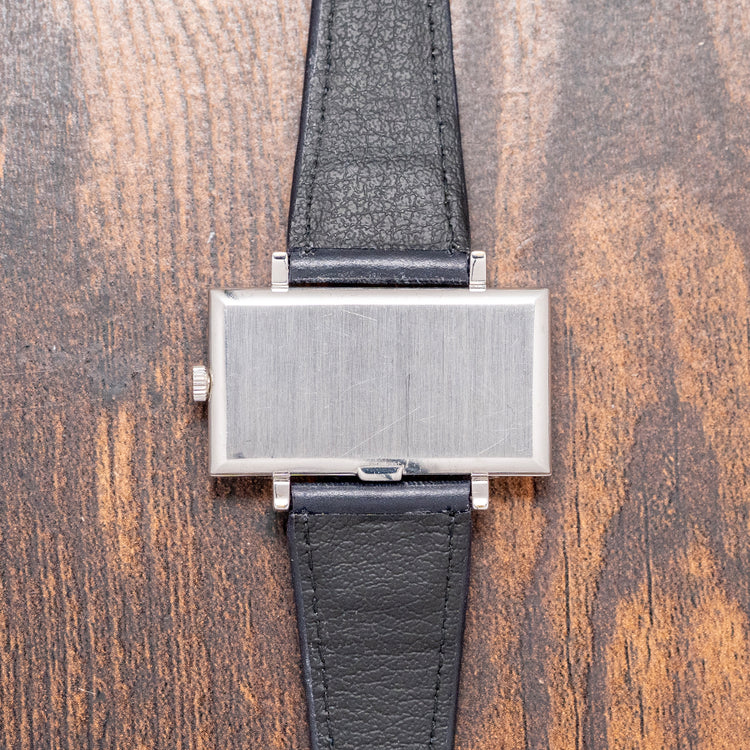
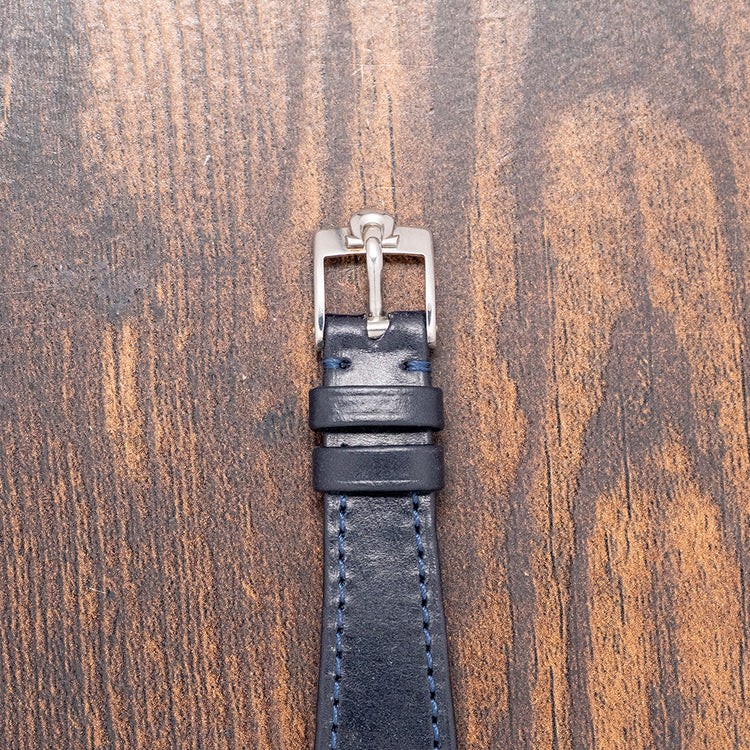
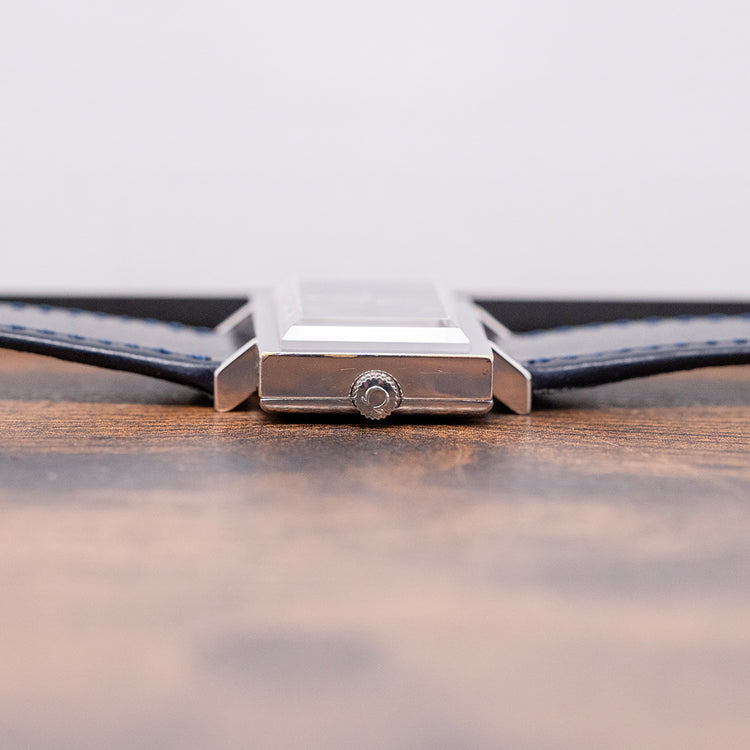
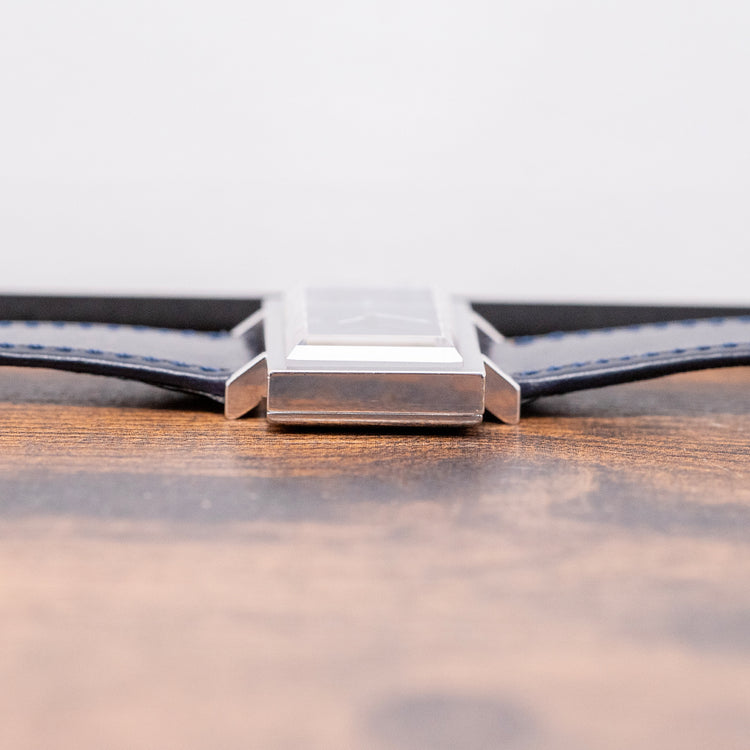
Here we have an exceptionally rare configuration 1972 Omega De Ville "Andrew Grima" Blue Dial 511.0383, a striking representation of Omega’s transition into the bold, experimental aesthetics of the early 1970s. Part of the highly celebrated, avant-garde "Emerald Line," this reference leans into the era's love for mid-century modern asymmetry and sculptural luxury, offering a genuinely artistic alternative to the classic dress watch. Designed by Andrew Grima, who was a prominent figure in the world of jewellery design, especially recognised during the 1960s and 1970s. He owned an exclusive boutique on Jermyn Street, located in the heart of London’s Mayfair. Grima specialised in high-end, bespoke jewellery and counted British royalty among his clients, including Queen Elizabeth II and Princess Margaret. His significant contributions to the field of jewellery are so well-regarded that his work is included in the collection of the Victoria and Albert Museum. Featuring a 38mm unusually elongated case profile, it possesses a distinct "Horizontale" presence that sits elegantly low with a thickness of just 9mm. The integrated lug design leads to a compact 28.5mm lug-to-lug length, allowing the watch to drape smoothly across the wrist with a seamless, jewellery-like flow. On the right, a signed Omega crown sits purposefully integrated into the clean geometry of the flank. The defining centrepiece is its unique faceted crystal, which mimics the intricate cuts of a gemstone to evoke a sense of architectural depth. Beneath it lies the deep blue dial, which shifts beautifully in tone and is kept intentionally restrained to respect the watch's clean aesthetics. Hour markers are printed directly onto the dial surface, keeping the profile flat and letting the architectural lines speak for themselves. Slender white-painted sword hands sweep across the centre, contrasting sharply against the blue backdrop to ensure effortless legibility. True to Omega's minimalist execution for this elite series, the dial carries only the minimalist Omega script and subtle De Ville branding at the 3 o'clock position. On the reverse, a solid snap-on case back protects the ultra-slim, manually wound Omega Calibre 625 movement. This refined, 17-jewel movement beats at 21,600 vibrations per hour and is a testament to Omega's mastery of thin mechanical watchmaking during this golden era of design. The watch comes paired with a 20mm premium leather strap secured by an Omega pin buckle.
Points of Mention
More
Less
Personal Note
More
Less
Specification
More
Less
Movement : Manually Wound Omega Cal. 625
Age : Circa. 1972
Year : 1972
Case Size : 38mm
Case Thickness : 9mm
Lug to Lug : 28.5mm
Lugs : 20mm
Condition : Pre-Owned
Box and Papers : None
Case Material : Stainless Steel
Warranty : 12-Months NON-Waterproof Warranty
The wrist model's wrist size is 7inch
About Omega
More
Less
Description
Here we have an exceptionally rare configuration 1972 Omega De Ville "Andrew Grima" Blue Dial 511.0383, a striking representation of Omega’s transition into the bold, experimental aesthetics of the early 1970s. Part of the highly celebrated, avant-garde "Emerald Line," this reference leans into the era's love for mid-century modern asymmetry and sculptural luxury, offering a genuinely artistic alternative to the classic dress watch. Designed by Andrew Grima, who was a prominent figure in the world of jewellery design, especially recognised during the 1960s and 1970s. He owned an exclusive boutique on Jermyn Street, located in the heart of London’s Mayfair. Grima specialised in high-end, bespoke jewellery and counted British royalty among his clients, including Queen Elizabeth II and Princess Margaret. His significant contributions to the field of jewellery are so well-regarded that his work is included in the collection of the Victoria and Albert Museum. Featuring a 38mm unusually elongated case profile, it possesses a distinct "Horizontale" presence that sits elegantly low with a thickness of just 9mm. The integrated lug design leads to a compact 28.5mm lug-to-lug length, allowing the watch to drape smoothly across the wrist with a seamless, jewellery-like flow. On the right, a signed Omega crown sits purposefully integrated into the clean geometry of the flank. The defining centrepiece is its unique faceted crystal, which mimics the intricate cuts of a gemstone to evoke a sense of architectural depth. Beneath it lies the deep blue dial, which shifts beautifully in tone and is kept intentionally restrained to respect the watch's clean aesthetics. Hour markers are printed directly onto the dial surface, keeping the profile flat and letting the architectural lines speak for themselves. Slender white-painted sword hands sweep across the centre, contrasting sharply against the blue backdrop to ensure effortless legibility. True to Omega's minimalist execution for this elite series, the dial carries only the minimalist Omega script and subtle De Ville branding at the 3 o'clock position. On the reverse, a solid snap-on case back protects the ultra-slim, manually wound Omega Calibre 625 movement. This refined, 17-jewel movement beats at 21,600 vibrations per hour and is a testament to Omega's mastery of thin mechanical watchmaking during this golden era of design. The watch comes paired with a 20mm premium leather strap secured by an Omega pin buckle.
Points of Mention
Personal Note
Specification
The Brand
Enquire or Book an Appointment
Would you like to discover further details about this watch, or perhaps arrange an appointment to view and try it on? Complete this form and a member of our team will get back to you shortly.
You May Also Like