

1972 Omega Constellation Automatic 36mm 168.0054
Read more...




More Information
Description
More
Less
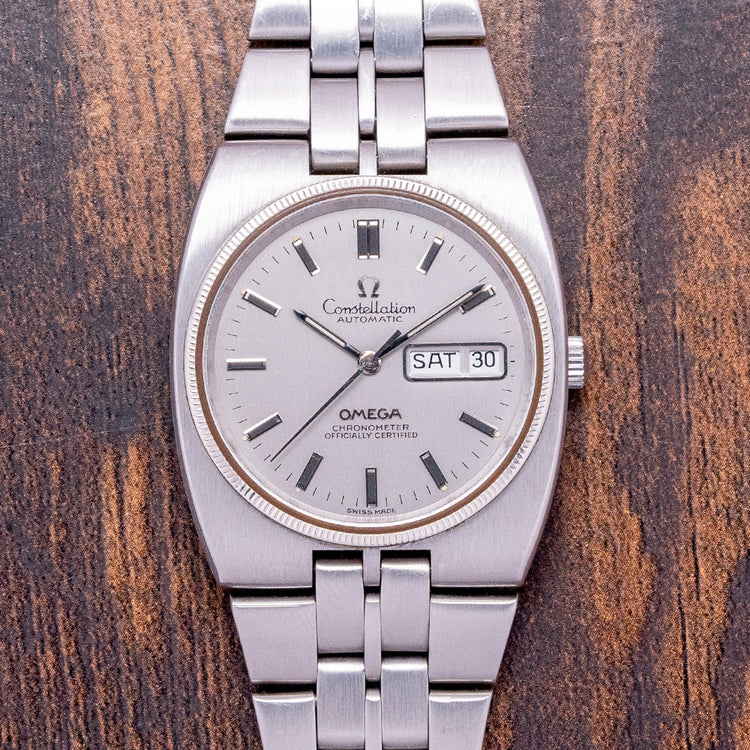
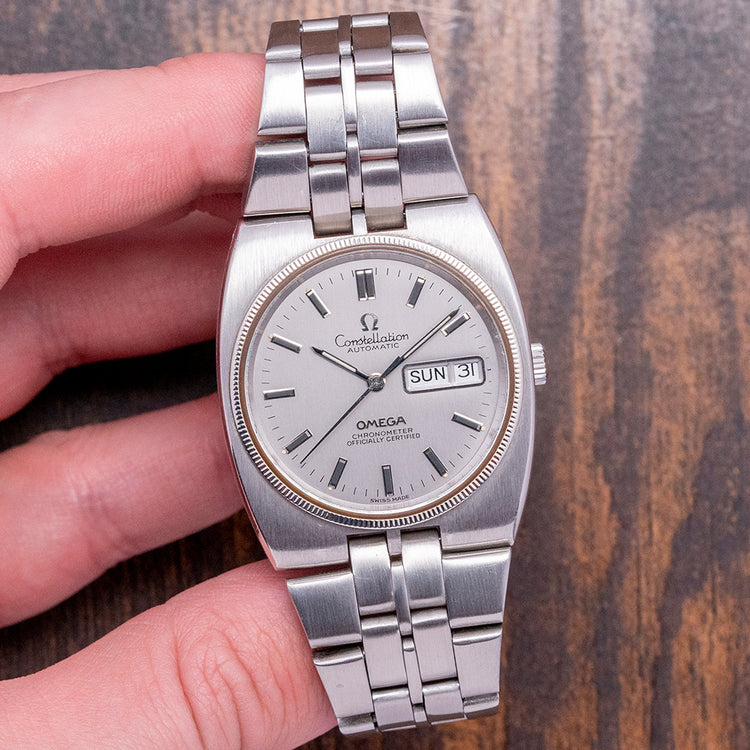
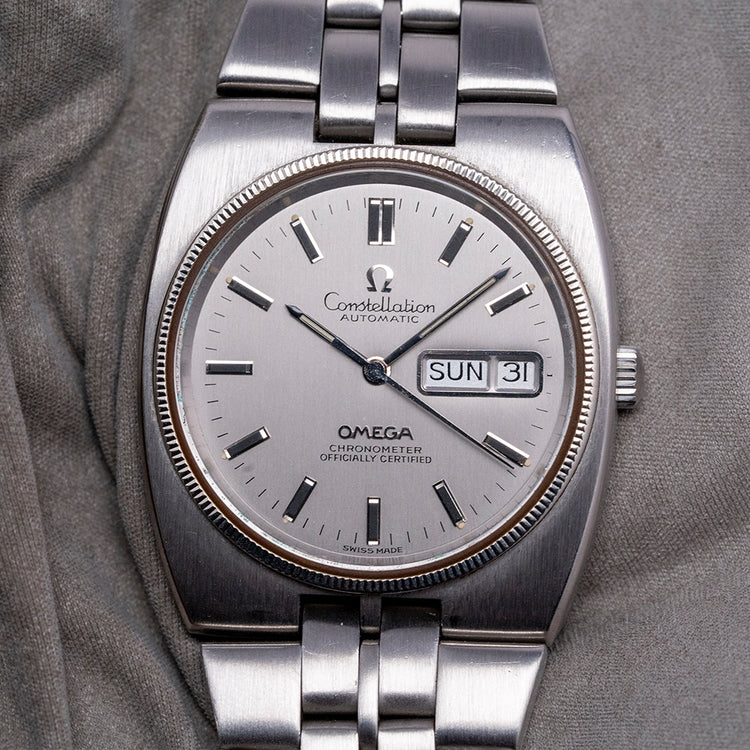
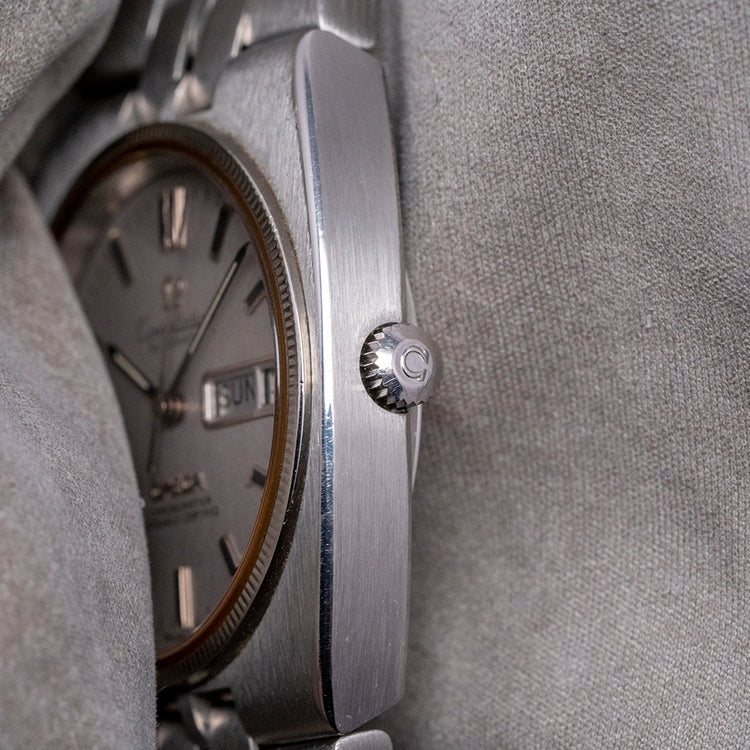
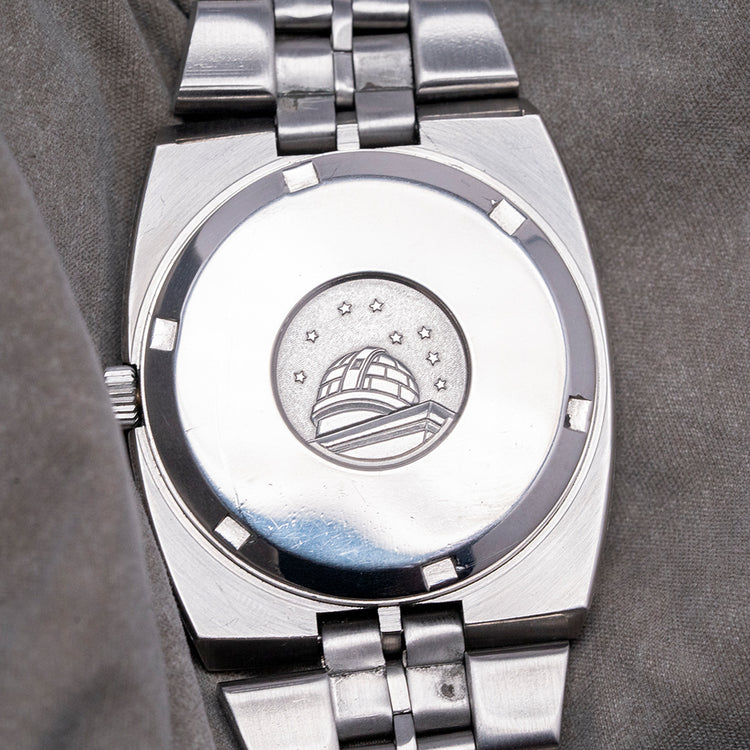
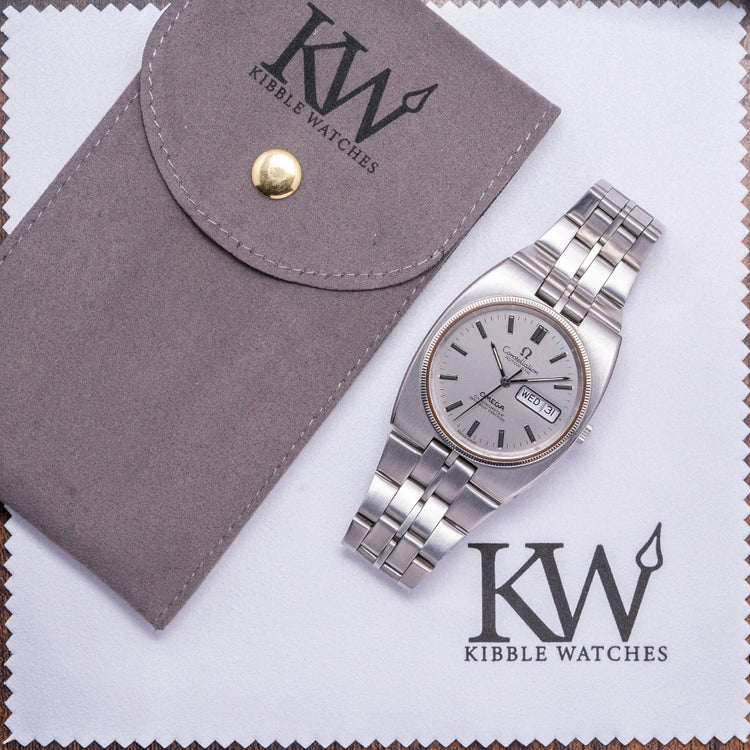
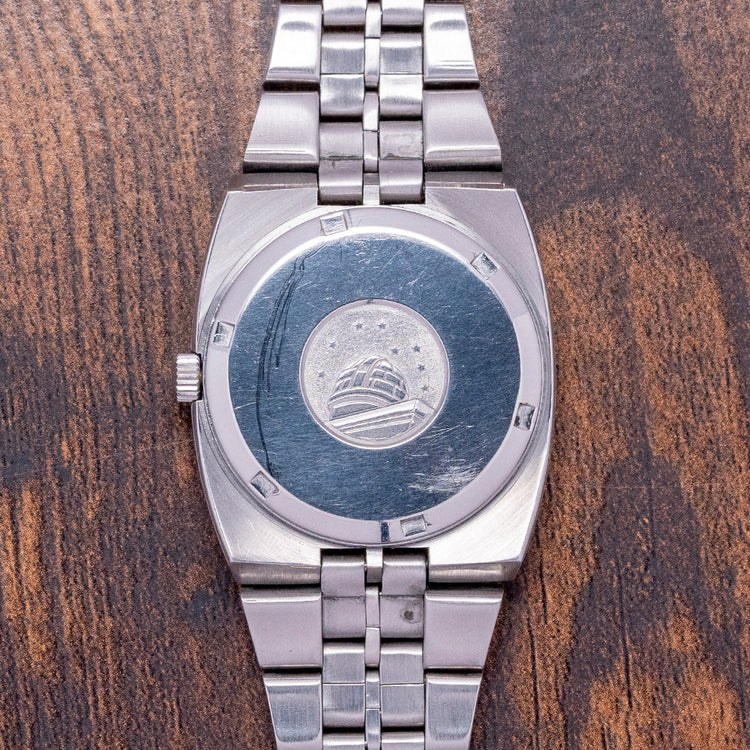
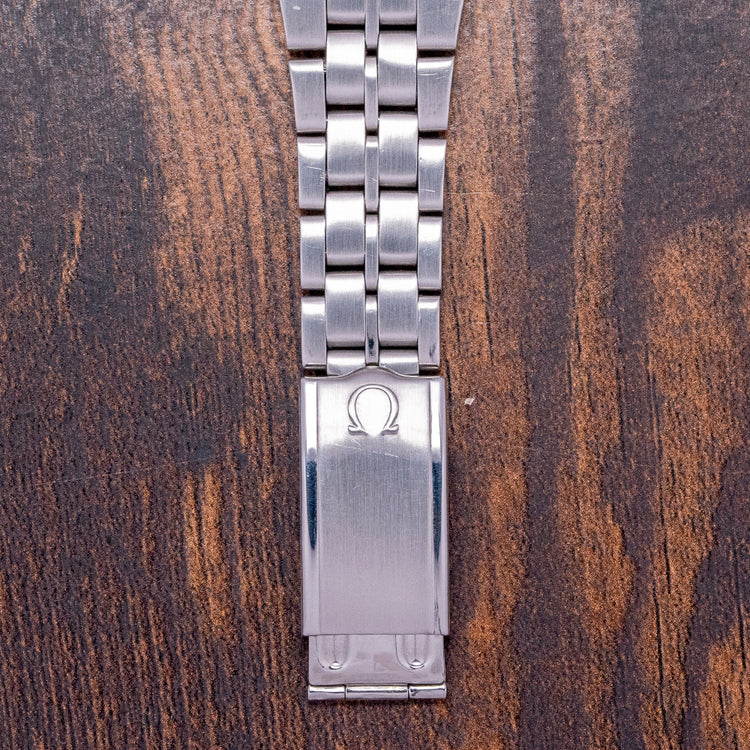
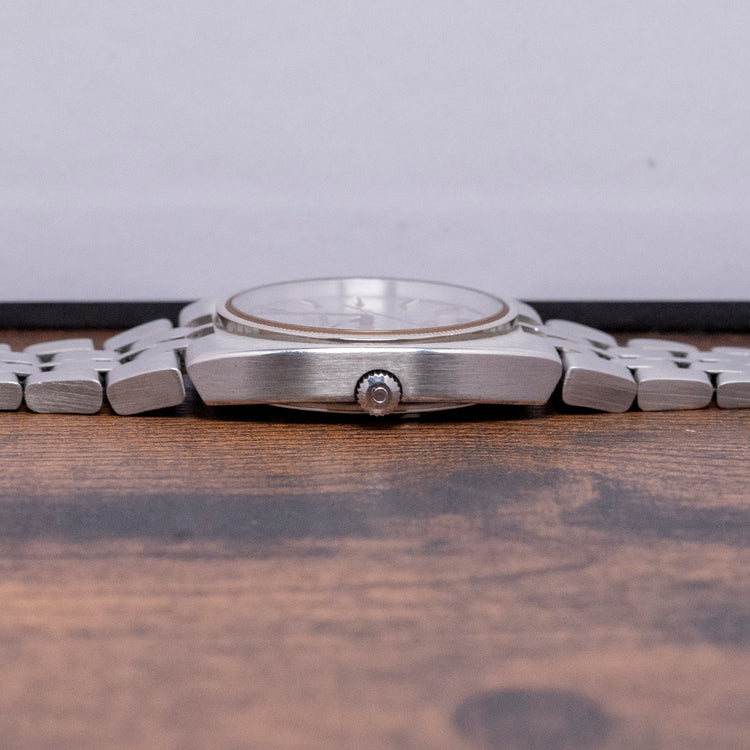
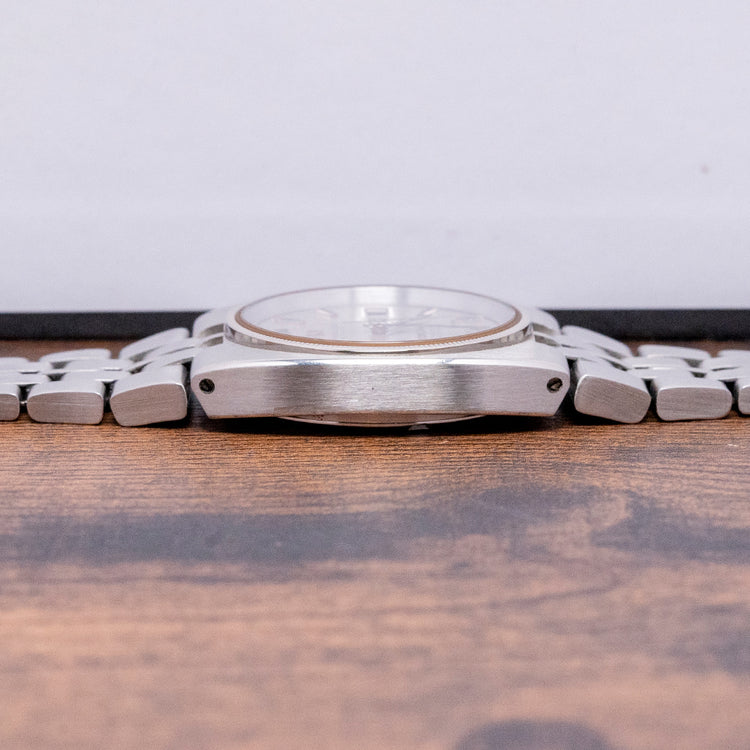
Here we have a classic 1972 Omega Constellation Automatic 168.0054. Omega first introduced the Constellation in 1952. At the time, it was Omega's flagship timepiece. The first models had a Cal. 354 bumper movement in them. Later, in 1955, Omega introduced the Automatic Cal. 50x, followed in 1959 by the Cal.55x (no date) and 56x (date) versions. Many of the Constellations came with pie-pan dials, diamond indexes, and fancy lug configurations. All the gold Constellations of that time have the Observatory of Geneva hand-engraved on the back. The eight stars above the Observatory represent the numerous achievements of Omega in the world Chronometer competition. Celebrating the fact that all Constellations are Chronometer Certified. It features a 36mm stainless steel tonneau-shaped case, satin-brushed, with drilled and screwed lugs on the left side that seamlessly flow into the integrated bracelet; its distinctive design is unapologetically 1970s. The polished chamfered edge creates a sophisticated flank profile, resulting in a lug-to-lug length of 40.5mm and a case thickness of 10mm, ensuring a comfortable fit on your wrist. On the right side sits a signed crown. The white gold fluted bezel holds a domed plexiglass crystal that protects a silver dial. An outer minute track has applied polished baton indexes that mark the hours. Slim sword hands are complemented with a tapered sweeping seconds hand. At 3 o’clock, a framed colour-matched day/date window. At noon, we have an Omega motif, ‘Constellation Automatic,’ printed underneath. At 6 o’clock, an applied Omega, ‘Chronometer Officially Certified’ printed underneath, completes this sophisticated, versatile watch. On the reverse, a screwed-down stainless steel case back features an embossed Observatory and eight stars. Inside, we have an Automatic Omega Cal. 1021, 23 jewels, beating at 28,800 beats per hour, with a quick-set date and quick-set day in the time-setting position that can be adjusted going backwards. It comes paired with its original 26mm integrated Omega stainless steel bracelet, featuring a satin-brushed finish, and a signed folding clasp with micro-adjustments, which will fit wrists up to 7.2 inches. This watch is sold with an original Omega box.
Points of Mention
More
Less
Personal Note
More
Less
Specification
More
Less
Movement : Automatic Omega Cal. 1021
Age : Circa. 1972
Year : 1972
Case Size : 36mm
Case Thickness : 10mm
Lug to Lug : 40.5mm
Lugs : 26mm (Integrated)
Condition : Pre-Owned
Box and Papers : Box
Case Material : Stainless Steel
Warranty : 12 Months NON-Waterproof Warranty
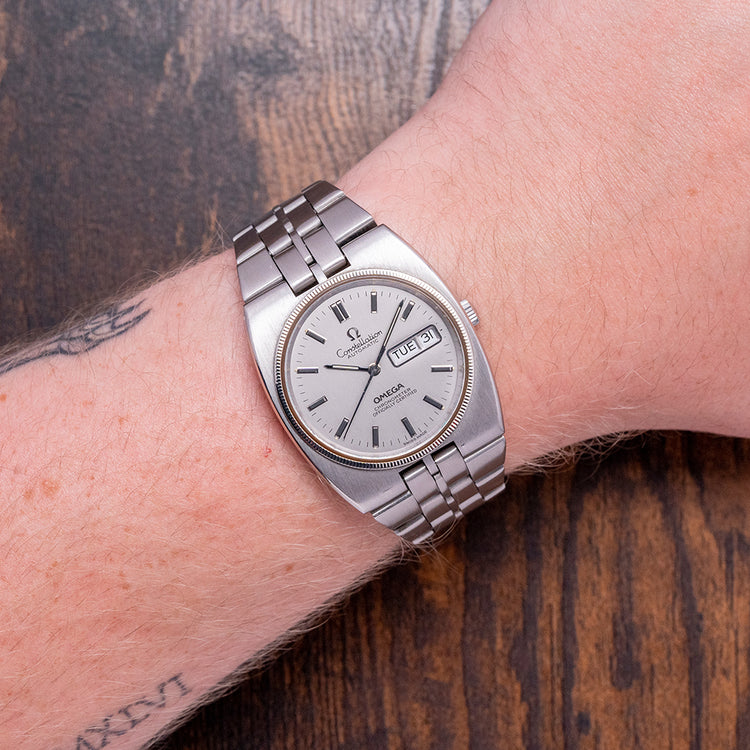
The wrist model's wrist size is 7inch
About Omega
More
Less
Description
Here we have a classic 1972 Omega Constellation Automatic 168.0054. Omega first introduced the Constellation in 1952. At the time, it was Omega's flagship timepiece. The first models had a Cal. 354 bumper movement in them. Later, in 1955, Omega introduced the Automatic Cal. 50x, followed in 1959 by the Cal.55x (no date) and 56x (date) versions. Many of the Constellations came with pie-pan dials, diamond indexes, and fancy lug configurations. All the gold Constellations of that time have the Observatory of Geneva hand-engraved on the back. The eight stars above the Observatory represent the numerous achievements of Omega in the world Chronometer competition. Celebrating the fact that all Constellations are Chronometer Certified. It features a 36mm stainless steel tonneau-shaped case, satin-brushed, with drilled and screwed lugs on the left side that seamlessly flow into the integrated bracelet; its distinctive design is unapologetically 1970s. The polished chamfered edge creates a sophisticated flank profile, resulting in a lug-to-lug length of 40.5mm and a case thickness of 10mm, ensuring a comfortable fit on your wrist. On the right side sits a signed crown. The white gold fluted bezel holds a domed plexiglass crystal that protects a silver dial. An outer minute track has applied polished baton indexes that mark the hours. Slim sword hands are complemented with a tapered sweeping seconds hand. At 3 o’clock, a framed colour-matched day/date window. At noon, we have an Omega motif, ‘Constellation Automatic,’ printed underneath. At 6 o’clock, an applied Omega, ‘Chronometer Officially Certified’ printed underneath, completes this sophisticated, versatile watch. On the reverse, a screwed-down stainless steel case back features an embossed Observatory and eight stars. Inside, we have an Automatic Omega Cal. 1021, 23 jewels, beating at 28,800 beats per hour, with a quick-set date and quick-set day in the time-setting position that can be adjusted going backwards. It comes paired with its original 26mm integrated Omega stainless steel bracelet, featuring a satin-brushed finish, and a signed folding clasp with micro-adjustments, which will fit wrists up to 7.2 inches. This watch is sold with an original Omega box.
Points of Mention
Personal Note
Specification
The Brand
Enquire or Book an Appointment
Would you like to discover further details about this watch, or perhaps arrange an appointment to view and try it on? Complete this form and a member of our team will get back to you shortly.
You May Also Like