

1970 Omega Speedmaster Mark II Tropical Brown Dial 145.014
Read more...



More Information
Description
More
Less
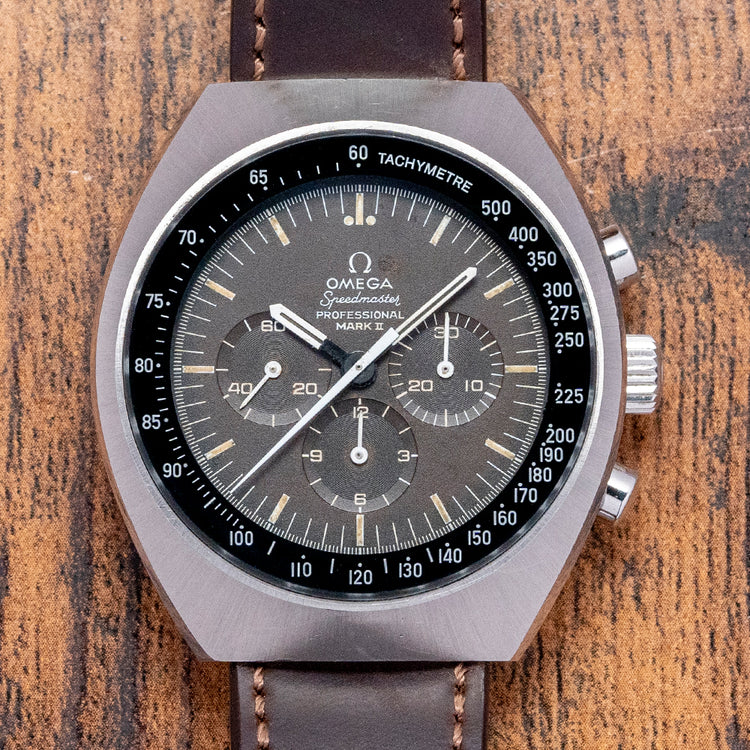
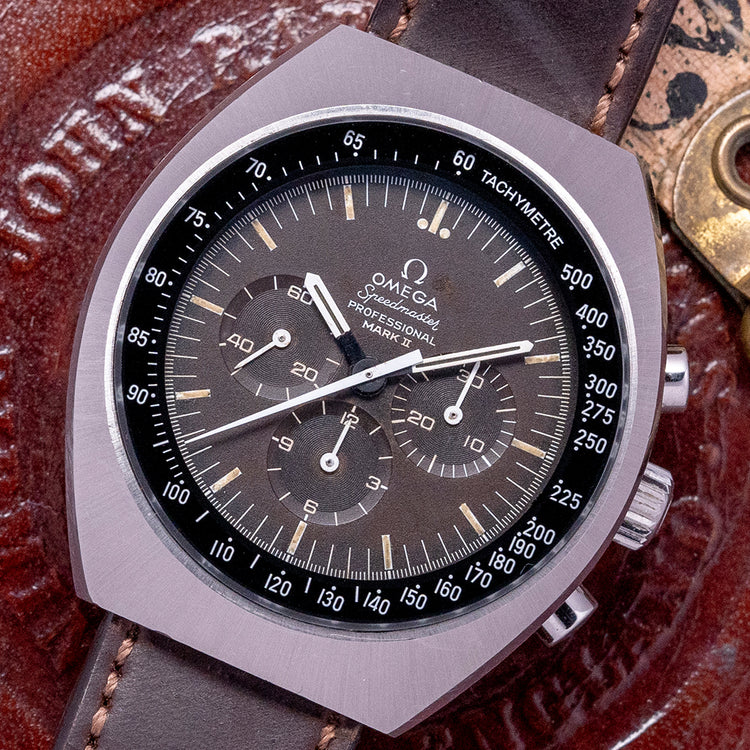
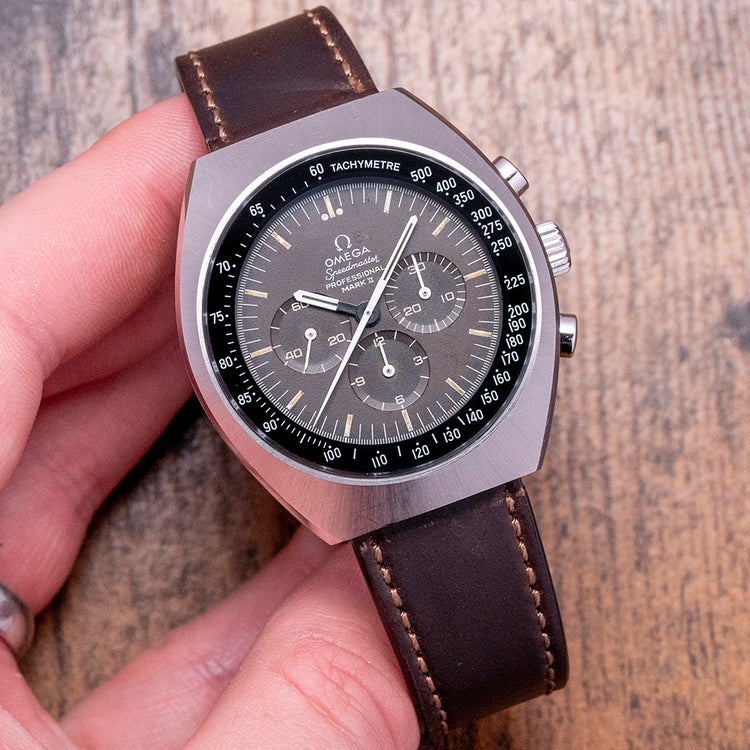
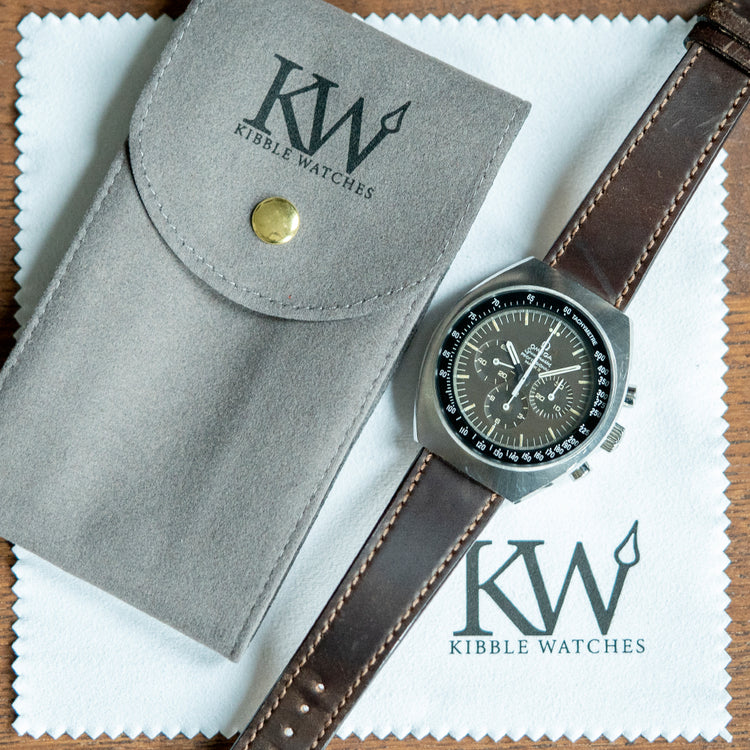
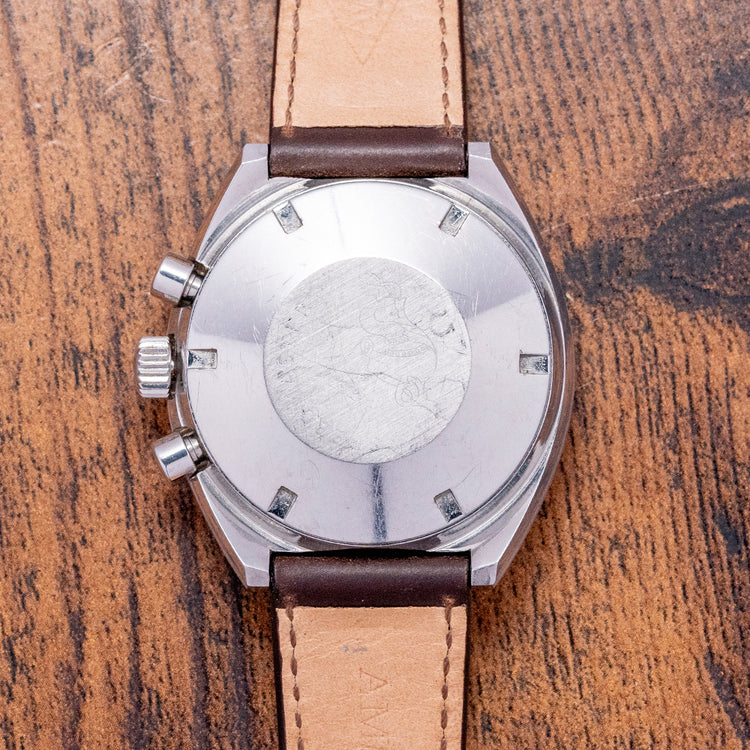
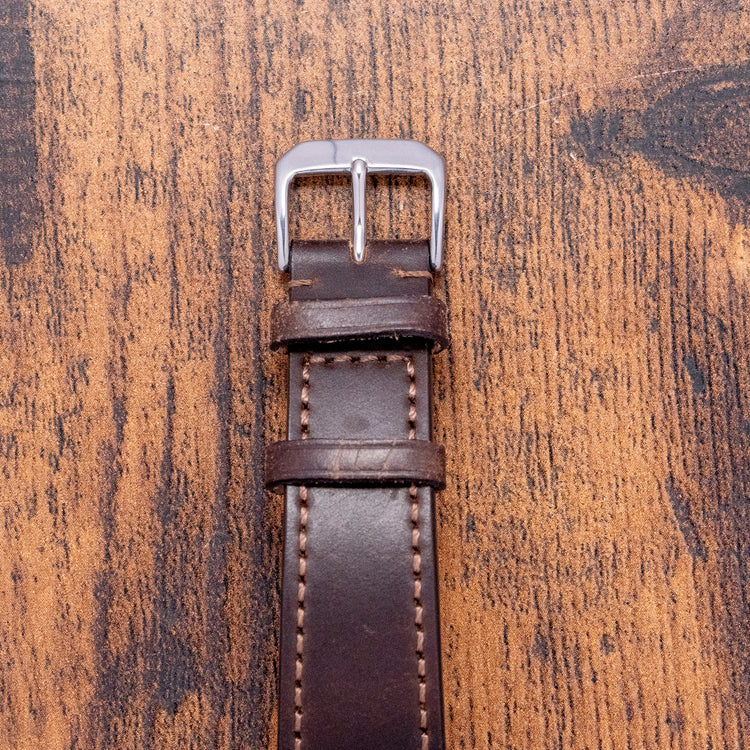
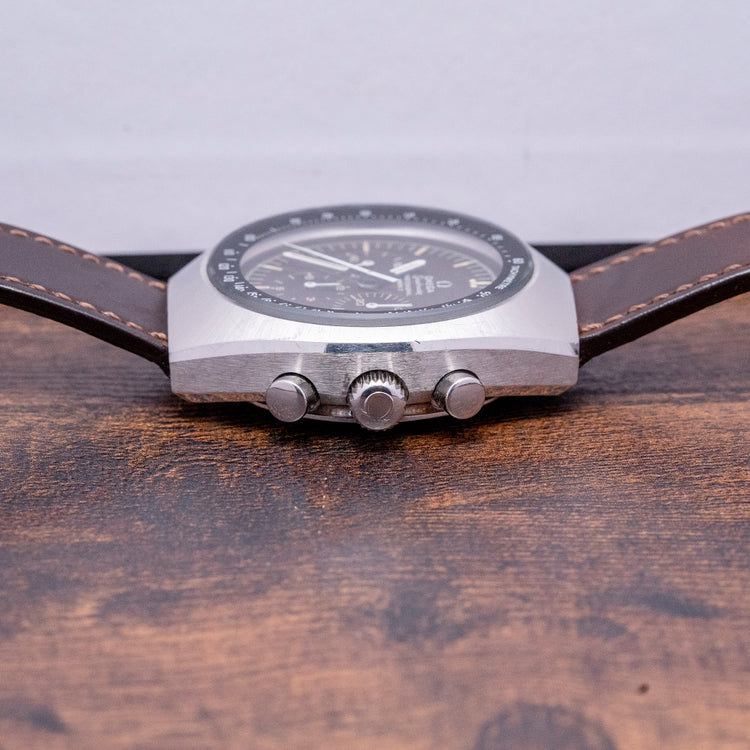
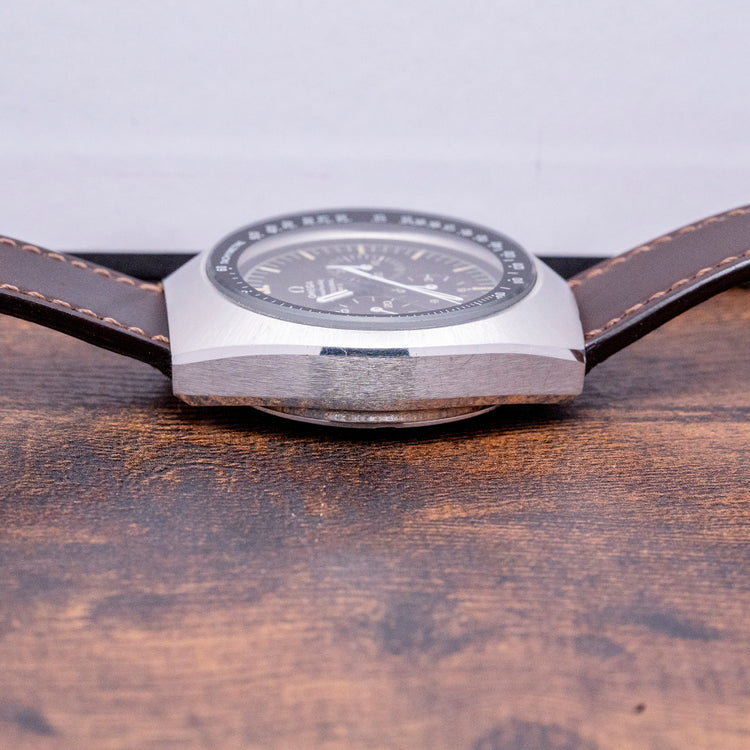
It was 1969, and we had just had one of man's finest achievements: stepping on the moon. Omega felt they needed to design a watch that encapsulated the future, showcasing their commitment to a modernist innovative design; step forward to our 1970 Omega Speedmaster Professional Mark II 145.014 with a 41.5mm tonneau-shaped case, its lines between polished and brushed transition seamlessly, the sides have polished chamfered edges with a brushed centre and radially brushed top surface, making the case a much more dynamic case than you normally find on a Speedmaster. A lug-to-lug length of 45mm and a case thickness of 14mm give the watch an impressive wrist presence. Down the right side, we have pushers and a signed crown that are flusher with the case than on other models. The flowing lines continue as the case encircles the flat crystal without a bezel above the attractive matte Tropical brown dial. The stunning Tropical dial is created by a reaction of the dial to long-term exposure to the sun's UV rays, which is an organic patina, making each watch dial unique and, therefore, collectable. A raised outer Tachymetre chapter ring sits above the white second's track with baton indexes marking the hours coated in Tritium, at 3 o’clock a 30-minute register, at 6 o’clock 12-hour register and finally, a running 60 seconds register at 9 o’clock, each register is slightly recessed creating depth and interest to the dial. Slim white baton hands with Tritium infill complete with a tapered chronograph seconds hand. On the reverse, we have a screw-down case back with an engraved Hippocampus in its centre, a seahorse that represents Neptune, the God of the sea; it was conceived by Pierre Borie after seeing a picture of Neptune riding a chariot pulled by seahorses; it is the reason why the seahorses are wearing a bridle. Inside a manually wound Omega Cal. 861, 17 jewels were based on the Lemania 1873, and it was the direct Calibre replacement to the 361 Omega used on the moon. The watch comes paired with its 20mm aftermarket leather strap and pin buckle.
Points of Mention
More
Less
Personal Note
More
Less
Specification
More
Less
Movement : Manually Wound Omega Cal. 861
Age : Circa. 1970
Year : 1970
Case Size : 40mm
Case Thickness : 14.5mm
Lug to Lug : 45.5mm
Lugs : 20mm
Condition : Pre-Owned
Box and Papers : None
Case Material : Stainless Steel
Warranty : 12-Months NON-Waterproof Warranty
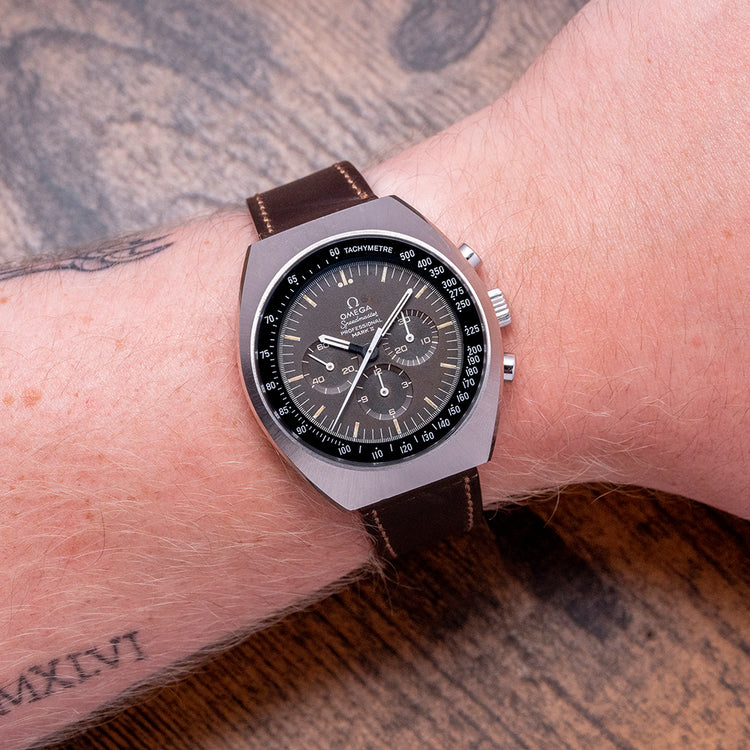
The wrist model's wrist size is 7inch
About Omega
More
Less
Description
It was 1969, and we had just had one of man's finest achievements: stepping on the moon. Omega felt they needed to design a watch that encapsulated the future, showcasing their commitment to a modernist innovative design; step forward to our 1970 Omega Speedmaster Professional Mark II 145.014 with a 41.5mm tonneau-shaped case, its lines between polished and brushed transition seamlessly, the sides have polished chamfered edges with a brushed centre and radially brushed top surface, making the case a much more dynamic case than you normally find on a Speedmaster. A lug-to-lug length of 45mm and a case thickness of 14mm give the watch an impressive wrist presence. Down the right side, we have pushers and a signed crown that are flusher with the case than on other models. The flowing lines continue as the case encircles the flat crystal without a bezel above the attractive matte Tropical brown dial. The stunning Tropical dial is created by a reaction of the dial to long-term exposure to the sun's UV rays, which is an organic patina, making each watch dial unique and, therefore, collectable. A raised outer Tachymetre chapter ring sits above the white second's track with baton indexes marking the hours coated in Tritium, at 3 o’clock a 30-minute register, at 6 o’clock 12-hour register and finally, a running 60 seconds register at 9 o’clock, each register is slightly recessed creating depth and interest to the dial. Slim white baton hands with Tritium infill complete with a tapered chronograph seconds hand. On the reverse, we have a screw-down case back with an engraved Hippocampus in its centre, a seahorse that represents Neptune, the God of the sea; it was conceived by Pierre Borie after seeing a picture of Neptune riding a chariot pulled by seahorses; it is the reason why the seahorses are wearing a bridle. Inside a manually wound Omega Cal. 861, 17 jewels were based on the Lemania 1873, and it was the direct Calibre replacement to the 361 Omega used on the moon. The watch comes paired with its 20mm aftermarket leather strap and pin buckle.
Points of Mention
Personal Note
Specification
The Brand
Enquire or Book an Appointment
Would you like to discover further details about this watch, or perhaps arrange an appointment to view and try it on? Complete this form and a member of our team will get back to you shortly.
You May Also Like