

1964 Omega Speedmaster "Ed-White" Faded DON Bezel 105.003
- Regular price
- £7,750.00
- Sale price
- £7,750.00
- Regular price
Read more...




More Information
Description
More
Less
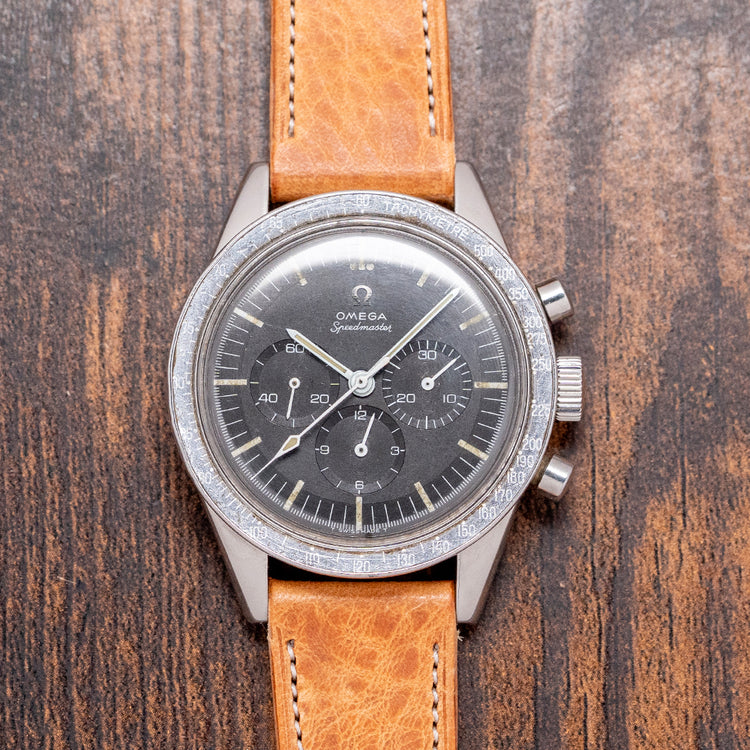
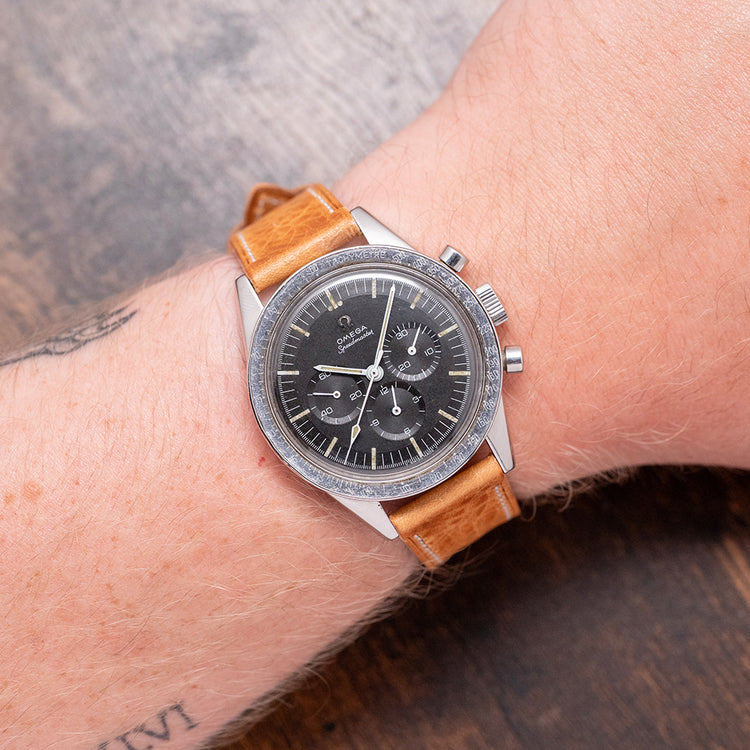
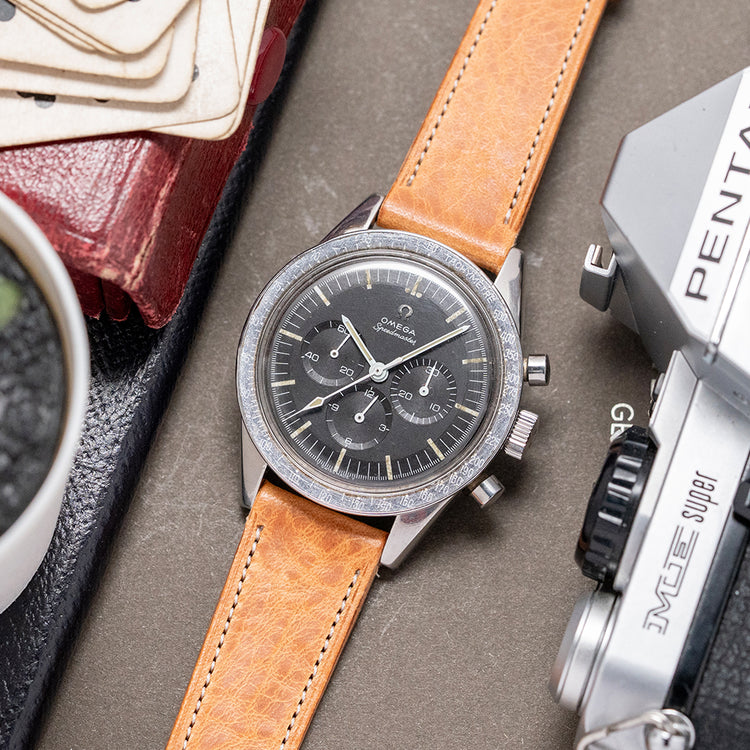
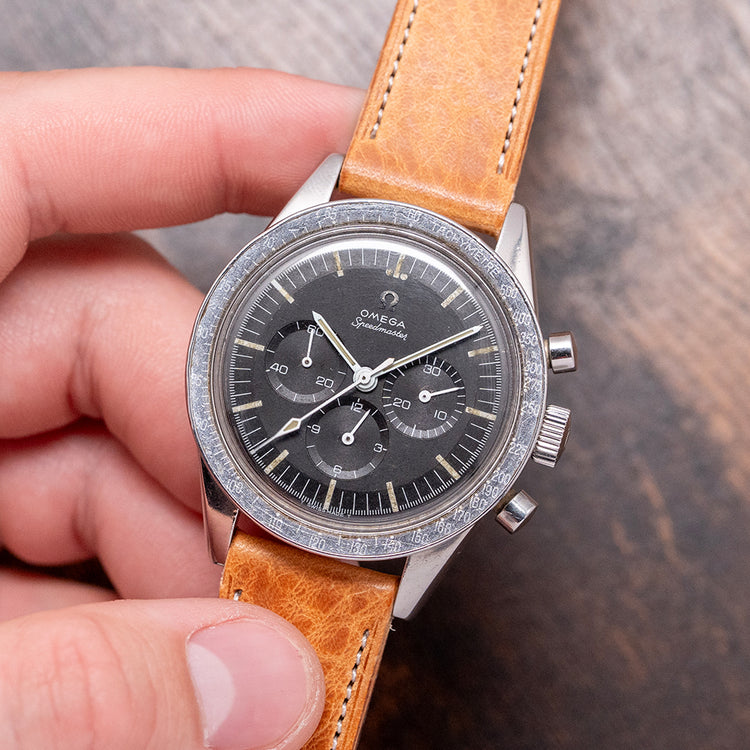
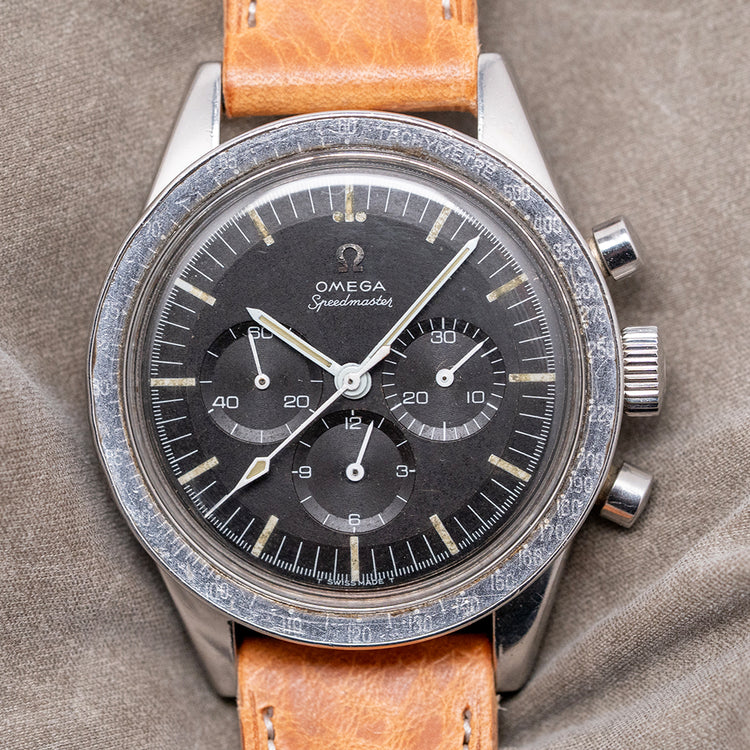
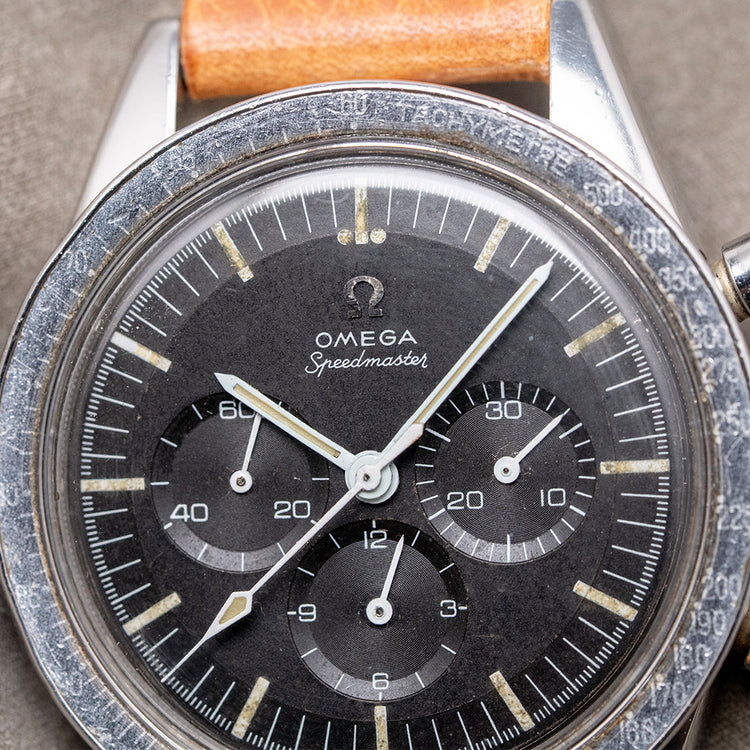
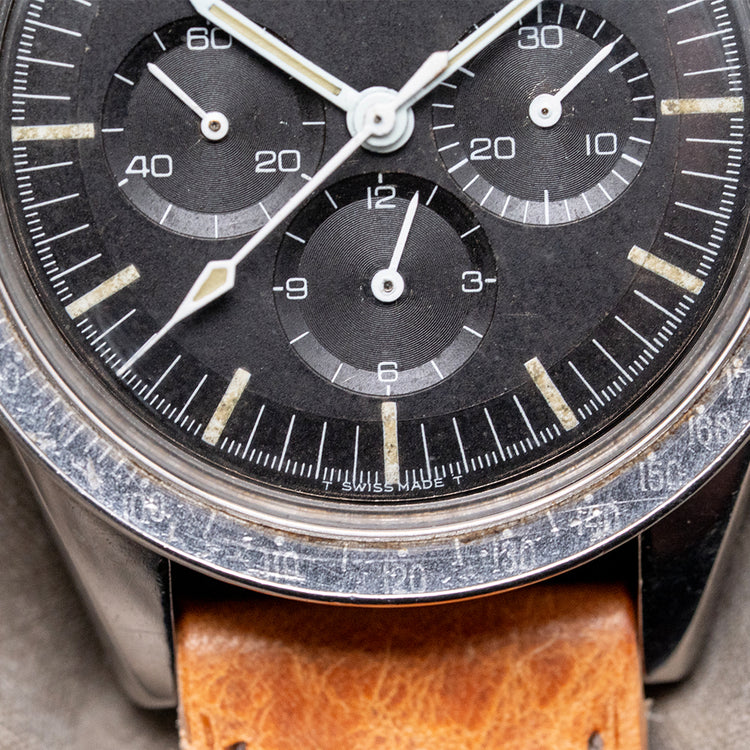
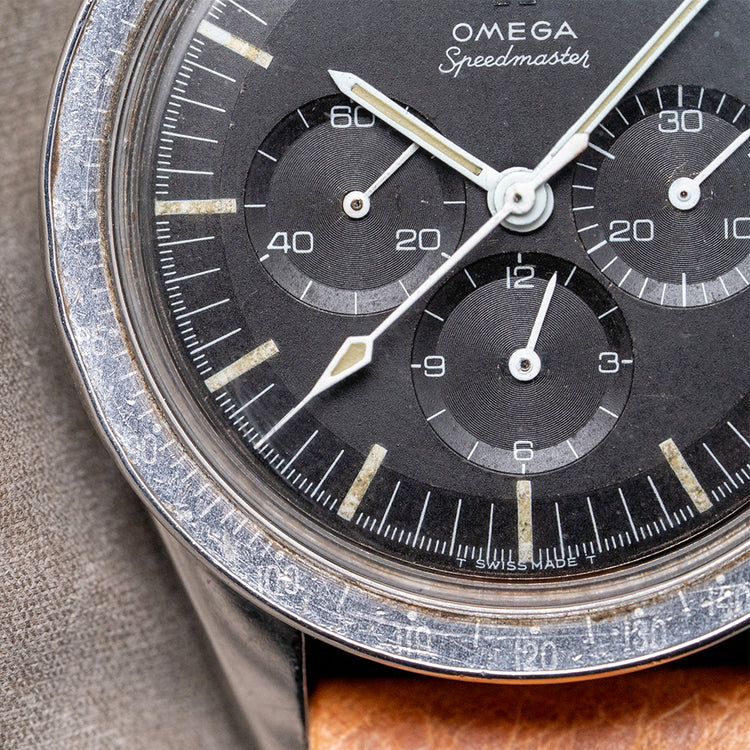
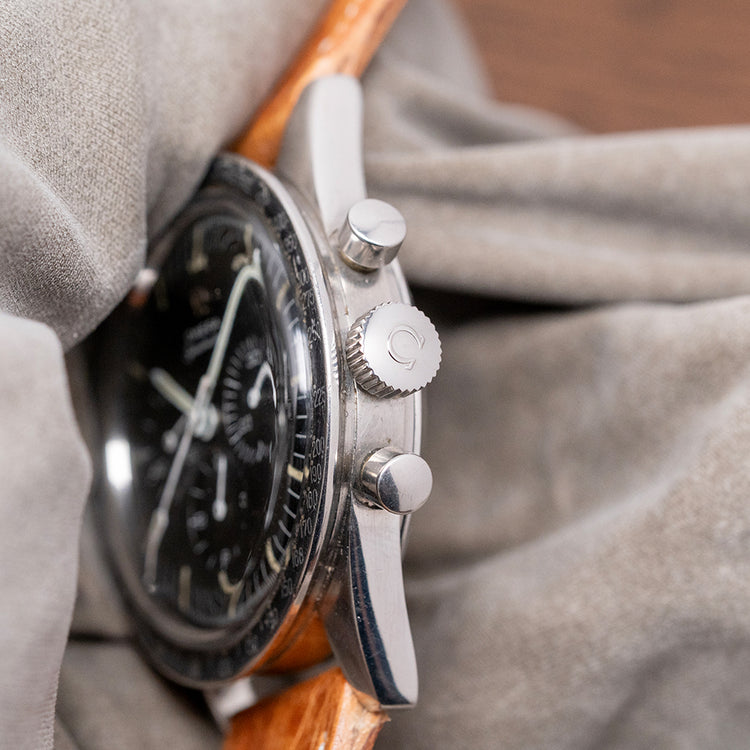
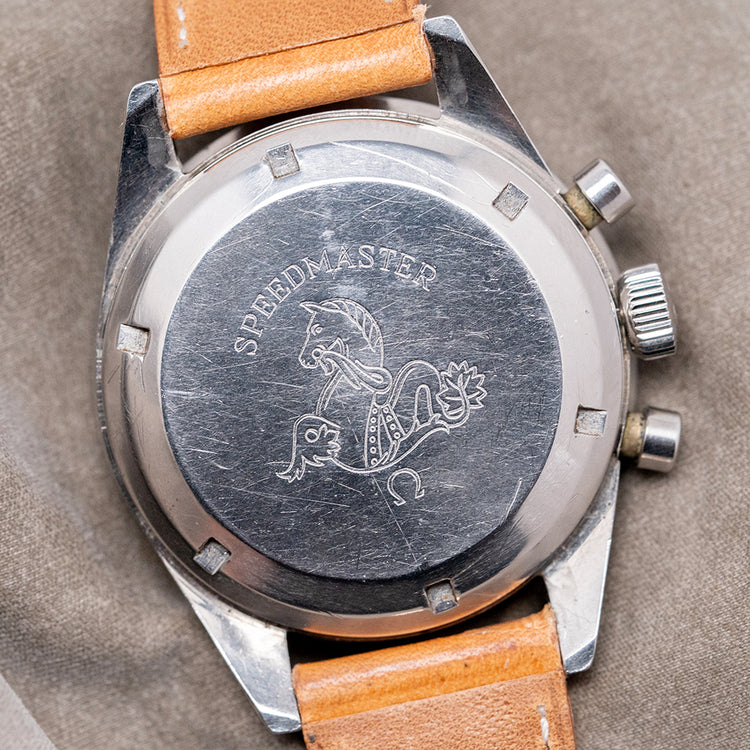
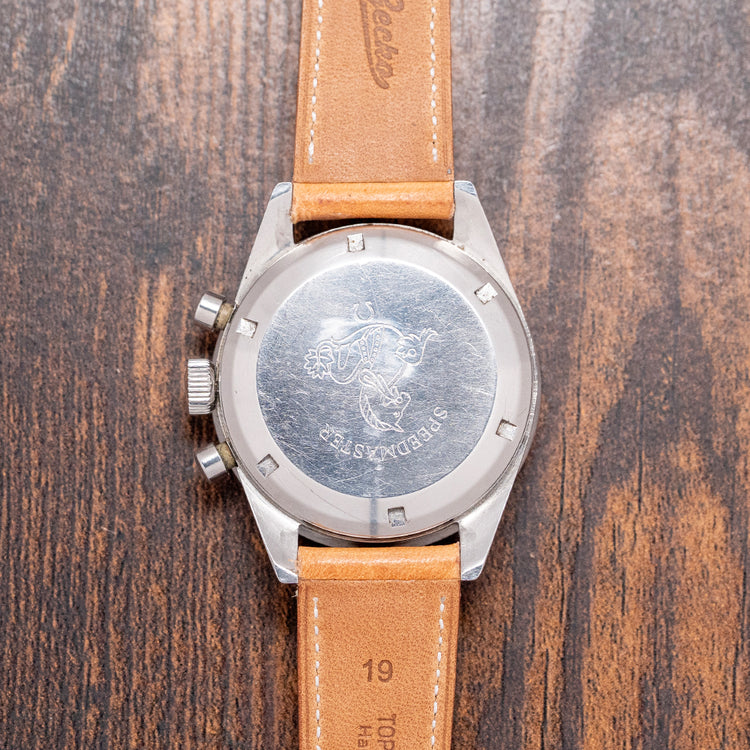
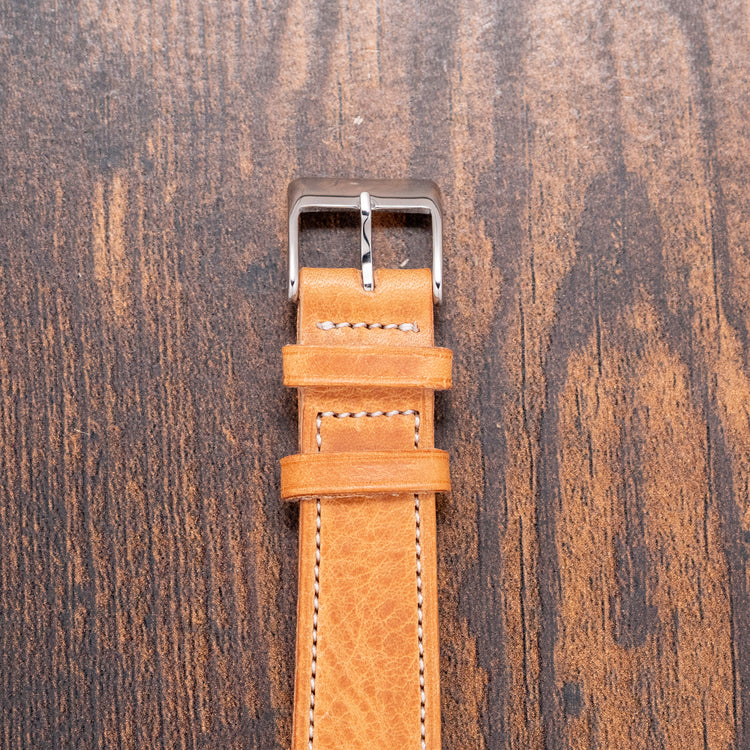
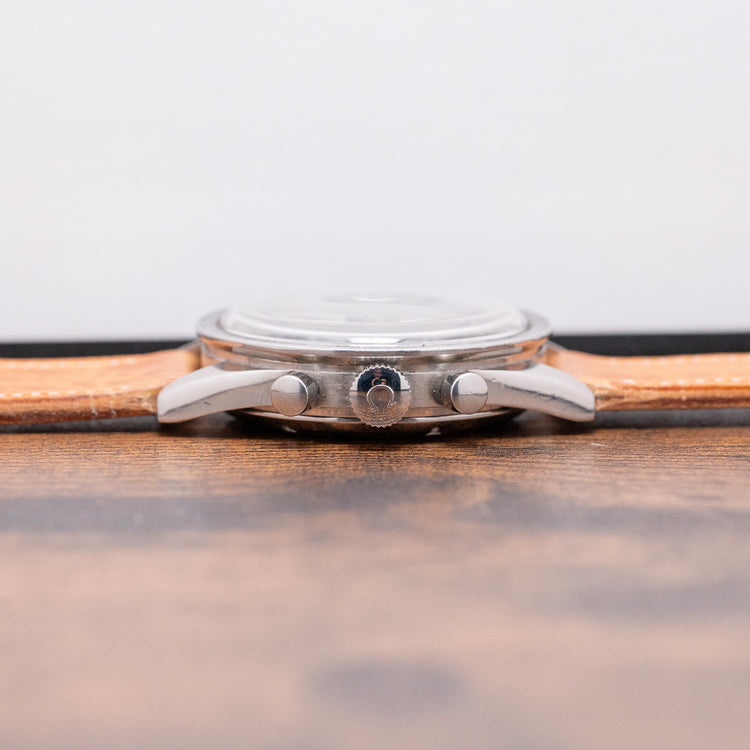
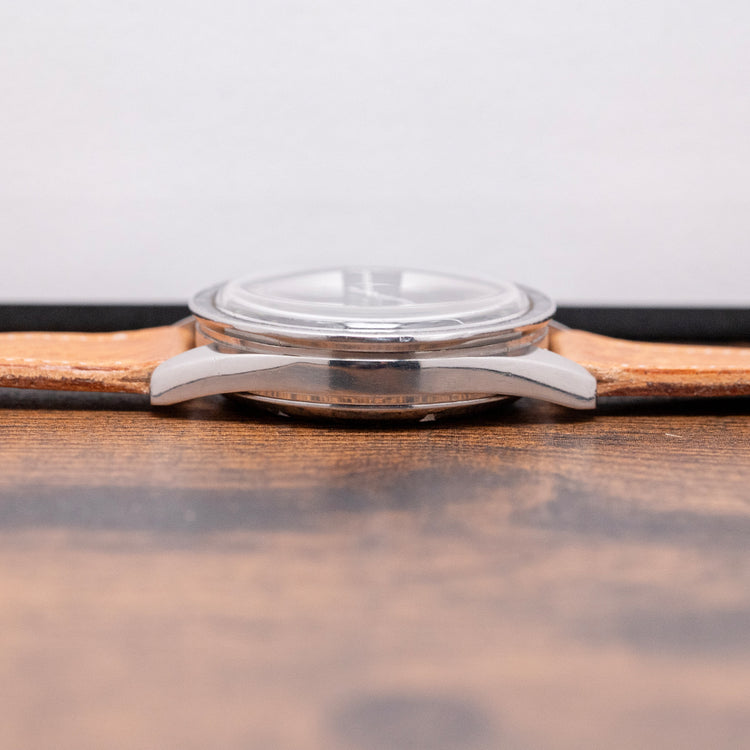
Here we have a rare 1964 Omega Speedmaster "Ed-White" Faded DON Bezel 105.003, a pre-professional Speedmaster that went under rigorous testing by NASA. The 105.003 was famously worn by Lt. Col. Edward White over his astronaut suit on June 3rd, 1965. He was the first US Astronaut to complete the very first extravehicular spacewalk (EVA) on this day during the Gemini IV mission. This was just 3 months after Omega was officially certified for use in the NASA space program. The 39mm stainless steel case curves over your wrist with tapered straight-ended lugs. A lug-to-lug length of 47.5mm and a case thickness of 12.5mm ensure a comfortable fit. Down the right side, we have the short piston-style chronograph pushers and a signed crown in the centre. The fixed stainless steel bezel has a Tachymeter scale insert that has “ghost” faded over time and has the characteristic “Dot Over Ninety”. A domed acrylic crystal sits above a black stepped dial, an outer minute track sits lower than the centre disc and is precisely executed with Tritium indexes marking the hours, at 3 o’clock a recessed 30-minute register, at 6 o’clock a recessed 12-hour register and finally at 9 o’clock a recessed continuous seconds register, each with a stick hand and precisely printed markings, slender original baton hands have been professionally relumed and complemented by an arrow paint chronograph hand, at 12 o’clock we have the applied Omega motif and Omega Speedmaster” printed underneath, on the bottom edge, you find “T Swiss Made T” completing this stunning historical chronograph. On the reverse a lightly engraved “Speedmaster” and Hippocampus that represents Neptune the God of the sea, it was conceived by Pierre Borie after seeing a picture of Neptune riding a chariot pulled by seahorses, it is the reason why the seahorses are wearing a bridle. Inside a manually wound Omega Cal. 321, 17 jewels, beating at a leisurely 18,000 beats per hour, column wheel chronograph based on a Lemania 2310. The watch comes paired with its well-suited 19mm leather strap.
Points of Mention
More
Less
Personal Note
More
Less
Specification
More
Less
Movement : Manually Wound Omega Cal. 321
Age : Circa. 1964
Year : 1964
Case Size : 39mm
Case Thickness : 12.5mm
Lug to Lug : 47.5mm
Lugs : 19mm
Condition : Pre-Owned
Box and Papers : None
Case Material : Stainless Steel
Warranty : 12-Months NON-Waterproof Warranty
The wrist model's wrist size is 7inch
About Omega
More
Less
Description
Here we have a rare 1964 Omega Speedmaster "Ed-White" Faded DON Bezel 105.003, a pre-professional Speedmaster that went under rigorous testing by NASA. The 105.003 was famously worn by Lt. Col. Edward White over his astronaut suit on June 3rd, 1965. He was the first US Astronaut to complete the very first extravehicular spacewalk (EVA) on this day during the Gemini IV mission. This was just 3 months after Omega was officially certified for use in the NASA space program. The 39mm stainless steel case curves over your wrist with tapered straight-ended lugs. A lug-to-lug length of 47.5mm and a case thickness of 12.5mm ensure a comfortable fit. Down the right side, we have the short piston-style chronograph pushers and a signed crown in the centre. The fixed stainless steel bezel has a Tachymeter scale insert that has “ghost” faded over time and has the characteristic “Dot Over Ninety”. A domed acrylic crystal sits above a black stepped dial, an outer minute track sits lower than the centre disc and is precisely executed with Tritium indexes marking the hours, at 3 o’clock a recessed 30-minute register, at 6 o’clock a recessed 12-hour register and finally at 9 o’clock a recessed continuous seconds register, each with a stick hand and precisely printed markings, slender original baton hands have been professionally relumed and complemented by an arrow paint chronograph hand, at 12 o’clock we have the applied Omega motif and Omega Speedmaster” printed underneath, on the bottom edge, you find “T Swiss Made T” completing this stunning historical chronograph. On the reverse a lightly engraved “Speedmaster” and Hippocampus that represents Neptune the God of the sea, it was conceived by Pierre Borie after seeing a picture of Neptune riding a chariot pulled by seahorses, it is the reason why the seahorses are wearing a bridle. Inside a manually wound Omega Cal. 321, 17 jewels, beating at a leisurely 18,000 beats per hour, column wheel chronograph based on a Lemania 2310. The watch comes paired with its well-suited 19mm leather strap.
Points of Mention
Personal Note
Specification
The Brand
Enquire or Book an Appointment
Would you like to discover further details about this watch, or perhaps arrange an appointment to view and try it on? Complete this form and a member of our team will get back to you shortly.
You May Also Like