1964 Audemars Piguet Ultra Thin 'Tank' Cal. 2003 18ct Gold Textured

Here we have a sophisticated 1964 Audemars Piguet Ultra Thin Cal. 2003, featuring a 26mm 18ct Yellow Gold rectangular case that sits comfortably on your wrist, thanks to its delicate tapered lugs. This stunning movement was jointly developed in 1953 with Vacheron Constantin and Jaeger-LeCoultre, and it was kept in production until 2002.

Read more...
Enquire
View additional images

More Information

Description

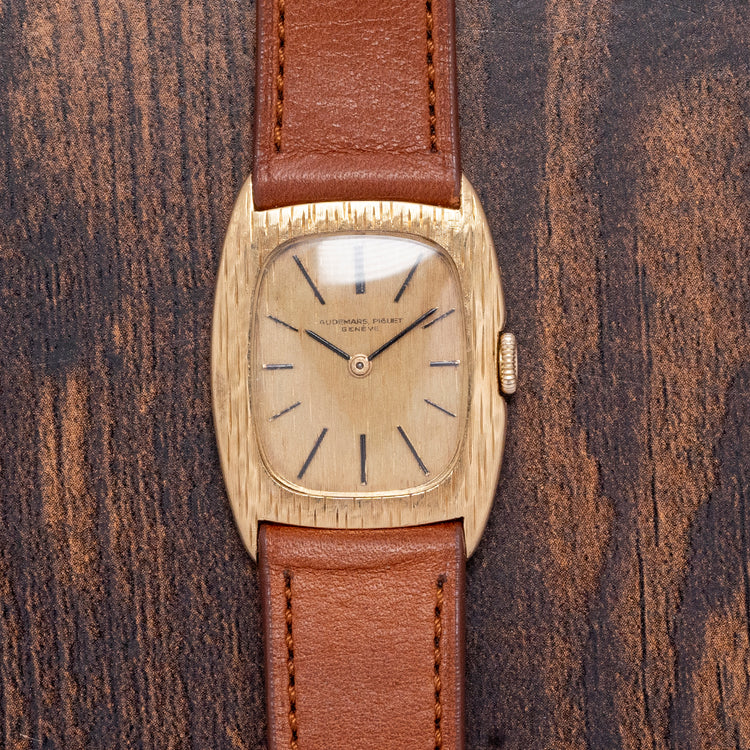
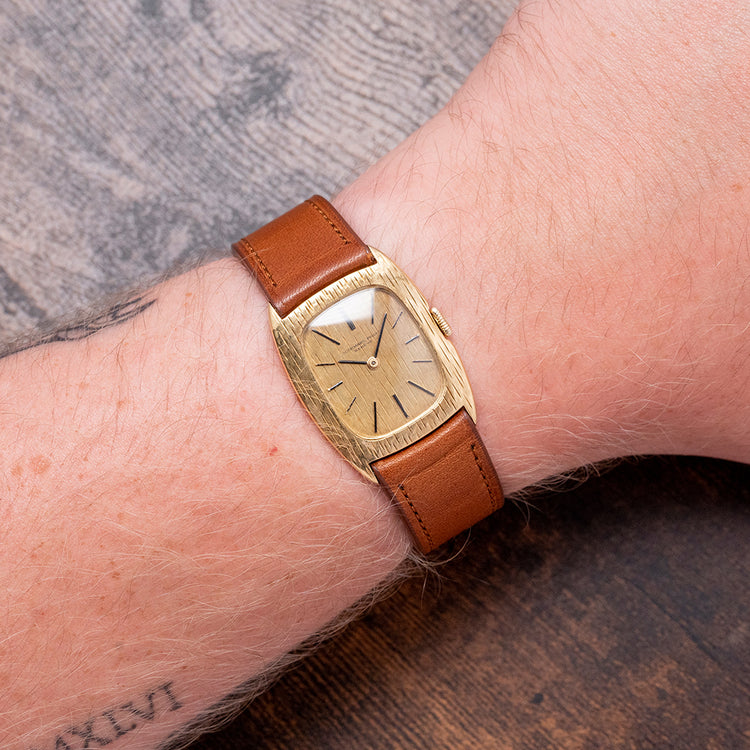
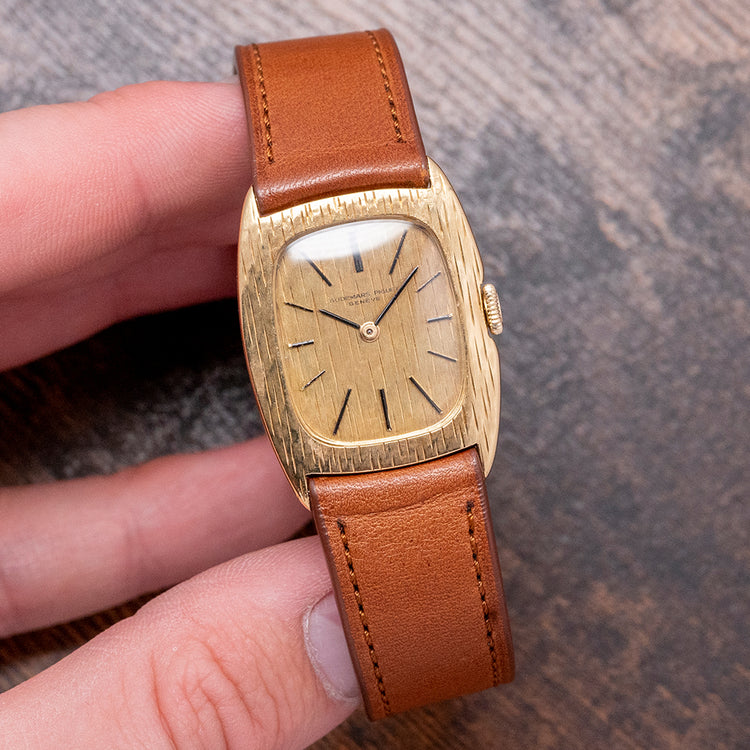
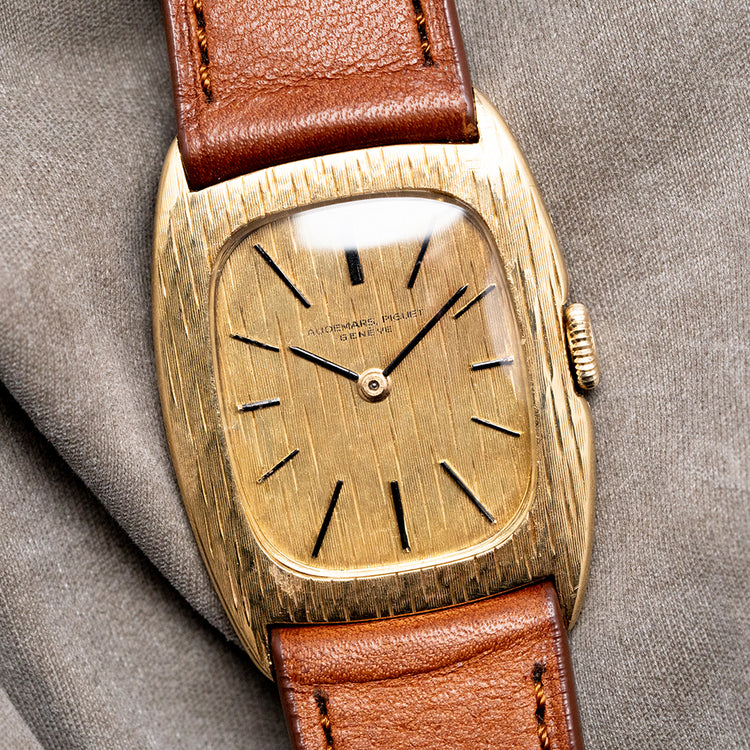
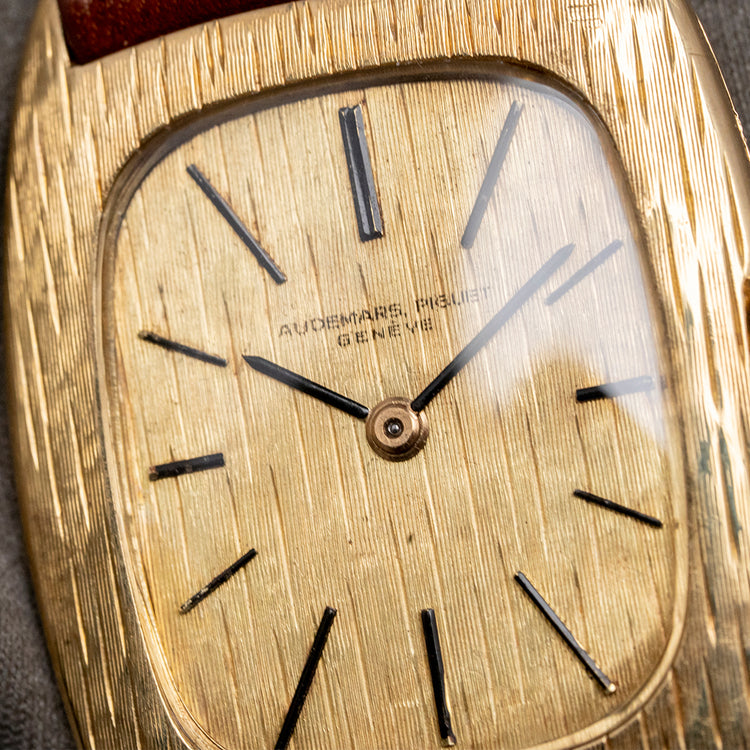
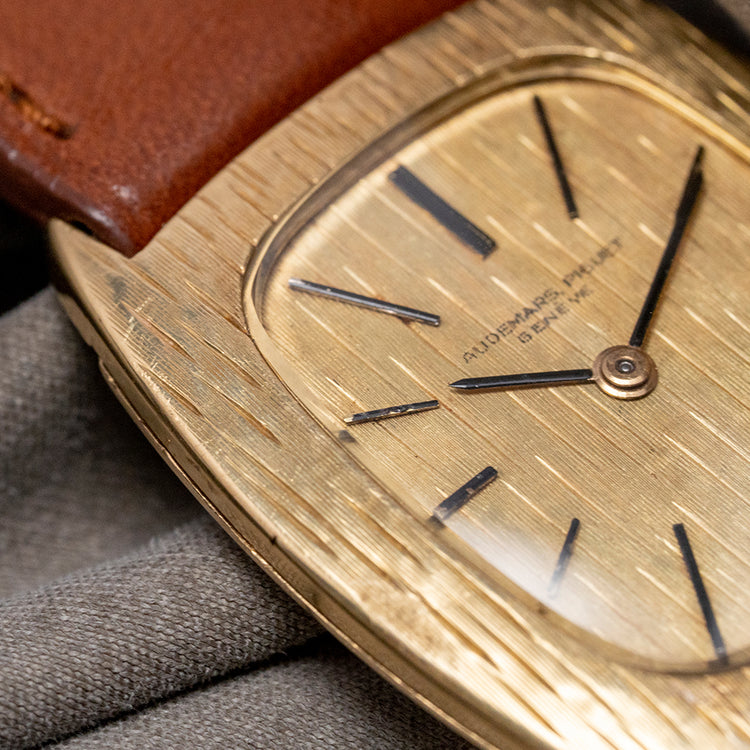
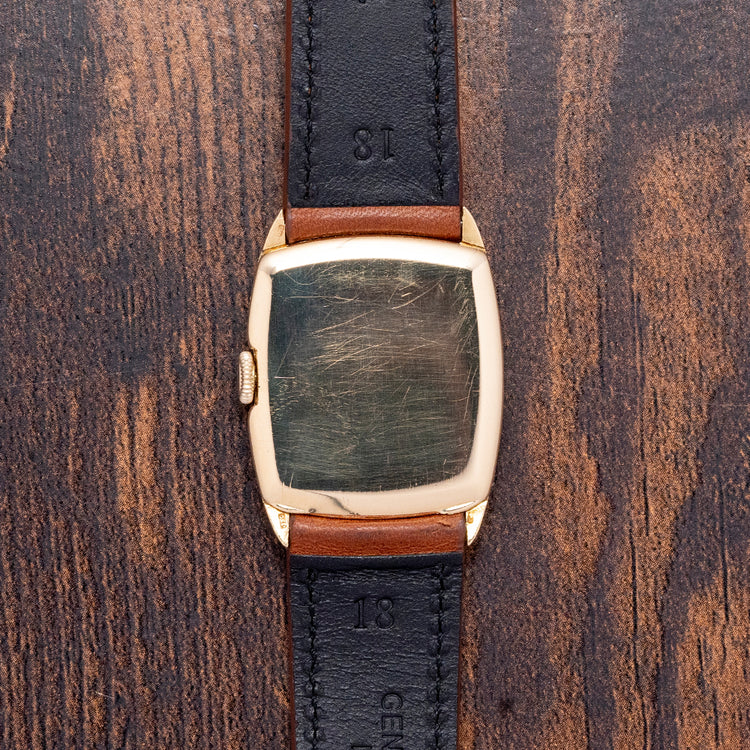
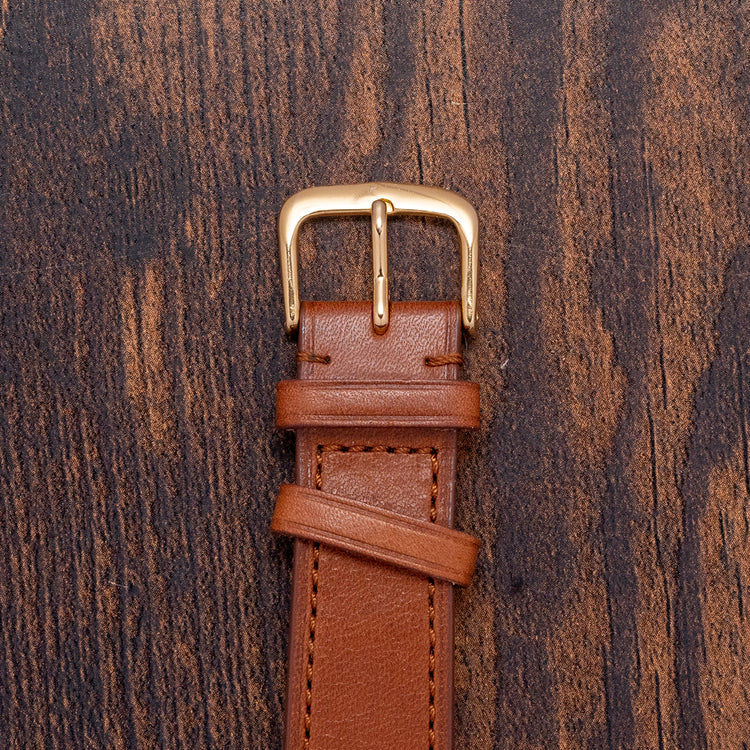
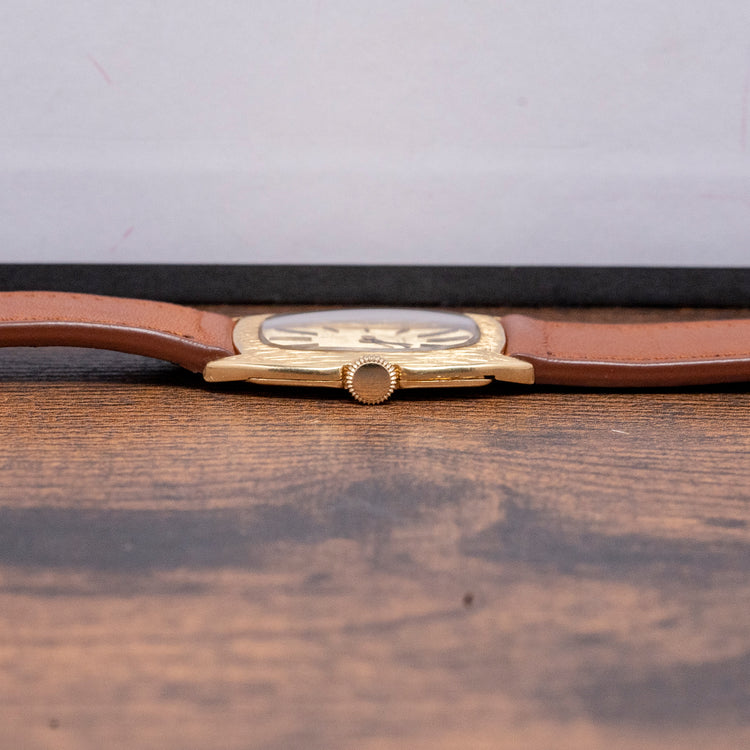
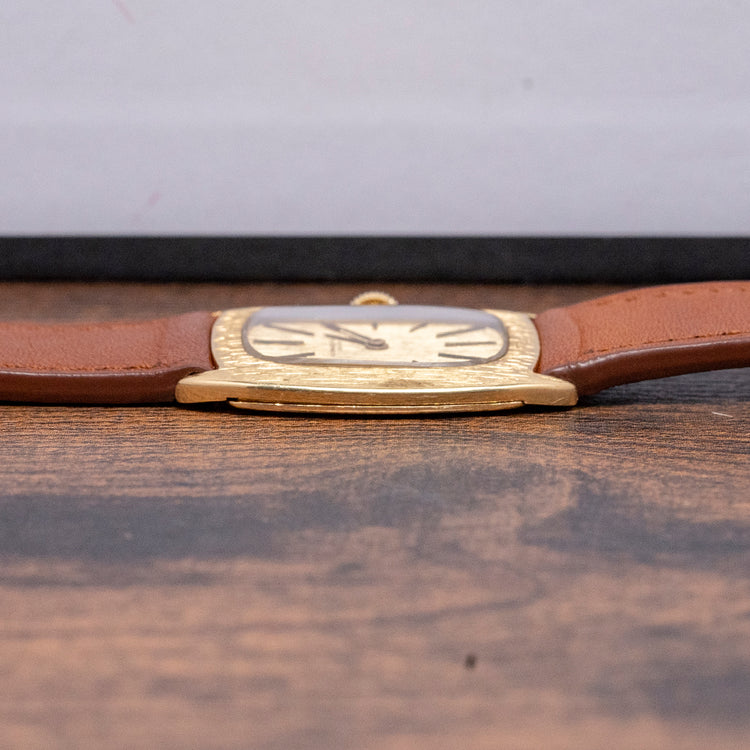
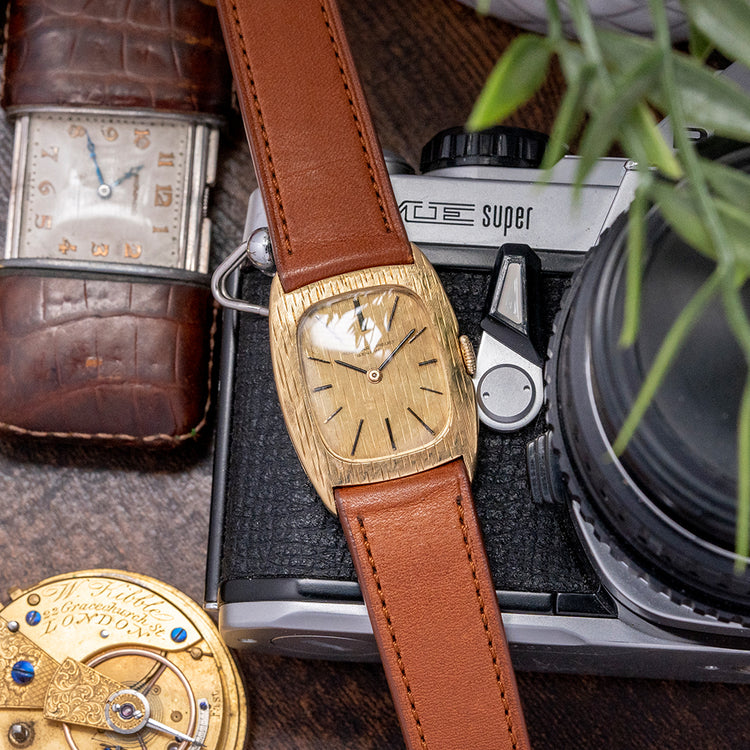
Here we have a sophisticated 1964 Audemars Piguet Ultra Thin Cal. 2003, featuring a 26mm 18ct Yellow Gold rectangular case that sits comfortably on your wrist, thanks to its delicate tapered lugs. A lug-to-lug length of 34mm and a case thickness of an incredibly thin 4.5mm ensure a comfortable fit. The case features rounded, soft corners and an interesting vertical pattern that resembles the bark of a tree. On the right side, a crown sits slightly recessed into the case. A flat crystal follows the contours of the case, protecting the vertically textured gold dial, repeating the same bark pattern as the case. Delicate thin baton indexes radiate with different thicknesses, marking the hours. Delicate baton hands complete this minimalist dress watch. At 12 o’clock, we have the Audemars Piguet motif. On the reverse, a snap-off 18ct Yellow Gold case back, the Gold hallmarks can be found stamped on the inside of the case, inside a manually wound Audemars Piguet Cal. 2003, 17 jewels, beating at a leisurely 18,000 beats per hour. It was the world's smallest movement, measuring 1.64mm thick due to a flat hairspring. This stunning movement was jointly developed in 1953 with Vacheron Constantin and Jaeger-LeCoultre, and it was kept in production until 2002. The watch comes paired with a suitable 18mm leather strap.

Points of Mention

This watch is sold “Watch Only” and therefore without its Audemars Piguet box or paperwork. The watch comes paired with a suitable 18mm leather strap. The watch is from Circa. 1964 and is sold in worn condition with signs of wear, but overall very fair condition, as can be seen from the photographs. The watch comes with our 12-Months NON-Waterproof Warranty.

Personal Note

It is incredible to think that the brand most known for the Royal Oak was capable of making such incredible watches in its past. That is not to say the Royal Oak isn't incredible, but Audemars Piguet is capable of so much more than just that, and this impressive ultra-thin 'Tank' from 1964 is the perfect example of that. Powered by the AP Calibre 2003 and cased in an 18ct yellow gold case with a textured, bark-like finish that flows from the case to the dial, this is one to see in the metal for yourself. Do not hesitate to book an appointment, but be warned, you will likely fall in love with it as much as I have!

Specification

Reference : N/A
Movement : Manually Wound Audemars Piguet Cal. 2003
Age : Circa. 1964
Year : 1964
Case Size : 26mm
Case Thickness : 4.5mm
Lug to Lug : 34mm
Lugs : 18mm
Condition : Pre-Owned
Box and Papers : None
Case Material : 18ct Yellow Gold
Warranty : 12-Months NON-Waterproof Warranty
The wrist model's wrist size is 7inch

About Audemars Piguet

Audemars Piguet was established in Le Brassus, a quaint village nestled within the Vallée de Joux. The company was founded in 1875 by two independent watchmakers, Jules Louis Audemars and Edward Auguste Piguet, who collaborated to create the brand. A hallmark of their innovation, they launched the first minute repeater wristwatch in 1892 and followed it with the release of the first Grand Complication pocket watch in 1899, which included features such as a minute repeater, alarm, perpetual calendar, deadbeat seconds, chronograph, and split-seconds hand. In 1925, they introduced the thinnest pocket watch calibre, and in 1934, they released the first skeletonised pocket watch. By 1946, they had created the world’s thinnest wristwatch, and in 1955, they unveiled the first wristwatch equipped with a perpetual calendar that included a leap-year indicator. A pivotal moment for the brand occurred in 1972 at the Swiss Watch Show Baselworld, where they collaborated with designer Gerald Genta to conceptualise a luxury sports watch. This partnership led to the birth of the Royal Oak, which became known as the world’s most expensive steel watch. In 1975, Jacqueline Dimier designed the first ladies' Royal Oak. Despite the challenges posed by the quartz crisis in the 1980s and 1990s, Audemars Piguet continued to innovate, introducing the world’s first automatic Tourbillon in 1986. In 1992, a collaboration with Renaud et Papi resulted in the creation of the Manufacture Les Saignoles, a dedicated research centre for horology located in Le Locle, Switzerland. The Royal Oak Offshore collection was launched in 1993 to commemorate the 20th anniversary of the Royal Oak. Stephen Urquhart, then CEO of Audemars Piguet, tasked Emmanuel Gueit, a young Swiss designer, with creating a watch tailored for youthful sports enthusiasts. The Royal Oak Offshore was unveiled at Baselworld in 1993, although Genta disapproved, feeling it strayed too far from his original design. The all-black Royal Oak Offshore gained additional visibility when it was featured in Arnold Schwarzenegger's 1999 film, "End of Days." In 2020, the Audemars Piguet museum was inaugurated in the Vallée de Joux, showcasing over 300 pieces that celebrate the brand’s extensive history. The impressive Arc building, housing all of the production facilities under one roof, was completed in 2025. Today, Audemars Piguet remains a family-owned business, represented by the fourth generation, Olivier Audemars, who serves as the Vice-Chairman of the Board of Directors.

Description

Here we have a sophisticated 1964 Audemars Piguet Ultra Thin Cal. 2003, featuring a 26mm 18ct Yellow Gold rectangular case that sits comfortably on your wrist, thanks to its delicate tapered lugs. A lug-to-lug length of 34mm and a case thickness of an incredibly thin 4.5mm ensure a comfortable fit. The case features rounded, soft corners and an interesting vertical pattern that resembles the bark of a tree. On the right side, a crown sits slightly recessed into the case. A flat crystal follows the contours of the case, protecting the vertically textured gold dial, repeating the same bark pattern as the case. Delicate thin baton indexes radiate with different thicknesses, marking the hours. Delicate baton hands complete this minimalist dress watch. At 12 o’clock, we have the Audemars Piguet motif. On the reverse, a snap-off 18ct Yellow Gold case back, the Gold hallmarks can be found stamped on the inside of the case, inside a manually wound Audemars Piguet Cal. 2003, 17 jewels, beating at a leisurely 18,000 beats per hour. It was the world's smallest movement, measuring 1.64mm thick due to a flat hairspring. This stunning movement was jointly developed in 1953 with Vacheron Constantin and Jaeger-LeCoultre, and it was kept in production until 2002. The watch comes paired with a suitable 18mm leather strap.

Points of Mention

Personal Note

Specification

The Brand

Enquire or Book an Appointment

Would you like to discover further details about this watch, or perhaps arrange an appointment to view and try it on? Complete this form and a member of our team will get back to you shortly.

By submitting this form, you agree to our Privacy Policy.

You May Also Like