1959 IWC 'Calatrava' Steel Manual Cal. 89 Silver Dial 35mm

Regular price
£1,200.00
Sale price
£1,200.00
Regular price
£1,350.00
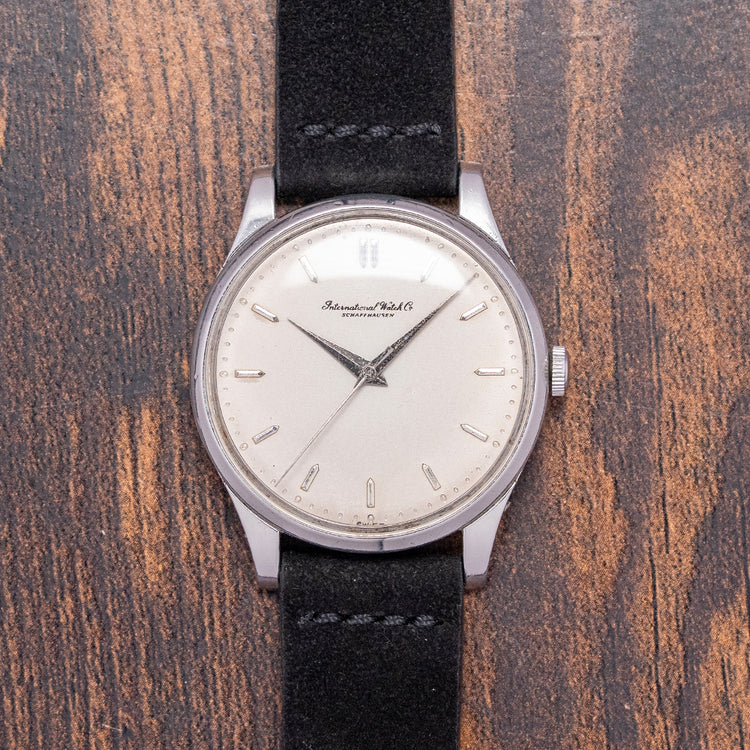
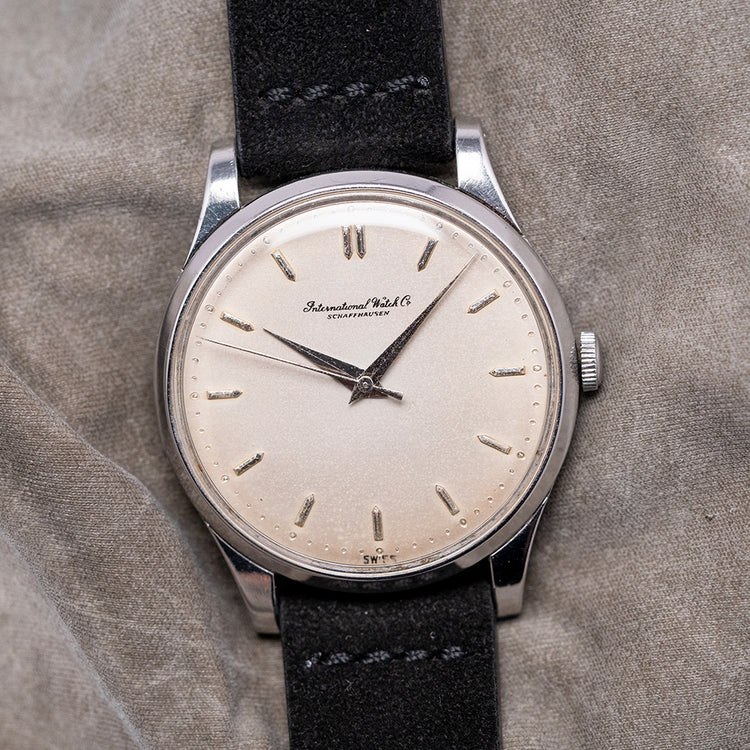
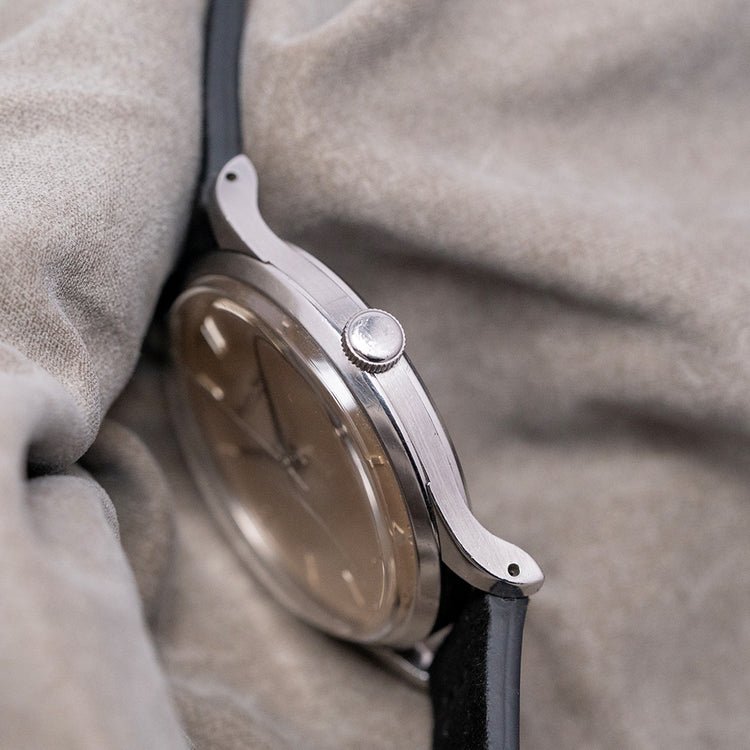
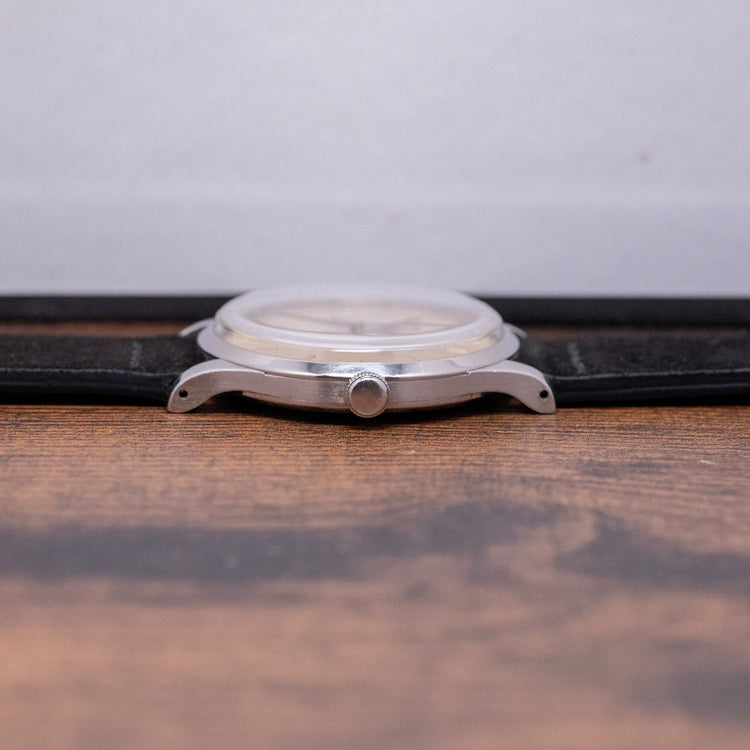
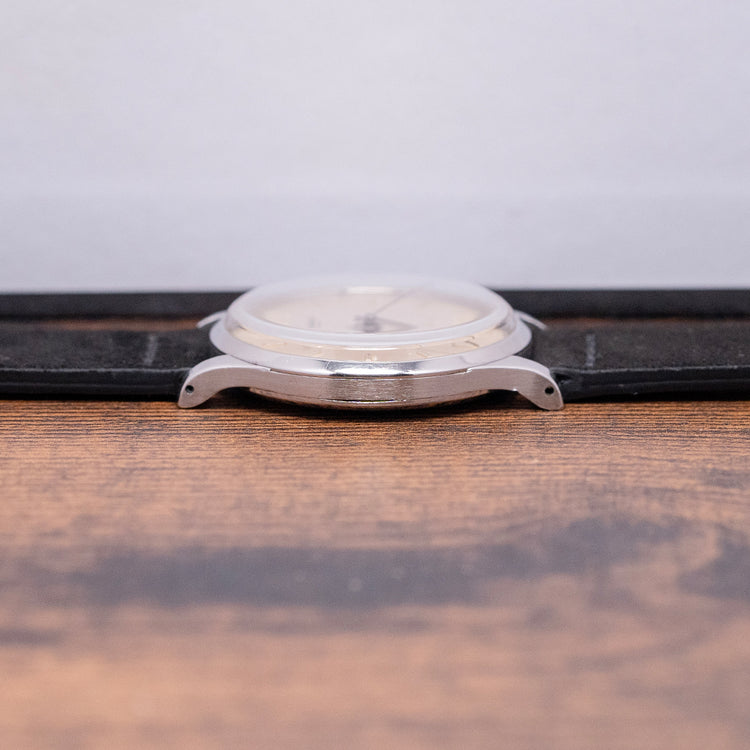
Here we have a curvaceous 1959 IWC 'Calatrava' Steel Manual Cal. 89 Silver Dial featuring a 35mm stainless steel round case that sits comfortably on your wrist, thanks to the curved drilled lugs. The curved flanks lead to a lug-to-lug length of 42mm and a case thickness of 9.5mm.

Read more...
View additional images

More Information

Description

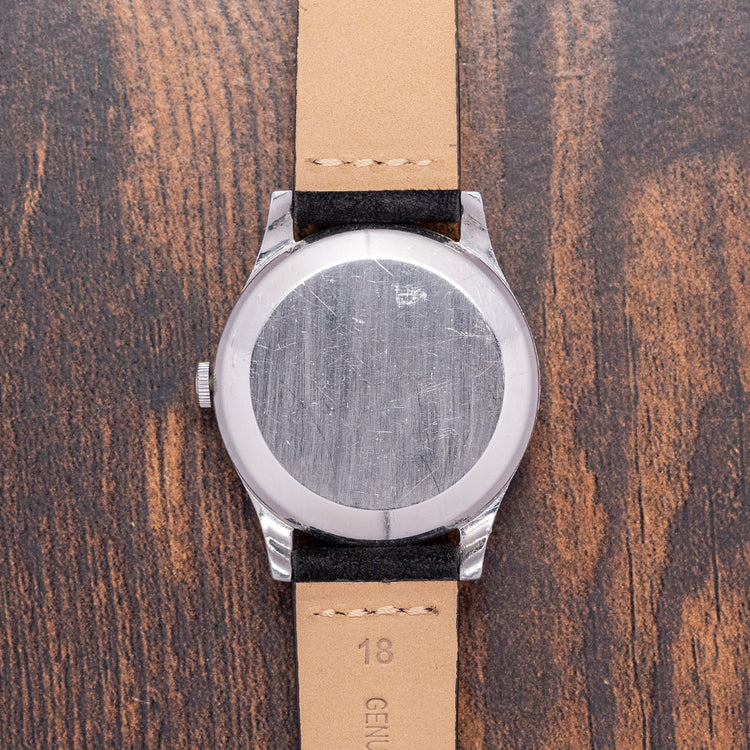
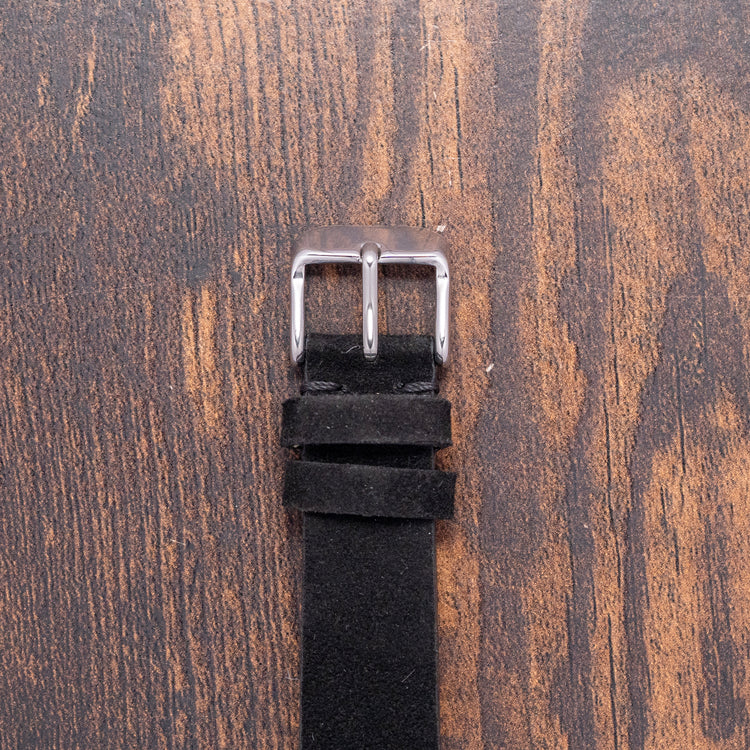
Here we have a curvaceous 1959 IWC 'Calatrava' Steel Manual Cal. 89 Silver Dial featuring a 35mm stainless steel round case that sits comfortably on your wrist, thanks to the curved drilled lugs. The curved flanks lead to a lug-to-lug length of 42mm and a case thickness of 9.5mm, and on the right side is a push/pull crown with a coin edge for grip. A thin, smooth, polished bezel holds a domed crystal above a striking silver ‘Calatrava’ dial, an outer ring of pips mark the minutes surrounding applied bullet-shaped indexes marking the hours, elegant slim Dauphine hands are complemented by a tapered second hand, at noon you find the original International Watch Company motif in its distinctive swirling script completes this incredibly sophisticated dress watch. On the reverse, a polished and brushed case back, inside a manually wound IWC Cal. 89, 17 jewels, beating at a leisurely 18,000 beats per hour, developed by Albert Pellaton in 1946 and remained in production until 1979. It comes paired with its well-suited aftermarket 18mm leather strap and pin buckle.

Points of Mention

This watch is sold as "Watch Only" and, therefore, comes with no original IWC box or paperwork. It comes paired with its well-suited aftermarket 18mm leather strap and pin buckle. The watch is from Circa. 1959 and sold in worn vintage condition, featuring an early refinished dial, as shown. The watch comes with our 12-Months NON-Waterproof Warranty.

Personal Note

Vintage IWC 'Calatravas' offer some of the best value for money in the vintage watch world, along with Omega. This example from 1959 features a brilliant 35mm case and is powered by the legendary manually wound IWC calibre 89. If you are in the market for a great vintage watch that won't break the bank but also punches well above its price, this is the one for you. Snap it up and add it to your collection today!

Specification

Reference : 1511748
Movement : Manually Wound IWC Cal. 89
Age : Circa. 1959
Year : 1959
Case Size : 35mm
Case Thickness : 9.5mm
Lug to Lug : 42mm
Lugs : 18mm
Condition : Pre-Owned
Box and Papers : None
Case Material : Stainless Steel
Warranty : 12-Months NON-Waterproof Warranty
The wrist model's wrist size is 7inch

About IWC

In 1867, a passionate visionary named Florentine embarked on a quest to revolutionise the art of watchmaking in Europe by applying for a passport. Fueled by the ambition to craft timepieces using the innovative American system of watchmaking, he drew inspiration from the renowned Federal Armouries at Springfield and Harpers Ferry. This meticulous system was designed for armaments requiring precision-engineered interchangeable parts—an ideal match for the world of horology. As a true pioneer, Florentine was instrumental in introducing this groundbreaking approach to the Swiss watchmaking industry. By 1868, Florentine had arrived in the picturesque town of Schaffhausen, Switzerland, where he teamed up with Charles Kidder. Together, they founded a company originally named F. A. Jones & Co. This name would evolve into the iconic IWC International Watch Company, a brand that would come to symbolise excellence in watchmaking. In 1876, after years of dedication, Florentine returned to the United States, where he eventually retired, leaving behind a legacy that lasted until his passing in 1916. The year 1885 marked a significant milestone for IWC with the launch of the first pocket watches featuring a revolutionary digital hours and minutes display known as the Pallweber system. As time progressed, the company continued to break new ground, producing one of the first ladies' wristwatches in 1899, showcasing IWC's commitment to innovation and inclusivity in horological design. In 1905, Ernst Jakob Homberger took over IWC's management on behalf of Rauschenbach's heirs, eventually becoming the sole owner after acquiring C.G. Jung's holdings in 1929. The following years saw remarkable advancements, such as the introduction of IWC's first pilot's watch in 1936, which featured a clever rotating bezel and indicator to log take-off times. The iconic Portuguese watch was designed in 1939, followed closely by the creation of the Big Pilot 52T SC, which catered to a growing demand for larger timepieces with a central second hand. During the tumultuous times of World War II, IWC introduced its first W.W.W. military watch in 1944, specifically crafted for the British military. Four years later, the Pilot's Watch Mark 11 was designed, incorporating an iron cage to protect against magnetic fields. A pivotal moment came in 1950 when Albert Pellaton unveiled the Calibre 85, IWC's first automatic movement featuring an innovative patented pawl-winding system. In 1955, Hans Ernst Homberger became the last private owner of IWC, continuing the legacy of craftsmanship and innovation. The late 1960s brought new challenges with the quartz crisis; however, IWC managed to adapt and evolve. In 1967, they launched the Aquatimer dive watch, and in collaboration with other Swiss brands, they participated in the development of the Beta 21 quartz movement in 1969. The renowned watch designer Gerald Genta made his mark in 1976 with the creation of the iconic Ingenieur, symbolising elegance and engineering prowess. A significant shift occurred in 1978 when German instrument manufacturer VDO Adolf Schindling AG acquired IWC, marking a new era for the brand. During this time, F. A. Porsche designed a groundbreaking chronograph, recognised as the world's first timepiece encased in titanium, a material primarily used in the aviation industry. The spirit of innovation that Florentine nurtured throughout his life continues to resonate in modern IWC watches. In 1990, the company unveiled a horological masterpiece: the Grand Complication, featuring a perpetual calendar, minute repeater, and moon phase indicator—a true testament to IWC's craftsmanship. At the prestigious Salon International de la Haute Horlogerie (SIHH) in Geneva in 2000, IWC dazzled attendees with the introduction of the Big Pilot's Watch. The watch showcased an exceptional automatic 7-day movement that earned accolades from watch enthusiasts and collectors alike. Since then, IWC has become an esteemed member of the Richemont Group, a collective of luxury brands. In 2017, IWC unveiled its groundbreaking invention, “Ceratanium®,” a unique blend of titanium and ceramic alloy meticulously engineered over five years of research and development. This remarkable material combines the lightweight nature of titanium with the strength and scratch resistance of ceramic, yielding a sleek, stealthy black finish that has since become iconic. Today, IWC continues to push the boundaries of watchmaking, consistently innovating and expanding the horizons of horological artistry while honouring its rich heritage.

Description

Here we have a curvaceous 1959 IWC 'Calatrava' Steel Manual Cal. 89 Silver Dial featuring a 35mm stainless steel round case that sits comfortably on your wrist, thanks to the curved drilled lugs. The curved flanks lead to a lug-to-lug length of 42mm and a case thickness of 9.5mm, and on the right side is a push/pull crown with a coin edge for grip. A thin, smooth, polished bezel holds a domed crystal above a striking silver ‘Calatrava’ dial, an outer ring of pips mark the minutes surrounding applied bullet-shaped indexes marking the hours, elegant slim Dauphine hands are complemented by a tapered second hand, at noon you find the original International Watch Company motif in its distinctive swirling script completes this incredibly sophisticated dress watch. On the reverse, a polished and brushed case back, inside a manually wound IWC Cal. 89, 17 jewels, beating at a leisurely 18,000 beats per hour, developed by Albert Pellaton in 1946 and remained in production until 1979. It comes paired with its well-suited aftermarket 18mm leather strap and pin buckle.

Points of Mention

Personal Note

Specification

The Brand

Enquire or Book an Appointment

Would you like to discover further details about this watch, or perhaps arrange an appointment to view and try it on? Complete this form and a member of our team will get back to you shortly.

By submitting this form, you agree to our Privacy Policy.

You May Also Like