1944 Omega 6B/159 RAF Pilots Wristwatch 33mm 2292

Regular price
£1,950.00
Sale price
£1,950.00
Regular price
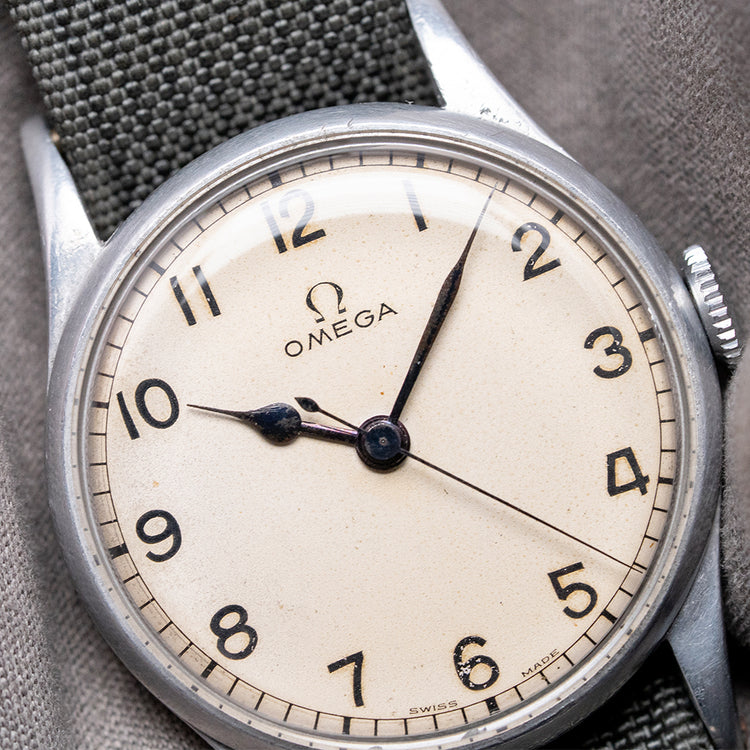
Here we have a rare 1944 Omega 6B/159 RAF Pilots Wristwatch 2292 issued to RAF pilots and navigators during World War II, used for dead reckoning calculations, allowing pilots and navigators to determine their position based on speed, heading, and elapsed time. Featuring a 33mm duraluminum case.

Read more...
View additional images

More Information

Description

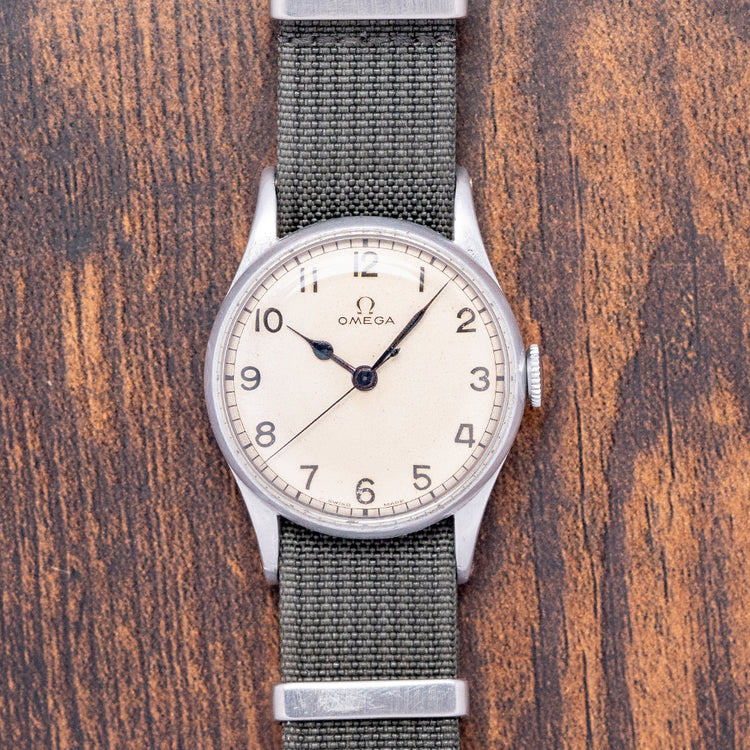
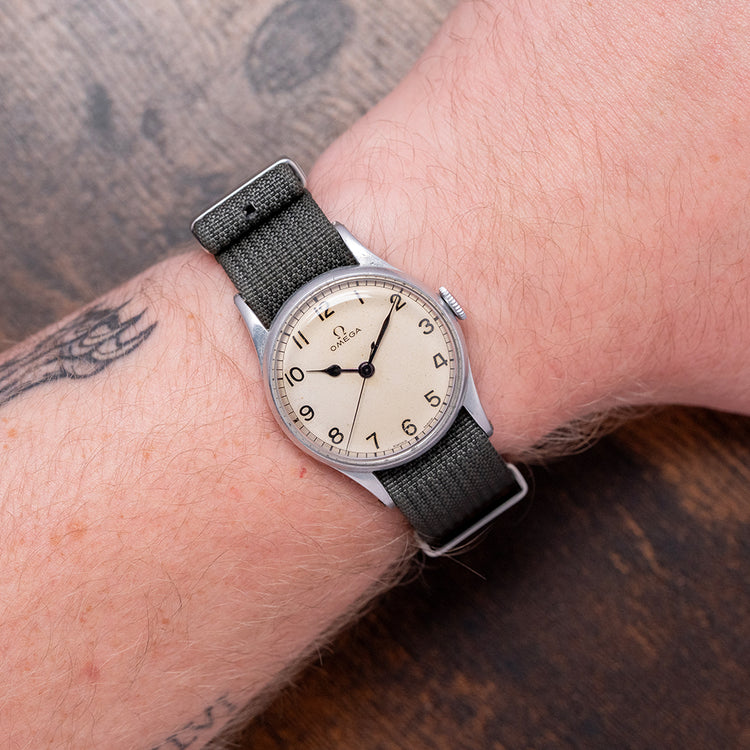
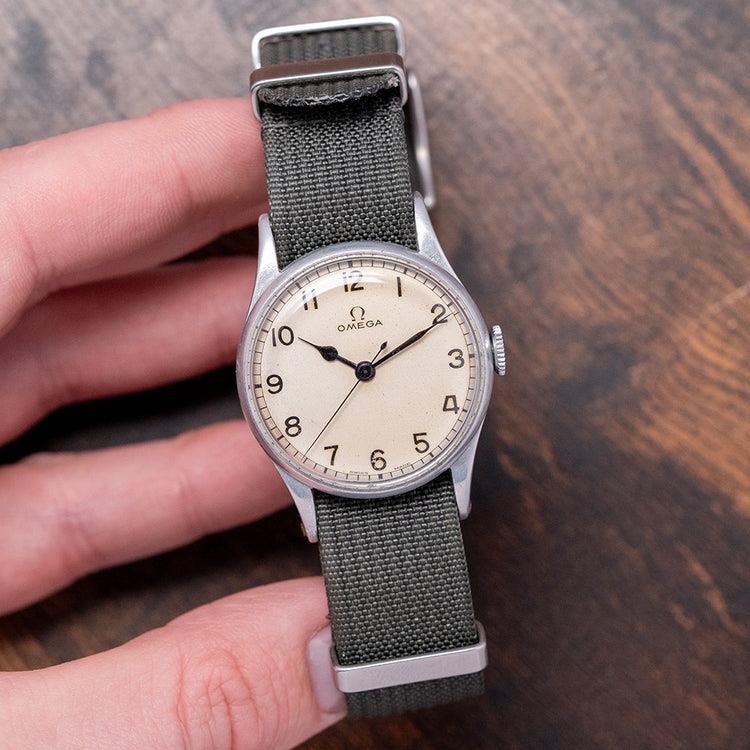
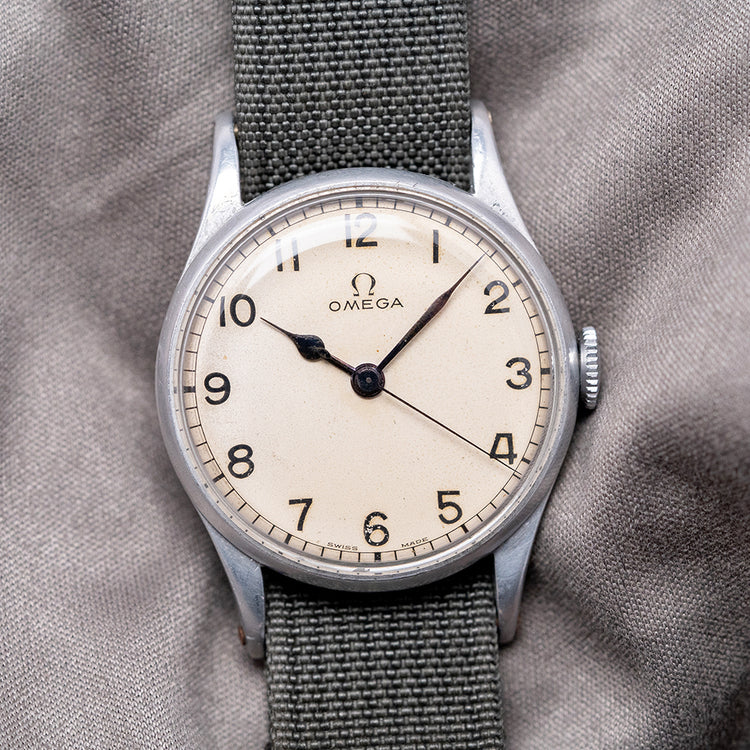
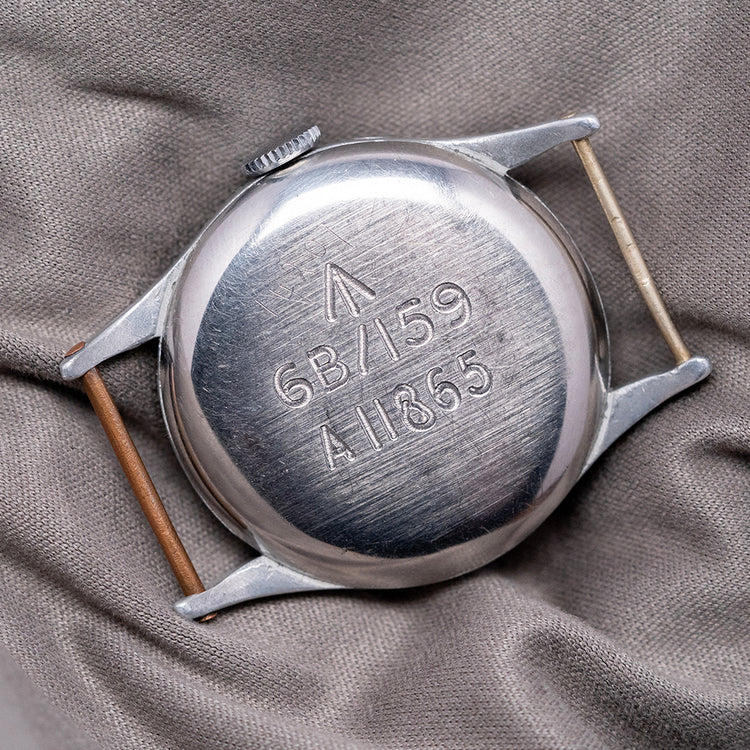
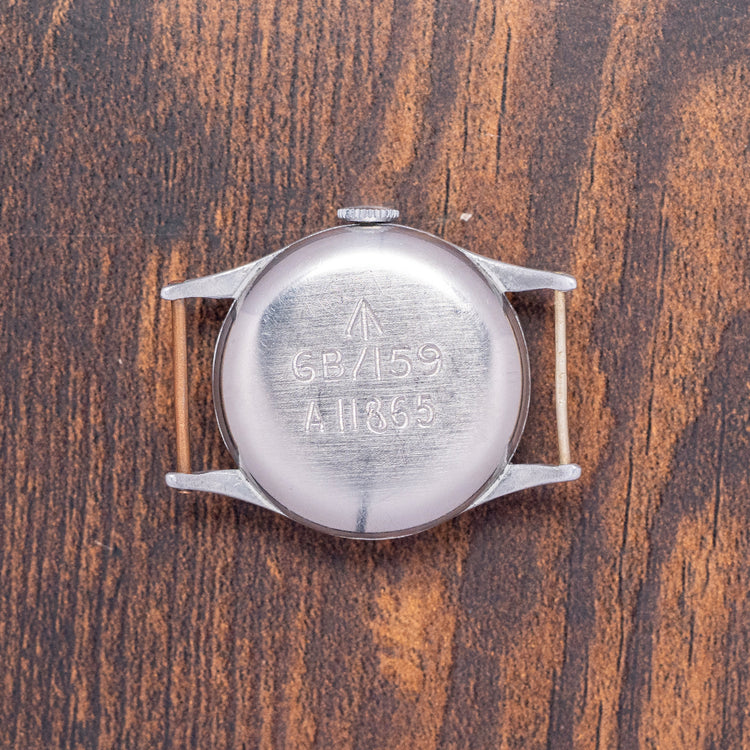
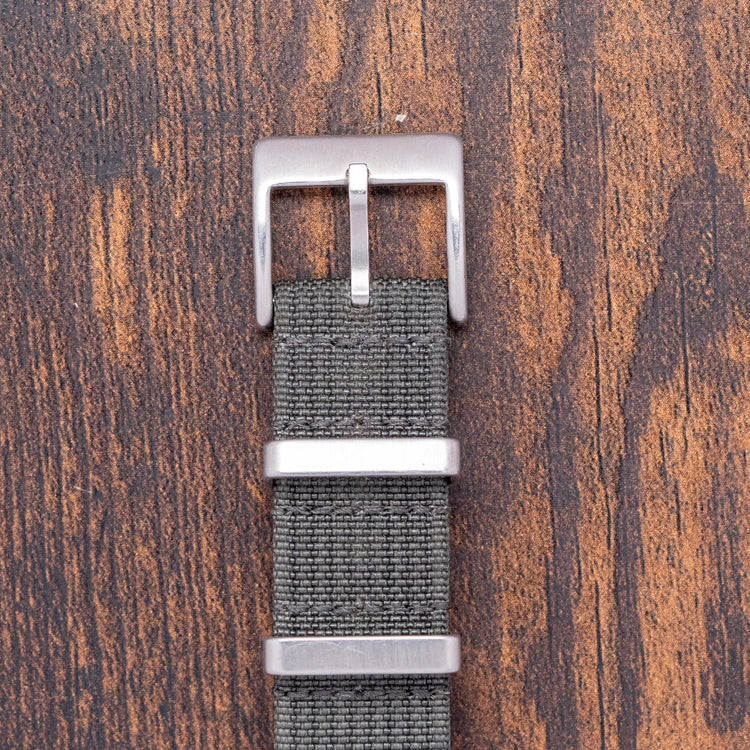
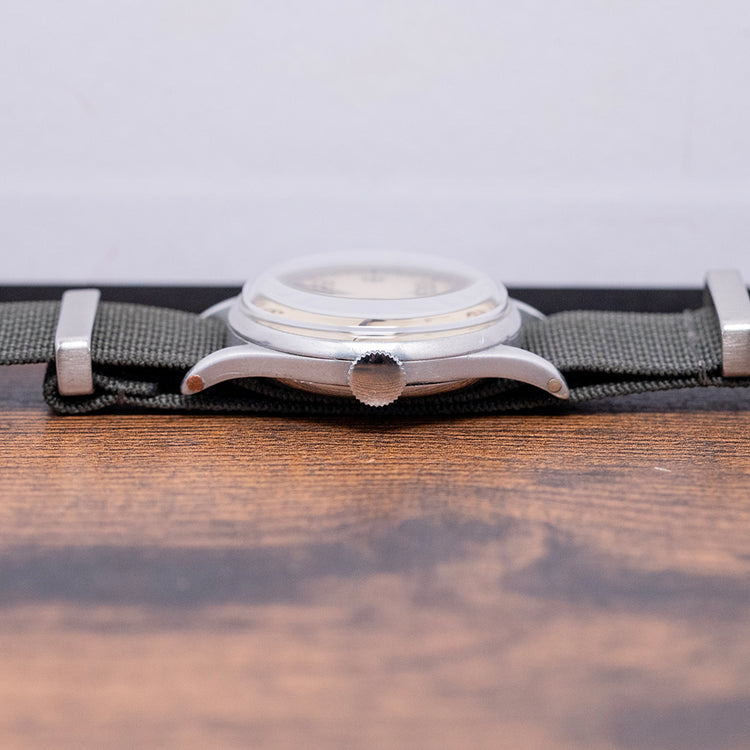
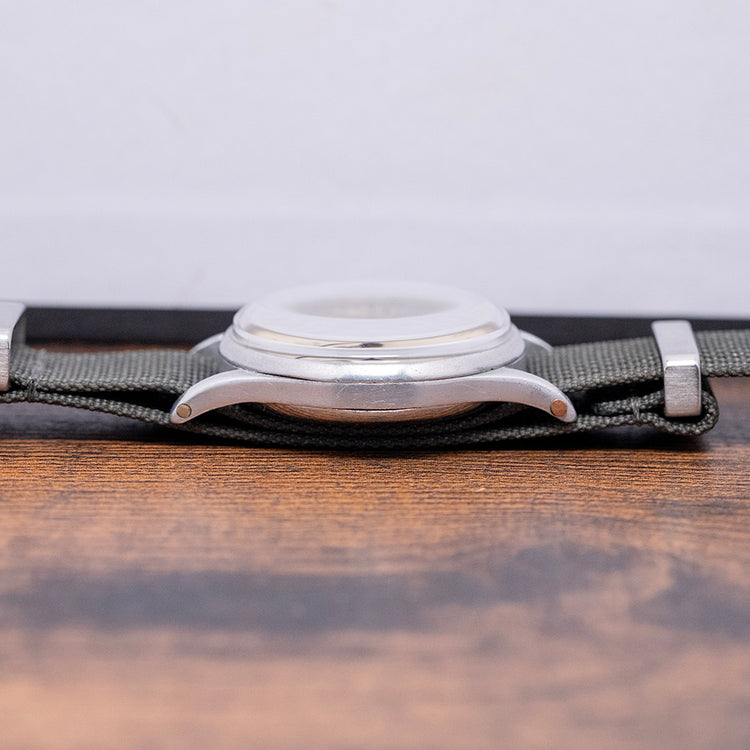
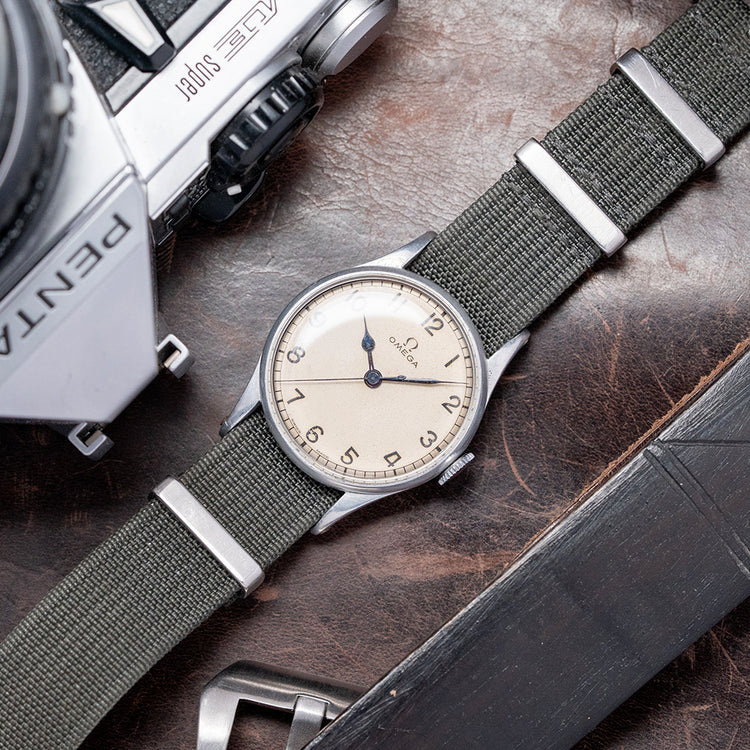
Here we have a rare 1944 Omega 6B/159 RAF Pilots Wristwatch 2292 issued to RAF pilots and navigators during World War II, used for dead reckoning calculations, allowing pilots and navigators to determine their position based on speed, heading, and elapsed time. Featuring a 33mm duraluminum case that curves over your wrist with fine tapered lugs and fixed spring bars, perfect for NATO straps. Its curved flanks lead to a lug-to-lug length of 42.5mm and a case thickness of 12mm, ensuring a comfortable fit on your wrist. On the right side, there is a large coin-edged crown. The smooth steel bezel holds a domed crystal above a cream dial. An outer railroad minute track surrounds black Arabic numerals marking the hours, thermally blued spade and syringe hands are complemented by a sweeping second hand. At noon, we have the Omega motif. On the reverse, a snap-off case back,  engraved with 6B/159, A11865 and the Broad Arrow (also known as a pheon or crow's foot), a stylised arrowhead used for centuries by the British military and government to mark property and ordnance. Inside a manually wound Omega Cal. The 30T2 SC, featuring 16 jewels that beat at a leisurely 18,000 beats per hour, is highly regarded by collectors and the industry for its reliability and accuracy. The Cal. 30 series of movements was produced from 1939 until 1963. It comes paired with a well-suited aftermarket NATO strap.

Points of Mention

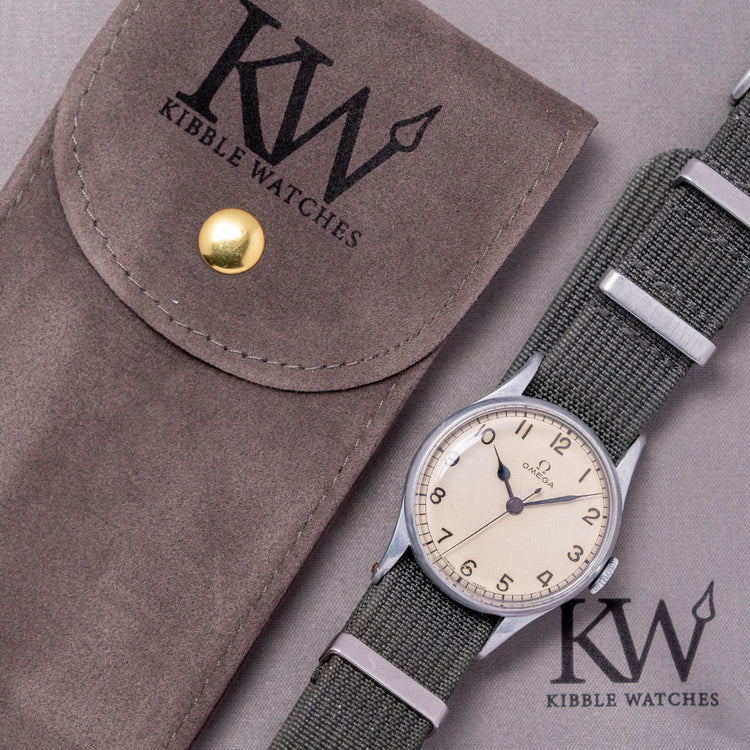
This watch is sold as "Watch Only" and, therefore, comes with no original Omega box or paperwork. It is paired with a well-suited aftermarket 18mm NATO strap. The watch is from the Circa 1944 and is sold in worn vintage condition, with little signs of wear across the case, as you can see from the photos. The watch comes with our 12-Month NON-Waterproof Warranty.

Personal Note

I have been fortunate to have purchased and sold many military watches. Beyond the Dirty Dozen, I would say the 6B/159 are some of the most recognisable models out there, especially from Omega. This is the Omega 6B/159 RAF Pilots wristwatch, in 33mm, this reference 2292 is from 1944 and looks incredible for its age and no doubt crazy history it has lived. I would not hesitate to add this vintage gem to your collection today. Examples like this are getting harder and harder to find as time goes on!

Specification

Reference : 6B/159 - 2292
Movement : Manually Wound Omega Cal. 30T2 SC
Age : Circa. 1944
Year : 1944
Case Size : 33mm
Case Thickness : 12mm
Lug to Lug : 42.5mm
Lugs : 18mm
Condition : Pre-Owned
Box and Papers : None
Case Material : Duraluminum
Warranty : 12-Months NON-Waterproof Warranty
The wrist model's wrist size is 7inch

About Omega

Formerly known as the La Generale Watch Co. in 1848, it was founded by Louis Brandt in La Chaux-de-Fonds. When he died in 1879, his sons carried on his dream. In 1880, they moved to 96 Rue Jakob-Stampfli, where they remain today. The brothers produced their first mass-produced calibre, the Labrador, in 1885. Just a few years later, in 1892, they produced the first minute-repeater. In 1903, they renamed the company Omega until 1982, when they officially changed their name to Omega SA. During WW1, Omega watches were used as official timekeepers for the Royal Flying Corps and the US Army. In 1930, Omega and Tissot merged together to form Société Suisse pour l'Industrie Horlogère (SSIH). In 1931, another group was formed - Allgemeine Schweizerische Uhrenindustrie AG (ASUAG). Where SSIH was primarily French-speaking, ASUAG was founded by the more German-speaking members of the Swiss watch industry. In 1948, they introduced the first edition of one of its most symbolic watches: the Seamaster. Omega first introduced the Constellation in 1952. At the time, it was Omega's flagship timepiece. The first models had a Cal. 354 bumper movement in them. Later, in 1955, Omega introduced the Automatic Cal. 50x, followed in 1959 by the Cal.55x (no date) and 56x (date) versions. Many of the Constellations came with pie-pan dials, diamond indexes, and fancy lug configurations. All the gold Constellations of that time have the Observatory of Geneva's hand engraved on the back. The stainless steel and stainless steel/gold versions had a gold medallion on the back with the Observatory of Geneva. The eight stars above the Observatory stand for the many exploits of Omega in the world Chronometer competition. Celebrating the fact that all Constellations are Chronometer Certified. In 1962, when astronaut Wally Schirra wore a Speedmaster on his Mercury Sigma 7 Mission, making it the first Omega watch to enter space. After rigorous tests, NASA used Omega for all their Apollo missions, including the 1969 Moon landing of Apollo 11. Today, Omega is still the first choice of astronauts. In 1969, President Nixon famously said it was “too valuable” and turned down the first-ever all-gold Speedmaster Professional Deluxe. As a response to the ever-growing threat of electronic watches to the manufacturers of mechanical watches, Omega and many Swiss brands such as Rolex and Patek Philippe formed Centre Electronique Horologer (CEH). Prototypes began to appear in 1967, and their production started in 1968. Then, In 1972, Omega introduced the reference 198.030, which included the Omega calibre 1250, a ‘tuning-fork electronic movement which was made under licence from Bulova. Later we saw a merger of SSIH and ASUAG into SMH, or Société de Microélectronique et d’Horlogerie. This merger took place in 1983. In 1992, the company acquired Blancpain, and in 1998, it officially branded itself from SMH to the Swatch Group. Then, in 1999, they purchased and integrated Breguet into the Swatch Group.

Description

Here we have a rare 1944 Omega 6B/159 RAF Pilots Wristwatch 2292 issued to RAF pilots and navigators during World War II, used for dead reckoning calculations, allowing pilots and navigators to determine their position based on speed, heading, and elapsed time. Featuring a 33mm duraluminum case that curves over your wrist with fine tapered lugs and fixed spring bars, perfect for NATO straps. Its curved flanks lead to a lug-to-lug length of 42.5mm and a case thickness of 12mm, ensuring a comfortable fit on your wrist. On the right side, there is a large coin-edged crown. The smooth steel bezel holds a domed crystal above a cream dial. An outer railroad minute track surrounds black Arabic numerals marking the hours, thermally blued spade and syringe hands are complemented by a sweeping second hand. At noon, we have the Omega motif. On the reverse, a snap-off case back,  engraved with 6B/159, A11865 and the Broad Arrow (also known as a pheon or crow's foot), a stylised arrowhead used for centuries by the British military and government to mark property and ordnance. Inside a manually wound Omega Cal. The 30T2 SC, featuring 16 jewels that beat at a leisurely 18,000 beats per hour, is highly regarded by collectors and the industry for its reliability and accuracy. The Cal. 30 series of movements was produced from 1939 until 1963. It comes paired with a well-suited aftermarket NATO strap.

Points of Mention

Personal Note

Specification

The Brand

Enquire or Book an Appointment

Would you like to discover further details about this watch, or perhaps arrange an appointment to view and try it on? Complete this form and a member of our team will get back to you shortly.

By submitting this form, you agree to our Privacy Policy.

You May Also Like